
Ep 156 – Zack Rosenberg, Qortex – What Your Audience Watches Reveals More Than What They Search
Listen & subscribe on the platform of your choice
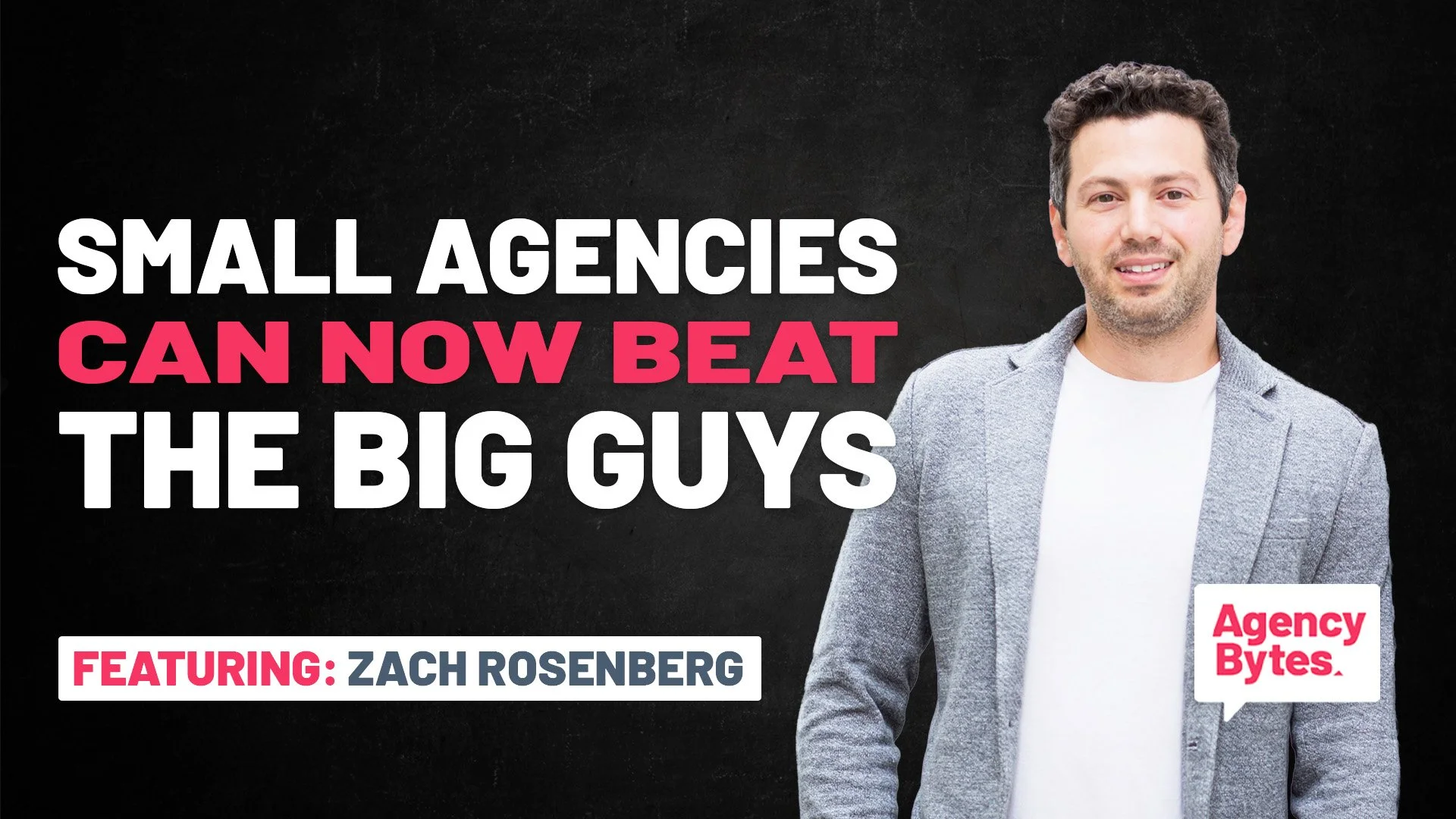
Featuring: Zack Rosenberg, Qortex
In episode 156, I sit down with Zack Rosenberg, founder and CEO of Cortex, a video intelligence company decoding the connection between what people watch and what they actually buy.
We get into how Zack discovered that buying intent shows up in the content people watch long before it ever reaches a search bar, why nearly 90% of video content is miscategorized, and why he's betting on "data-supported" creative over blind data-driven formulas. We also talk about what AI means for ad production costs, the future of agency workforces, and why smaller shops now have a real shot at business that used to belong exclusively to the hold-cos.
If you've ever wondered whether your audience is telling you something your gut instincts haven't caught up to yet, this conversation will change how you think about targeting, creative, and where your next best client might already be looking.
Key Bytes
• Nike ads perform four times better in cooking content than in basketball content — proof that buying intent rarely follows the obvious audience.
• Nearly 90% of video content is miscategorized, which means most "data-driven" targeting is built on garbage.
• Buying intent starts long before the search bar — inspiration comes from the content people watch, not what they type into Google.
• AI can be random, but it can't be creative — data should inform the work, not replace it.
• The industry's obsession with "data-driven" thinking should give way to "data-supported" thinking, where human hunches still lead.
• Cheaper AI-driven production doesn't shrink agency costs to zero — human costs are capped, but AI costs scale with every single use.
• Smaller, nimble agencies now have a real shot at winning business that used to be locked up by the big hold-cos.
• Relationships built through community outlast any single job or client.
Chapters
00:00 Intro and welcome to Zack Rosenberg
01:46 The origin story of Cortex and the Nike-in-cooking-content discovery
03:46 Who Cortex actually serves: data teams, brands, and agencies
04:41 From small sports leagues to solving the mis-categorization problem
06:58 Why buying intent starts long before the search bar
08:41 Broad reach vs. micro-targeted creative, and AI-generated ad variations
10:52 Data-driven vs. data-supported, and why identical ads keep winning
16:20 What AI means for creative costs, agency workforce, and hold-cos
22:08 Building the Montclair Media Group community
27:08 Rapid-fire questions and closing thoughts
Zack Rosenberg is the Founder & CEO of Qortex, an advanced video intelligence company helping brands identify intent based on what people watch. Qortex analyzes millions of videos to uncover real-time signals that connect content consumption to purchase behavior—powering smarter planning, activation, and performance across digital media.
A lifelong entrepreneur from a family of founders, Zack is passionate about building enduring companies and shifting the advertising industry from audience assumptions to content intelligence. He also co-founded Montclair Media Group, a fast-growing community for marketers and founders in New Jersey.
-
Steve Guberman (00:07.084)
Welcome to Agency Bites. I'm your host, Steve Guberman from Agency Outside, where I help agency owners build the business of their dreams. This week on Agency Bites, I'm joined by Zach Rosenberg, founder and CEO of Cortex, a video intelligence company helping brands connect with people with what people. Yeah, see there I guess, screwing it up. Take two. Welcome to Agency Bites. I'm your host, Steve Guberman from Agency Outside, where I help agency owners build the business of their dreams. This week on Agency Bites, I'm joined by Zach Rosenberg.
founder and CEO of Cortex, a video intelligence company helping brands connect what people watch to what they actually buy. Zach is a lifelong entrepreneur who's building towards something bigger than just ad tech. He's on a mission to shift the industry from audience assumptions to real content intelligence. Thanks for joining me, Zach.
Zack Rosenberg (00:53.933)
Thanks for having me, Steve, and great intro. Thank you.
Steve Guberman (00:56.96)
Hey, thanks. did not rehearse it. Cortex, man. it's been on my radar for a couple of years. We met, guess, three years ago now at, was it New Jersey media marketing, something that Chris Delaney's group does. Yeah. There you go.
Zack Rosenberg (00:59.181)
the
Zack Rosenberg (01:06.092)
That sounds right.
Zack Rosenberg (01:12.129)
The New Jersey Marketing Conference. Yeah, I did one of the keynotes there.
Steve Guberman (01:17.346)
Yeah, and I gotta say, prior to that, had heard of CTV, I had heard of some of the enhancements going on, I've seen some on my own TV, but when you talked about and showed some of the things that you're doing with Cortex during your keynote on screen, and I think you showed like some like Adidas soccer jersey, in game, I, like my mind was absolutely blown away. So talk through kind of your...
Zack Rosenberg (01:34.221)
Mm-hmm.
Zack Rosenberg (01:43.243)
Yeah.
Steve Guberman (01:46.062)
journey to launching cortex. What cortex is all about? by the way, as you're listening, cortex is spelled with a Q cause why not? It's got to be different. So there you go.
Zack Rosenberg (01:55.371)
Yeah, well, it looks like a brain stem. So there was some branding element there. And also there are other, you know, cortexes with Cs, but the Q really stands out. So yes, we get that a lot.
Steve Guberman (02:05.366)
Yeah. So what was your journey in launching it and what are you guys up to?
Zack Rosenberg (02:08.65)
Do you the version with tears, without tears? great. I'll find the tissue box. The journey really started with, in a previous role I had, I was working with all these content creators, all these publishers, and they all have the same struggle. Video is very expensive to produce, it's where most of their audience is, they struggle to monetize it because they struggle to understand it. And so, yes, the very first product of Cortex is...
Steve Guberman (02:11.772)
Let's get emotional, man, bring us in.
Hahaha
Zack Rosenberg (02:38.142)
an in-video ad experience called Onstream, which would dynamically surface ads based on what people were watching. And we started to really connect the dots in our own mind. It's like, well, when I watch this piece of content and I see an ad for this type of product, what happens? Is it the things that we assume are going to happen or something interesting? And the something interesting became the thing. We talked about in maybe in that presentation or maybe not.
how Nike performs four times better in cooking content than it does. And as I often joke, when I think about my friends who really love watching basketball, there's a pretty good reason that they're not playing basketball. But if you're watching healthy cooking content and you care about health and fitness, you care about Nike's products, perfect linear line that is completely untouched. I started to realize, wow, you can learn a tremendous amount.
based on what people watch, yes, across the TV, or YouTube, or whatever, wherever, how do we make that actionable? That's what cortexes evolved to over the years.
Steve Guberman (03:46.648)
So it's a software that layers into video production ad buying or onto the networks or like where does it plug in and who's like the key target for you.
Zack Rosenberg (03:58.539)
Yeah. So the key target, I'll start backwards. The key target are data teams within brands and agencies, as well as investment teams who want to utilize this understanding of who's watching what content and make it actionable. In terms of that activation product, it's working with video players, publishers, platforms to make that solution available. So it's kind of one by one.
or one too many if it's the platform itself, but really it's about how do we utilize the data? And that's just one way to activate it.
Steve Guberman (04:37.374)
And what inspired you to launch this?
Zack Rosenberg (04:41.418)
What inspired me to watch it is, well, first, we, my cousin and I started many, years ago, thinking that what ESPN the Ocho is in the dodgeball movies would be what social would turn into. So we acquired the rights to these very small independent sports leagues, Ultimate Frisbee, Major League Eating,
fan control football, which is actually really big now, which is amazing. And like all these like very small sports leagues, and we started broadcasting their games through our Facebook page, YouTube, Twitch, Twitter, thinking, hey, we could build not 10 million people watching these things, but you know, 100 different programs with 10,000 people each, right? And that was doing it. the social platforms
didn't allow you to monetize your own content with ads. So we had to find unique, interesting ways to integrate sponsorships into the programming that we were doing. So that was kind of the first foray into it was, okay, you how do we better monetize our own content as content creators? But then as I mentioned, I to think, is this the right...
message or the right ad to appear within the content. Well, if we don't know what the content is or what's happening within the content, how do you know if it's the right thing? Then how do you take the consumer element into that too and go, well, this is what we thought, but actually the data is telling a very different story. So I would say that's the evolution over time of how we got from step A to step, you know, now I guess V, I don't know, wherever we are on that journey. Yeah.
Steve Guberman (06:18.38)
VWXYZ, yeah. Interesting, so you talk a lot about how, I mean, you're a data guy, you're an ad guy, you're plugged into the ad community, at least the New York metro area, Montclair, New Jersey. But what your software is doing is helping people commit to the brands that they're watching and the data that you kind of support that with is that...
Once somebody is committed to the idea of buying something, that first brand that hits their eyeballs, they're in, they're buying, it's in their shopping cart on the TV like three quarters of the time.
Zack Rosenberg (06:58.783)
And I would even start earlier than that. You know, I think a lot of marketers are convinced that buying intent starts at search. I just miraculously had this idea. I went to Google, I typed it in and that's where my journey.
Steve Guberman (07:07.192)
Mm-hmm.
Zack Rosenberg (07:15.357)
now know that that's just not the case. And in fact, I think what we have learned over the several years we've been doing this is that you're more likely to come up with the inspiration for a purchase based on the videos you watch.
So you're scrolling through TikTok or YouTube or watching TV or whatever, and this home remodeling show comes up and you're seeing, man, I wish I could redo my fireplace, right? That inspired you to then go search and say, I want a fireplace. So what we're trying to help marketers do there is identify those intent signals way before they've hit the search bar.
based on what they're watching. it's, as I said, it's never what you really suspect. BMW is another good example where home gardening, home and gardening shows drove more people to the dealerships because people who care about how beautiful their home looks and the aesthetic of it care about what's in the driveway too. So you start to make these connections that you go, of course that makes sense. But if you walked into the brand and you pitched, we're gonna only
advertise on home and gardening shows, you'd be laughed out of the office. But the data is the data. And so that's what we're really trying to help the marketers understand is that your audience tells you a lot about them through the shows, through the content that they consume across all these different channels. How do you harness that and make it usable?
Steve Guberman (08:41.496)
So is it more that when agencies are building content for their brands, for their clients, they need to be more generic in where it's going to be delivered because now AI is putting their content where they might not even think it's going to go?
Zack Rosenberg (08:48.802)
Mm-hmm.
Zack Rosenberg (09:00.745)
say the exact opposite. know, kind of going back to my example about targeting people who like ultimate frisbee, what a gift, right? One of the greatest things that think AI is going to really do for all of us is help people learn the way that they like to be taught. And if you take that same idea to creatives, I don't have to talk to you the same way that I have to talk to somebody else. And in fact, you know, we
Steve Guberman (09:02.475)
Okay, tell me more about that.
Zack Rosenberg (09:28.877)
A perfect example of this was Nationwide Insurance gave us a couple of different creatives and they said, this is the person we're going after. I was like, well, this creative is a couple in the kitchen. This creative is a group of people hiking. Those aren't the same people. Yes, I know you want to reach as many people as possible, but you're trying to... These creatives are talking to someone and it's not everybody. So how can you be both broad
Steve Guberman (09:46.36)
Mm-hmm.
Zack Rosenberg (09:56.5)
and micro-targeted at the same time and let the creative speak for itself. And if I can plug, we have a free tool where you can upload a video creative and we'll show you what audiences will pair best with it. And so that's the very idea of let's be broad, but we could still be kind of out there with a scalpel too, looking how to talk to people specifically. And that goes back to that creative example where, you know, I think we are
months away from a world where you're going to see 10,000 versions of the same ad, right? Literally talking to you different than me, you we probably fit in the same demographic buckets, we live in the same area, all this sort of stuff, but I think we're now going to have very different stories to tell based on the creative.
Steve Guberman (10:40.376)
So broadly specific, but to your point of 10,000 versions of the same ad, mean, that's a big play for AI in the creative variation game.
Zack Rosenberg (10:52.909)
And we're going to learn a lot. My hope there is that...
I think that a lot of folks live by this mantra of being data-driven. I feel like I've heard this for a decade, right? Like we're only data-driven. We only do what the data tells us. I hope the pendulum swings back to data-supported. And the distinction there for me is that data-driven is you just wait for the results and then you say, okay, this worked. Let's do more of that. Whereas data-supported is when you have a hunch, you have a good feeling, you know, let's see if this works.
Steve Guberman (11:13.442)
Hmm.
Zack Rosenberg (11:28.167)
and human creativity comes into play. I think what we're going to start to see, and I noticed this during the Super Bowl, certainly a lot more last year than this year. I don't know if I watched the commercials as closely this year, but it felt like of the top 10 ads as ranked by consumers the day after, seven of them had the same story. You know, the little girl, the little dog, the horse, the, you know, person who
wasn't included, wasn't helpful, but then they saved the day at the end. It's like seven of the top 10 ads were the same thing, all with the same data-driven insight. Like, is that where we're all headed? I hope not. Let's be data supportive, be creative, and use that to our advantage, as opposed to just letting AI figure it out for us, which I think is going to always come to the same conclusion for everybody, which is why you have to start with a new thesis.
Steve Guberman (12:22.082)
That's an interesting mindset. So I've always been creatively led, data supported in going with a hunch. And that's just the way I was trained. It's the DNA that I was brought up in, in the creative space. A lot of the agencies that I have partnered with, that's how they drive. But the data driven ones claim we're using the demographic data. We're using all the data points pointed to this. So let's use whatever, the blonde haired girl, because that tested best with the markets.
Zack Rosenberg (12:37.762)
Mm-hmm.
Steve Guberman (12:51.362)
But if you're seeing that 70 % of the commercials resonated best because they were data-driven storylines, why wouldn't you follow that and allow AI to point you in that direction for greater efficacy on the development of the creative and the ad spend itself?
Zack Rosenberg (13:10.413)
I would say two things immediately come to mind because you're right, follow the data, right? That there is a reason and a rationale, but it also depends on how you're asking the questions. Right? So that's part one. Part two is that our research has found that 88.98 % of video content is mis-categorized. Nine out of every 10 videos is mis-categorized. So the idea that the data is solid.
Steve Guberman (13:30.914)
That's a huge number. Holy shit.
Zack Rosenberg (13:38.934)
has to be question number two. And if you put garbage in, you get garbage out. And depending on what models you're using, or if you're using your own data or whatever the case may be, who knows? So I do think that the ability to iterate on creative will help us tell stories to people, as I said, in a way that resonates better with them. And I think that's the real magic.
we come up with stories that should just that should always be creative led.
Steve Guberman (14:09.772)
Yeah, yeah. And I agree with that. Creative LED, I think, is just the right way to do it. It leads with a human. It connects with humans. I think people know people better. I think empathetic curiosity is just the greatest tool that we have. Hopefully, robots never have that tool, you know, least not in our lifetimes. I guess on on. Go ahead.
Zack Rosenberg (14:22.893)
Mm-hmm.
Yeah, I hope so.
You know, I was gonna say, mean, you know, if you think about that pitch meeting from Vince Gilligan to the network about I'm gonna have a school teacher with cancer, you know, sell meth and be a gangster. I don't think the data driven approach to that would have been like, yeah, all signs are pointing yes. Like this is gonna be a huge hit and everyone's gonna love it. Creativity.
Steve Guberman (14:53.324)
Yeah, yeah. I don't, yeah, I don't see any time I've put in a prompt and I said, I need an image that does this, you know, for just a quick bang something out. It's not creative at all. It's like, this is very standardized. This is very, what would be expected. It's nothing outside the box. Whereas you put a few designers like in a war room with some pizza and shitty music blaring all night. They're going to come up with some really good ideas that there's no chance AI is coming up with.
Zack Rosenberg (15:05.229)
Mm-hmm.
Steve Guberman (15:23.246)
So I'm, yeah.
Zack Rosenberg (15:23.785)
AI can be random. It can't be creative. But more importantly, you have to, what the data should do is inform. And I think that's what we talk a lot about with, you know, our understanding of video content that, Nike example in cooking. It's like, well, LeBron James is LeBron James and you should continue to work with LeBron James, but maybe you want to talk to Martha Stewart, right? Maybe you want to start to think about other people or concepts.
in your conversation with your audience based on the data that we're seeing. And that informs the creative, obviously, but it's a whole new way to find insights about your audience in a way that we couldn't do. Again, if 90 % of the data was inaccurate, our hunches were based on figments of our imagination. That's where bringing these things together really can be impactful.
Steve Guberman (16:20.238)
Yeah, fair enough. So on the heels of AI and thousand video variation production and how AI is playing into the spot creative place. had a conversation with somebody recently and we were talking about how, what that's going to do for the impact on the workforce as one thing. The bigger picture was if I used to spend whatever.
Zack Rosenberg (16:41.656)
Hmm.
Steve Guberman (16:47.062)
a million dollars on creative and now I'm spending a hundred grand on creative as a brand. I've got nine hundred grand to flood the market with my my creative now. What's that doing for the cost per acquisition or the cost per placement or add just the real estate that's available? And is it going through the roof in hot demand? Like what's what's the impact you're seeing there?
Zack Rosenberg (17:10.954)
It's a great thing for us as marketers to bring more people into the market, right? Facebook and Google succeed in a lot of ways, but one of the ways that they succeed most is availability. If I want to go work with NBC, I know that they have some tools that can open the market, but you still have to have creative. You still have to have television worthy creative. And that's a bar too high for most marketers, but Google and Facebook
Steve Guberman (17:31.437)
Mm-hmm.
Zack Rosenberg (17:41.088)
Over 50 % of their revenues comes from small and medium sized businesses. Cause what do you need? An image, a couple lines of text.
Off you go. So I think that this is a revolution that's certainly positive for the industry. So yes, there's a lot of places that garner attention, but a lot of those places have been bridged too far for most marketers. So this is a wonderful thing. I think about my dad's a small business owner. 10 years ago, I pitched him the idea, you got to do more marketing, of course. Of course I said that.
And that wasn't feasible. Like, what was I going to do for him? But now we can have a real conversation. It's like, hey, we can take some of these concepts and now we can turn it into marketing collateral in a matter of minutes. And now it could be a video creative and now it could be this and that. What it does to the workforce, I know that's, I don't know that I have all the answers to that question either, but you know, one of the things that I've seen, at least in my business or as I look ahead,
is I think there's this assumption that costs and prices are gonna come down, which I don't believe is actually going to be reality. I think the prices are gonna go up. And at some point you might actually say to yourself, well, wait, if I have a employee that makes X and now my bills for the AI training and models and all this sort of stuff is Y, well, wait a minute, I'm actually kind of capped.
on my human costs versus the variable costs of... So let me use a bad example, but an example nonetheless, if you have a full-time employee, they might work 41 hours, they might work 43 hours. They're gonna finish the project, whatever the incentive is. That's to the benefit of the agency that they're getting those extra hours. There's not a single second...
Zack Rosenberg (19:36.563)
of AI usage that you are not paying for every single token, every single use forever. And most of those costs don't scale down, as I said. you know, I do not know what the future of work is going to look like. I've got a thousand ideas and, you know, stuff that I personally want to try to tackle. But I think that the idea that there's no need, you know, for humans at all. I, I
just don't feel like that's gonna be the case.
Steve Guberman (20:08.43)
I also don't think it's the case. I do think there's going to be a massive shift. You know, we're seeing a big depletion in the junior talent pool being fed into, at least in our industry. I'm sure it's in lot of other industries. I think that's going to screw with what does it look like in three to five years when we need middle management. There's going to be a massive void there. But yeah, I think it's going to be not a one to one, but it's going to be a swap of instead of, you know, the cost of this creative being whatever, a million dollars.
Zack Rosenberg (20:18.562)
Mm-hmm.
Steve Guberman (20:35.758)
Is it going to be a hundred grand? No, because we still need prompt engineers and we still need designers. We still need tech stack and all these other things. So I don't think it's going to be that drastic. I was merely like using that.
Zack Rosenberg (20:44.942)
But what advantage for all the people who watch and listen to your podcast, right? They can do the services of the big holdcos without the overhead of the big holdcos and compete for business they never could have gone after. Like, what a game changer. And, you know, my hope, and, you know, we talked about this before.
is that they take advantage of that opportunity. And I haven't felt it in a lot of conversations I've had with agency owners and midsize agencies where, you I could see the holdcos having that pricing issue where all of sudden, you said, our creative goes from 10 million down to a million and now they've got the overhead. like they can't move the way that smaller agencies can scale up, scale down as.
offer services and elements that the big holdcos would take a long time to get to. So I don't know if you're a Game of Thrones fan, I certainly loved books, the original series, and my favorite line comes from the character Littlefinger where he said basically, it's the version of Blood in the Street by gold, but chaos is a ladder. So if you see chaos,
Steve Guberman (21:59.961)
Mm-hmm.
Zack Rosenberg (22:02.146)
That's your opportunity. Well, I would say that sufficiently, we're seeing chaos.
Steve Guberman (22:08.984)
Fully agree. And I do think to your point, the smaller, more nimble agencies have an opportunity. We've seen a shift over the past five years of the smaller agencies taking chunks from the hold co retainers, taking projects that otherwise would have gone to the McCann's of the world and the Ogilvy's of the world. And so we've seen that shift. We've also seen the shift of more and more, AOR agreements turning into project-based work so that the brands can delve it out more to. Yeah.
larger big picture strategy stuff is going to the holdcos and the production and development of certain things going to the independent shops. So I also think we're seeing a massive shift in the independent shops kind of flailing about out of fear of what the tsunami of AI is gonna do for them or to them. And so there's a lot of &A activity, mergers and acquihires and things like that, which I'm all for, because I think it's exciting as hell, but.
there's amazing opportunities for these nimble shops to leverage what AI can do to help them. talk, you started to talk about like your involvement in what this kind of reshape of the future of workforce looks like. What are you doing with that? What are you doing locally? Talk about Montclair media group.
Zack Rosenberg (23:23.508)
Sure. Just to finish one thought on what you just said, and then I'll get into that. This concept of a data spine is something that I had never heard of six, seven months ago. The concept has been there, but I think that's an incredible opportunity for agencies to build out profiles and understanding of consumers for the brands and be that centralized location. mean, it makes you stickier for sure. It adds a new business model and gives you
Steve Guberman (23:27.853)
Yeah.
Zack Rosenberg (23:53.113)
tremendous amount of from which to build your audience understanding, to activate, to leverage. I think that's what I'm seeing is the great innovation and the opportunity in all these tools. So that's how we're starting to work with a lot of agencies as well, which is why I bring it up. Audience enrichment, helping them build their data spines. I think that's an opportunity that makes them both stickier and has longevity. In terms of my role in Montclair Media Group,
so my wife and I during COVID, we both work in the ad industry, you know, as things started to thaw, we, every zoom call we were on, people were saying, where are you calling from? Where are you calling from? Just as everyone else did. And the answer either came back in or around Montclair or if not, do know these 12 people that live there? We didn't. So why are we going all the way into Manhattan to meet all the people who live around the corner? And so we partnered up with a few other folks in town.
And now we host about an event or two every single month for the people in the marketing media advertising industry around Montclair, from lunches to hosted dinners to charity events, practice, trivia nights, the whole thing. And we've amassed over 700 people in the area as members in the community. And I think that's the future of work. You know, as I saw an article
recently that 30 to 70 % of brand teams are now made up of freelancers. And I thought, well, that's going to come from your community, these opportunities to partner up both from a new business standpoint, but also, hey, I need that designer. And I know this person's in town or this person's around, like, can we build our little SWAT team, take on this piece of business and, you know, work on it collaboratively? And I think that's...
Steve Guberman (25:29.656)
Mm-hmm.
Zack Rosenberg (25:51.18)
what we've seen as a result of bringing all these people together, not necessarily the intention of it.
Steve Guberman (25:56.643)
I was going to ask you was like this collective hunting model and intention, but no, it's kind of like a latent effect of it, which is super common when you bring people together with common interests, like, I've got this opportunity. You dovetail nicely into it. Let's go get it together. And so, yeah, I love that.
Zack Rosenberg (26:09.327)
Exactly. Yeah, look, the relationships last longer than the jobs. And I think what's really nice about community-driven organizations like that is there was a woman I saw, I still see at the bus stop every morning as I bring my kids to school. She showed up to one of our events. Wow, I had no idea. You know, we've been talking for years at this point at the bus stop, never got into what we did for work, and we have a relationship.
independent of that, right? That's how you build something meaningful, not transactional, and those people will always take your calls as result, and that's the best you can hope for.
Steve Guberman (26:50.136)
Hmm. Love that man. And that's the nature of networking. And that's what it should be is about building relationships, trusted partnerships, and not making a transactional like, Hey, I met you. Can you do this for me? Or yeah, that's short lived. Yeah.
Zack Rosenberg (27:01.389)
Yeah, always do the first favor. That's my advice to everybody. Always do the first favor. Yeah, I think that's just a good way to live.
Steve Guberman (27:08.29)
Yeah. Love that. On that note, let's wrap up with a couple of rapid fire questions. Super. You got the script ahead of time. Who? Yeah. Who gave you that is by the way, totally random, not random. Mon, medium Montclair media group is Stephen Colbert. Remember.
Zack Rosenberg (27:15.575)
Yes, no gold.
Did nail it? Wow.
Zack Rosenberg (27:29.551)
So, no, but we have done events with Montclair Film Festival, which obviously he and his wife Evie, well, his wife Evie is the president of, so we've done many collaborations around the film festival with them, but no, we've never gotten Stephen. However, as of May, he's gonna have a lot of free time, so who knows, maybe he'll come up to our lunches.
Steve Guberman (27:33.59)
I'm not joining that.
Okay.
Steve Guberman (27:51.247)
Yeah, DJ Ron is also hanging out at Paper Planes all the time in Montclair and or Darrell rather. Yeah.
Zack Rosenberg (27:59.024)
All I know is Tierneys is featured in more movies, TV shows and commercials than anyone else in town. all the FanDuel commercials right now feature Tierneys. The Bob Dylan movie featured Tierneys. It's like, what? Anyway, great place to get a beer.
Steve Guberman (28:07.139)
Yes.
Steve Guberman (28:17.388)
I saw that, yep, yep. Anyway, if you're not from New Jersey, head out to Montclair. It's a cool town. You might run into Stephen Colbert or Daryl from Undemmc or Zach. Yeah, all right, so random rapid fires. The first is what is a daily activity that is a routine for you that you probably can't do without?
Zack Rosenberg (28:28.299)
Or me. Yeah, exactly. First drink on Steve.
Zack Rosenberg (28:41.537)
As sappy as this sounds, spending time with my kids. It is what I look forward to every day when they come home from school. is one of the blessings of being able to work from home. As soon as I hear that door open, I run upstairs. Best part of my day.
Steve Guberman (28:54.382)
You're like the Labrador that just runs and here's the door open and runs up to them. Perfect. What's something that you are binging these days? You can't get enough of a book, a podcast, a show, a YouTube series.
Zack Rosenberg (28:56.623)
And I lick their faces, so it's a perfect analogy. Yeah.
Zack Rosenberg (29:08.057)
Whoa, that's a great question. man, the phases have changed. Right now, it's all about the Pivot podcast with Scott Galloway, Kara Swisher. That's become my new, you know, once, twice a week listen. And I'm back into The Daily Show as well. That's, you know, Jon Stewart has brought it back for me and the rotating cast of characters, I think it's just gotten better and better. So those are two things that I'm definitely into.
Steve Guberman (29:16.28)
Mm-hmm.
Steve Guberman (29:24.142)
Yeah.
Steve Guberman (29:32.768)
Love that. Did you read Scott Galloway's book?
Zack Rosenberg (29:37.241)
started to. have not gotten all the way through, as a father of three boys, yeah, it's definitely something I'm working through.
Steve Guberman (29:44.729)
Yeah, it's on my list. A total random fun fact, not related to rapid fire questions. I met John Stewart. went to high school with his stepbrother and he came to our school to pick him up one day and his stepbrother, Daniel, was in our, had the high school had like a TV studio and they had a show and John came to pick him up from the show. And I don't remember what the full interaction was, but it was pretty big deal.
Zack Rosenberg (30:09.901)
Okay.
Steve Guberman (30:13.25)
He doesn't remember me, I'm sure, maybe, who knows? Anyway, all right, final question. Exactly, yeah, final question is, and you kind of allude to it, what is an invaluable piece of business advice that you can tell younger Zach?
Zack Rosenberg (30:15.011)
Yeah.
The footage will live forever though, so that's the important thing. Yeah.
Zack Rosenberg (30:30.507)
Order of operations. This is something that I, it's so obvious and any engineer always thinks this way, but as a business person, I don't think we put enough emphasis on it. And, you know, I think that there are always steps to be taken and they shouldn't be short-cutted. And the more we remember that and realize it and think that through, the better off we'll be. So,
Steve Guberman (30:32.334)
Hmm.
Zack Rosenberg (30:58.049)
Order of operations is something that I always share with entrepreneurs. And it's one of those where you're like, yes, of course. And then you think about your own day to day and how you function. It doesn't marry up with that idea. So that would be my advice.
Steve Guberman (31:13.538)
Love it. Sage advice, Zach from Cortex, Griff for your time together. Thank you for joining me today and sharing all of your wisdom and experience with us.
Zack Rosenberg (31:22.319)
Thank you so much, Steve.