
Agency Bytes Podcast
Agency Bytes is a video podcast series that packs a ton of important agency information on one topic, from one expert into a 25-minute brief.
Why 25 minutes?
Because who has the attention span for much more these days, and you can squeeze in a listen between meetings with time for a bathroom break or coffee refill before your next meeting.
Easily find the episode you’re looking for with the Podcast Search feature - type in a guest name, topic, or episode number and voila!
Listen & subscribe on the platform of your choice
Subscribe for email delivery each week
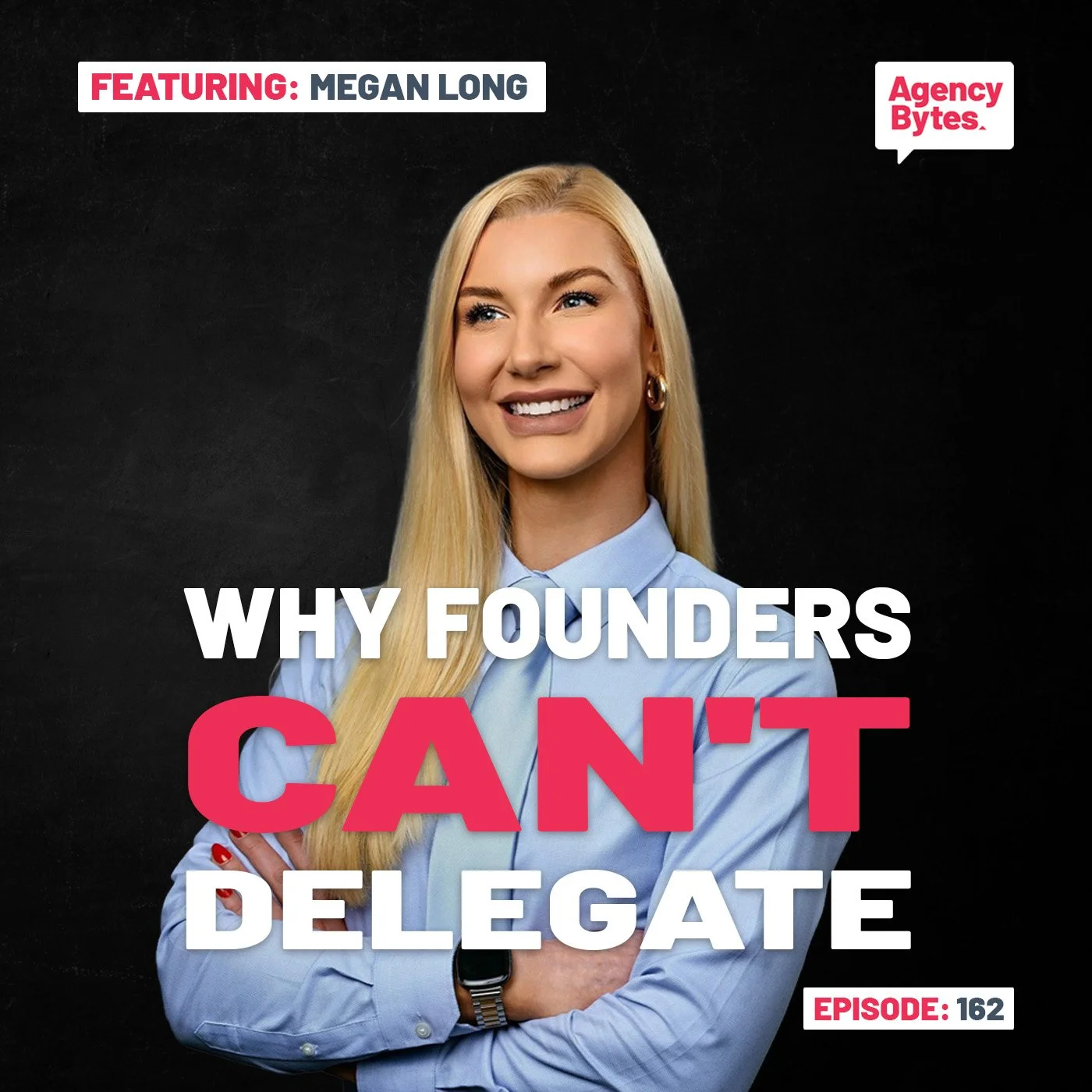
Ep 162 – Megan Long, Second First – What Agency Owners Get Wrong About Delegating to Their Right-Hand Leader
Every founder has a blind spot when it comes to delegation, and it usually shows up as the same bad habit: pulling things back onto their own plate the moment they let go. In this episode, Megan Long of Second First joins me to talk about the role most agencies get wrong from day one, the second-in-command. We dig into why the "sexy resume" hire almost always fails, why the best partnerships look more like a shared Venn diagram than a pair of opposites, and what it actually takes for a founder to leave for a month and come back to a business that grew without them.
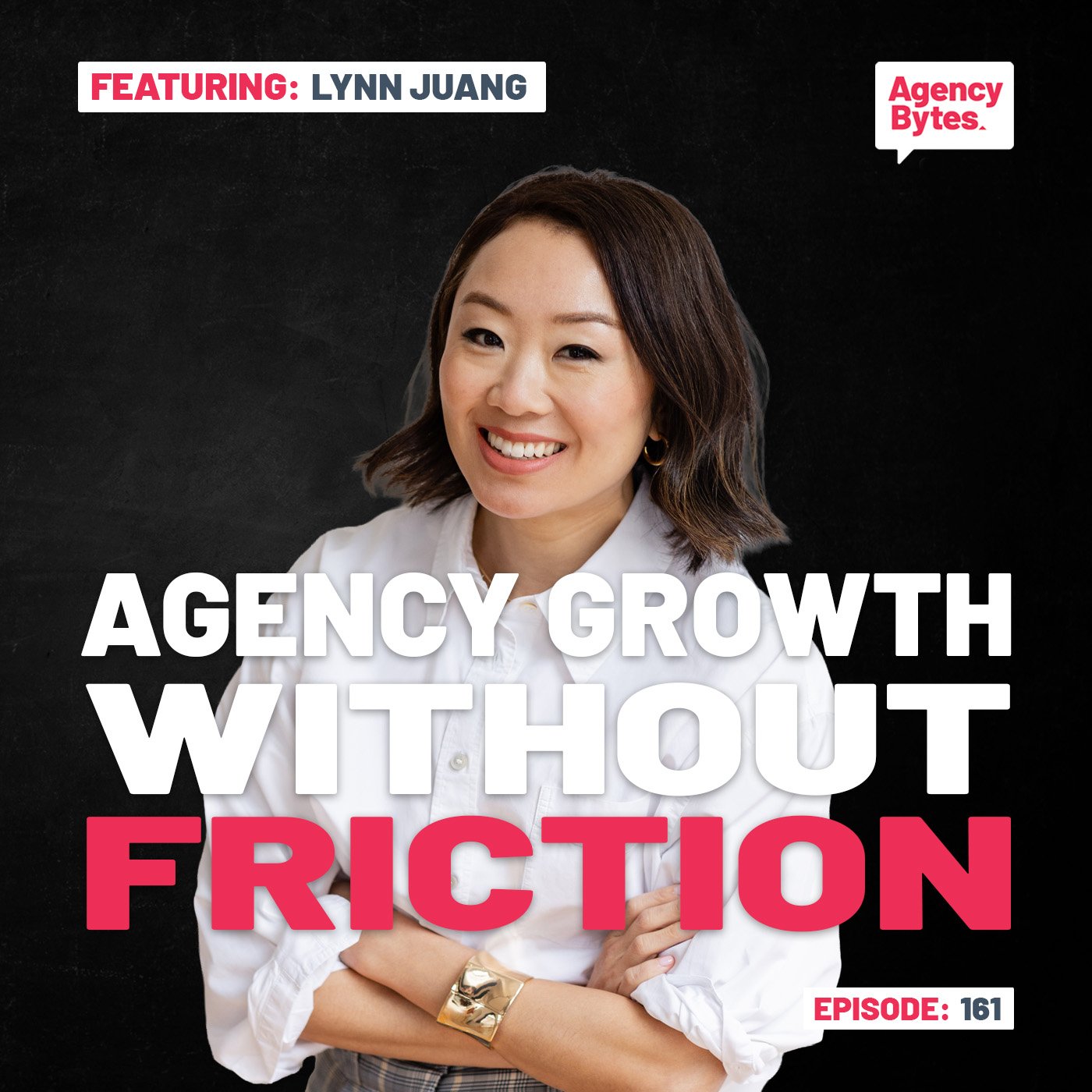
Ep 161 – Lynn Juang, Frameworks Consulting – Agency Growth Without the Friction
Lynn Juang spent two decades climbing from client services to COO before deciding she'd rather help founders run their agencies than run one herself. In episode 161, she breaks down why agency growth doesn't have to come with friction, and what actually separates a business that looks successful from a company built to last.
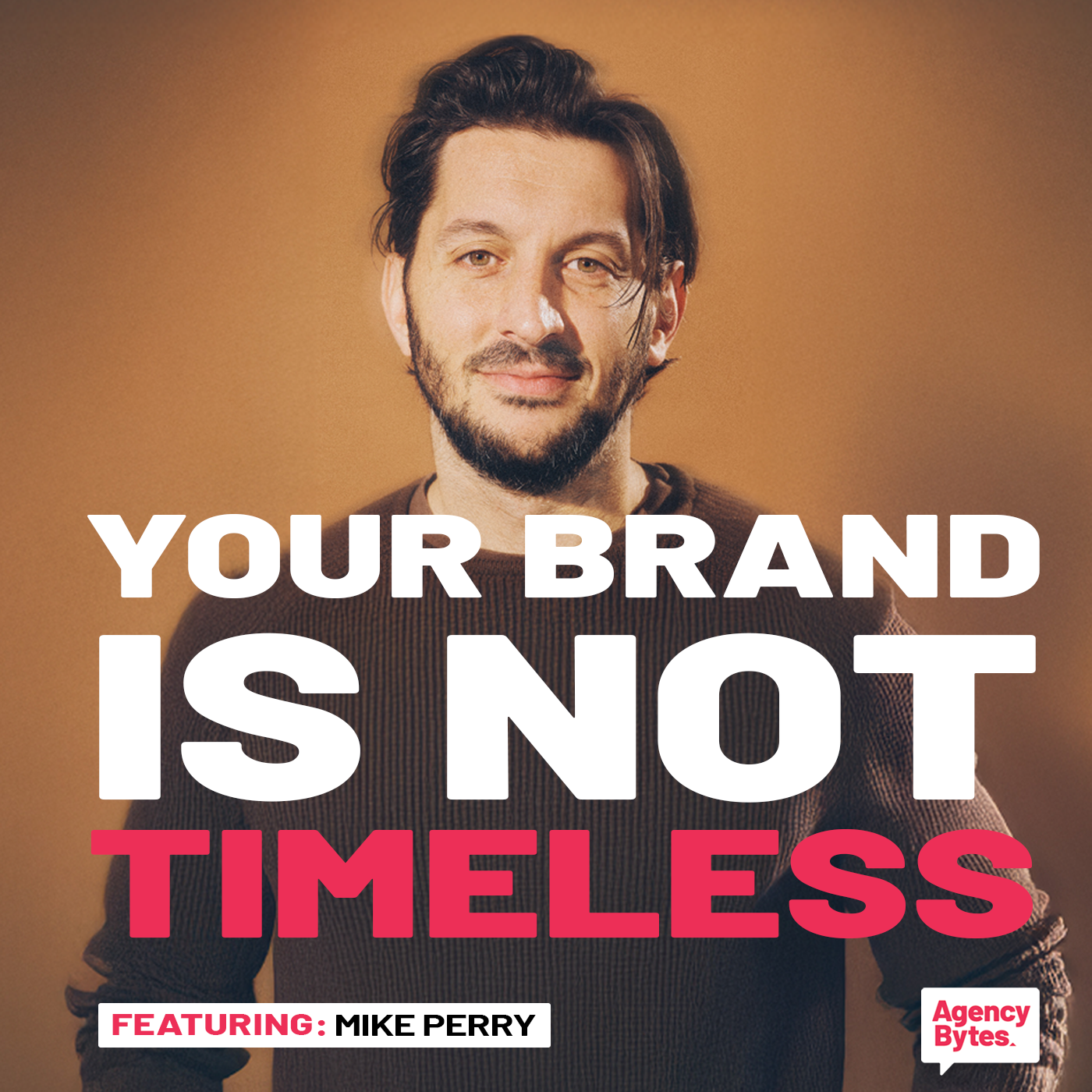
Ep 152 – Michael Perry, Tavern – Why Relationships — Not Design — Actually Grow Your Agency
Mike Perry, founder and Chief Creative Officer of Tavern, joins Agency Bytes to unpack "modern heritage" — building timeless brands by mining the past instead of chasing trends. Steve and Mike dig into real niching, staying hands-on as a founder, launching your own product brand, and why this is fundamentally a relationship business above all else.
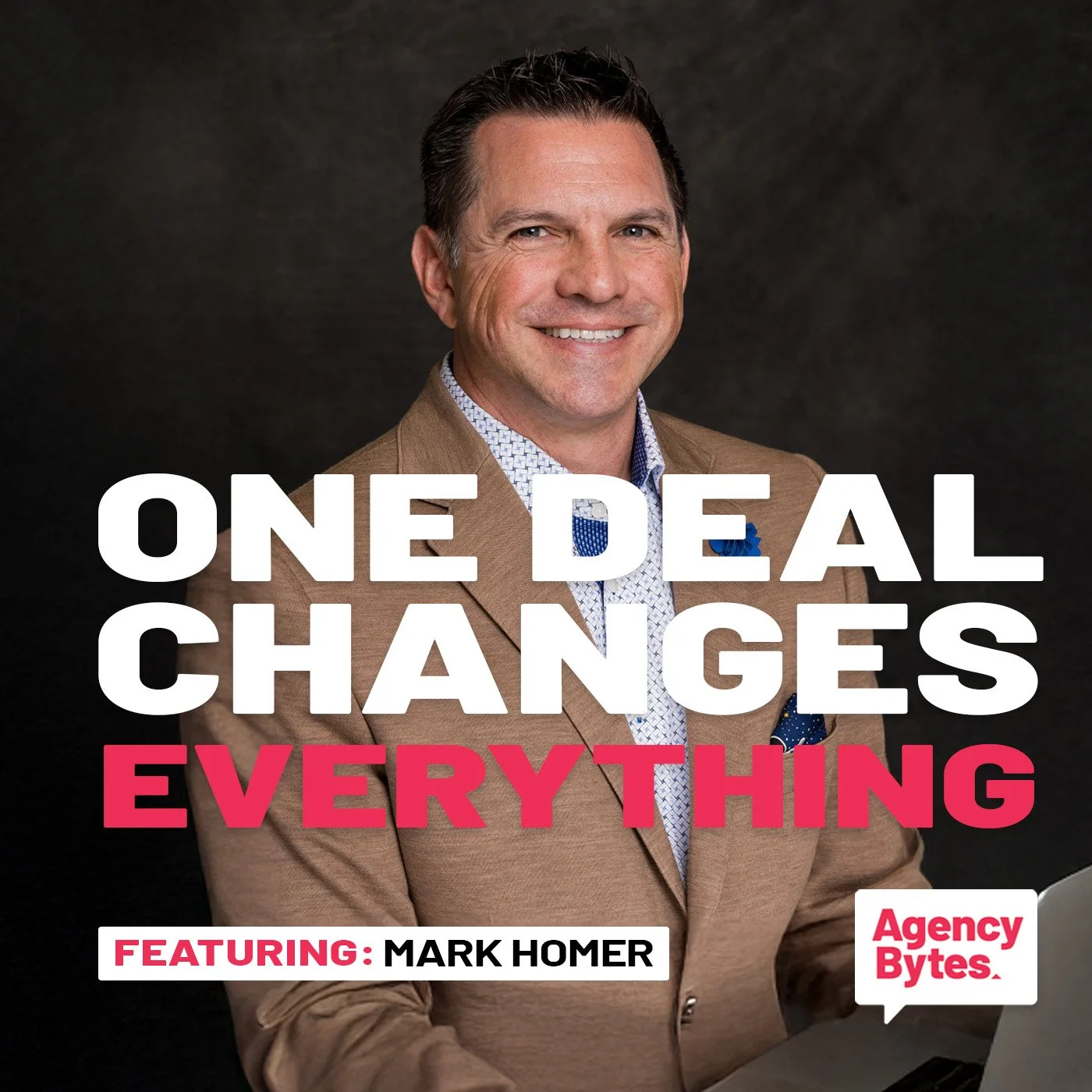
Ep. 151 – How Mark Homer Buys & Sells Agencies Without a Pile of Cash
In episode 151, I sit down with Mark Homer of Grandin Holdings to demystify M&A for agency owners. We bust the myth that you need a pile of cash to buy an agency, dig into why your network is your best source of deals, and talk through what actually makes a business sellable — and worth keeping. If you've ever assumed M&A wasn't for you, this one will change your mind.
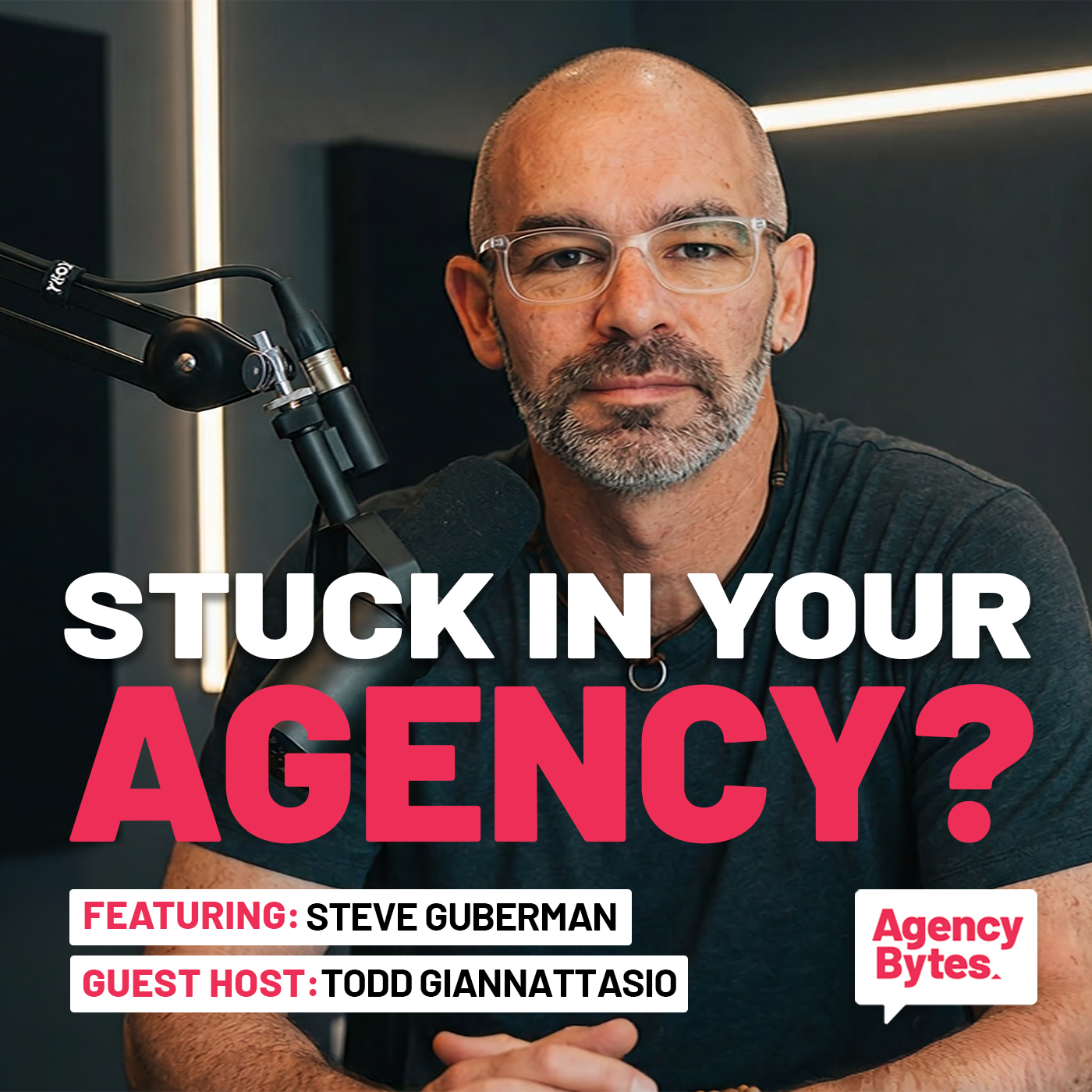
How Steve Guberman Built, Sold, and Reinvented His Agency — Season 4 Kickoff
In episode 150, I flipped the mic. To kick off Season 4, I handed the host chair to my friend Todd Giannattasio of Tresnic Media — a returning guest from episode 10, and the guy who helped me name Agency Outsight in the first place.
This one's more personal than most. Todd walks me through my journey from screw-off art kid to graphic designer to accidental agency owner, the acquisition that should have been the first of many, selling my agency, and the grief that ultimately reshaped how I think about purpose, work, and what a business is really for. We get into the asset mindset, programmatic M&A as a growth lever, why most founders pay themselves last (and shouldn't), and the copycat goals that keep agency owners chasing someone else's dream.
If you've ever wondered what's actually on the other side of an exit — or whether you're building a business or just a really demanding job — this is the conversation.
Key Bytes
• Most agency founders accidentally build a job, not an asset — and the difference shows up the day you try to sell.
• Programmatic M&A unlocks exponential growth that organic effort simply can't match.
• Buying talent is faster, safer, and more predictable than hiring it.
• You don't need a truckload of cash to acquire — SBA loans, earnouts, and seller financing make deals possible at almost any size.
• Paying yourself last isn't noble — it's a habit that quietly devalues the business you built.
• Copycat revenue goals pull founders into chasing numbers that mean nothing to their actual life.
• Grief, burnout, and life events have a way of forcing the clarity most founders avoid.
• Creative empathy — not tactics — is still the most underrated edge agency owners have.
Chapters
00:00 Flipping the mic: why Todd is interviewing me
02:47 From screw-off art kid to graphic designer
05:30 Starting the agency with ego and no business plan
08:25 The acquisition I should have repeated four times
11:00 Selling the agency and what came after
14:30 Grief, COVID, and finding purpose in the garden
17:10 Launching Agency Outsight and pricing it on instinct
21:40 The asset mindset: building enterprise value
26:00 Programmatic M&A as the real growth lever
30:15 Why founders pay themselves last (and shouldn't)
33:00 Copycat goals and chasing someone else's dream
36:00 Rapid-fire questions and closing thoughts
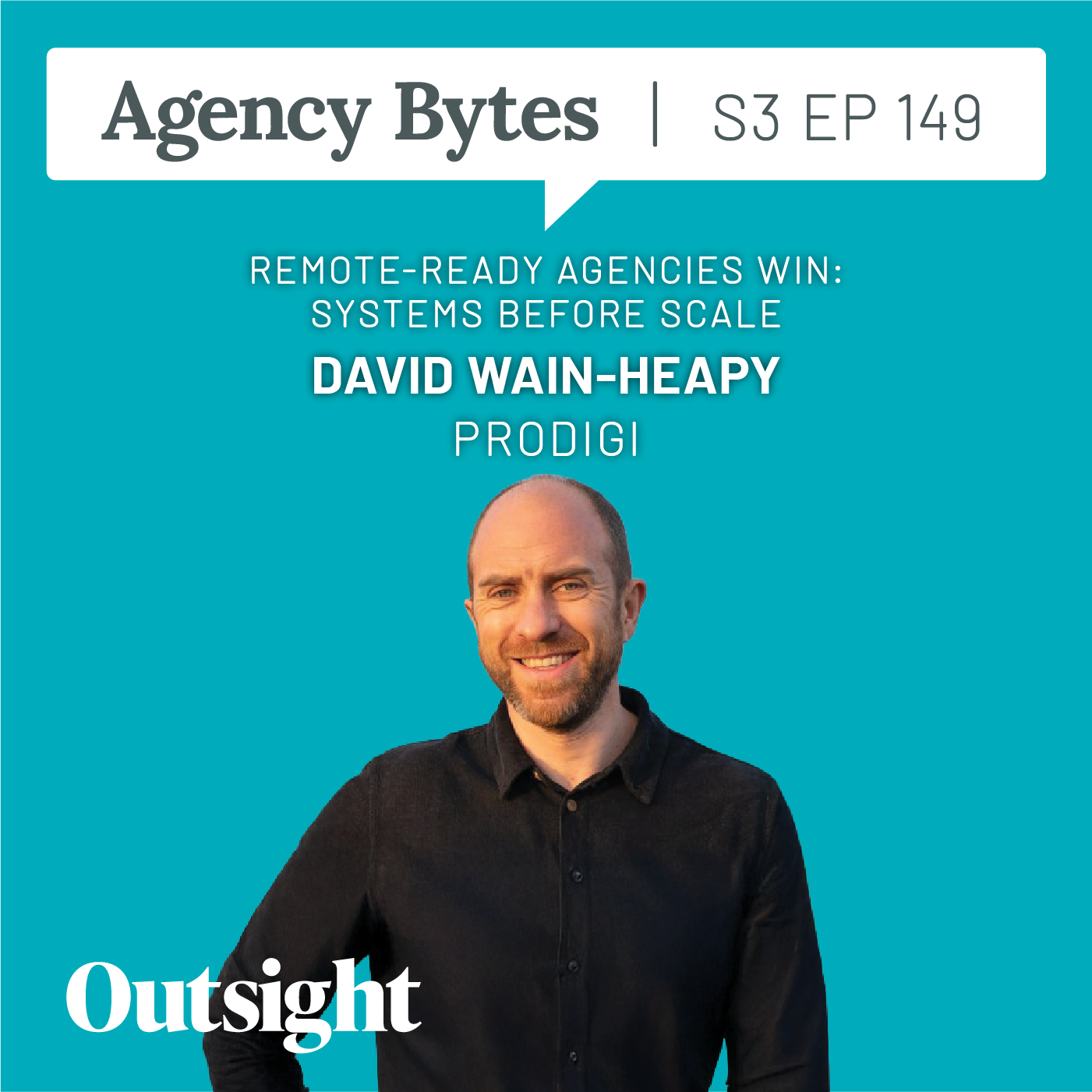
Ep 149 – David Wain-Heapy, Prodigi – Remote-Ready Agencies Win: Systems Before Scale
In episode 149, I sit down with David Wain-Heapy, founder of Prodigy, a company that helps agencies and digital businesses build flexible, scalable remote teams through global talent sourcing.
David spent 14 years building and running a Magento-focused e-commerce agency out of central London before selling it to Brave Bison PLC. We talk through what that exit process actually looked like, why the right acquirer matters as much as the right offer, and how building systems independent of the founders made the transition possible.
From there, we get into the real substance of what David does now: helping agencies shift from an outsourcing mindset to an offshore hiring mindset. There's a difference, and it matters. Agency owners will come away with a clearer framework for when and how to integrate global talent, how to think about time zones, which roles translate well offshore, and what AI is actually doing — and not yet doing — to development teams in agencies right now.
Key Bytes
• Outsourcing and offshore hiring are not the same thing — one is a handoff, the other is a hire.
• The fix for a failed first attempt wasn't better talent, it was better integration — sprints, tools, and cadence.
• Building a business that runs independently of you isn't just good leadership, it's what makes you acquirable.
• The right acquirer matters as much as the right offer — alignment on team and culture is what made a six-month handoff possible.
• East Coast agencies fit well with Eastern European talent; West Coast agencies are better served by South and Central America.
• AI handles contained tasks well, but it still can't hold the context of an enterprise-scale project.
• The people who will thrive in an AI-augmented world are the ones who bring real creativity — the architects and problem-solvers, not just the executors.
Chapters
00:00 Why this conversation matters for agency owners right now
01:45 David's 14-year agency journey and building in a competitive London market
05:10 The first attempt at offshore talent and why it failed
08:30 Selling to Brave Bison: what the exit process actually looked like
13:15 Choosing the right acquirer and making a clean handoff
17:00 Outsourcing vs. offshore hiring: why the mindset shift changes everything
21:30 How to think about time zones when sourcing global talent
24:45 What systems agencies need before hiring offshore
28:00 Where AI is actually helping agency dev teams right now
33:20 Which roles work well offshore and which don't
37:50 Rapid fire: surfing in Bristol, letting go of control, and a risky bet that paid off
David Wain-Heapy is an experienced founder currently focused on building remote teams for digital businesses with Prodigi.
Having sold my digital agency to Brave Bison PLC, I am now working to provide a flexible and scalable solution that enables companies to take control of hiring by looking at a global talent pool.
I have many years experience building globally distributed teams of digital professionals and leading them to help great businesses win in the race for attention and accelerate their digital growth.
Contact David:
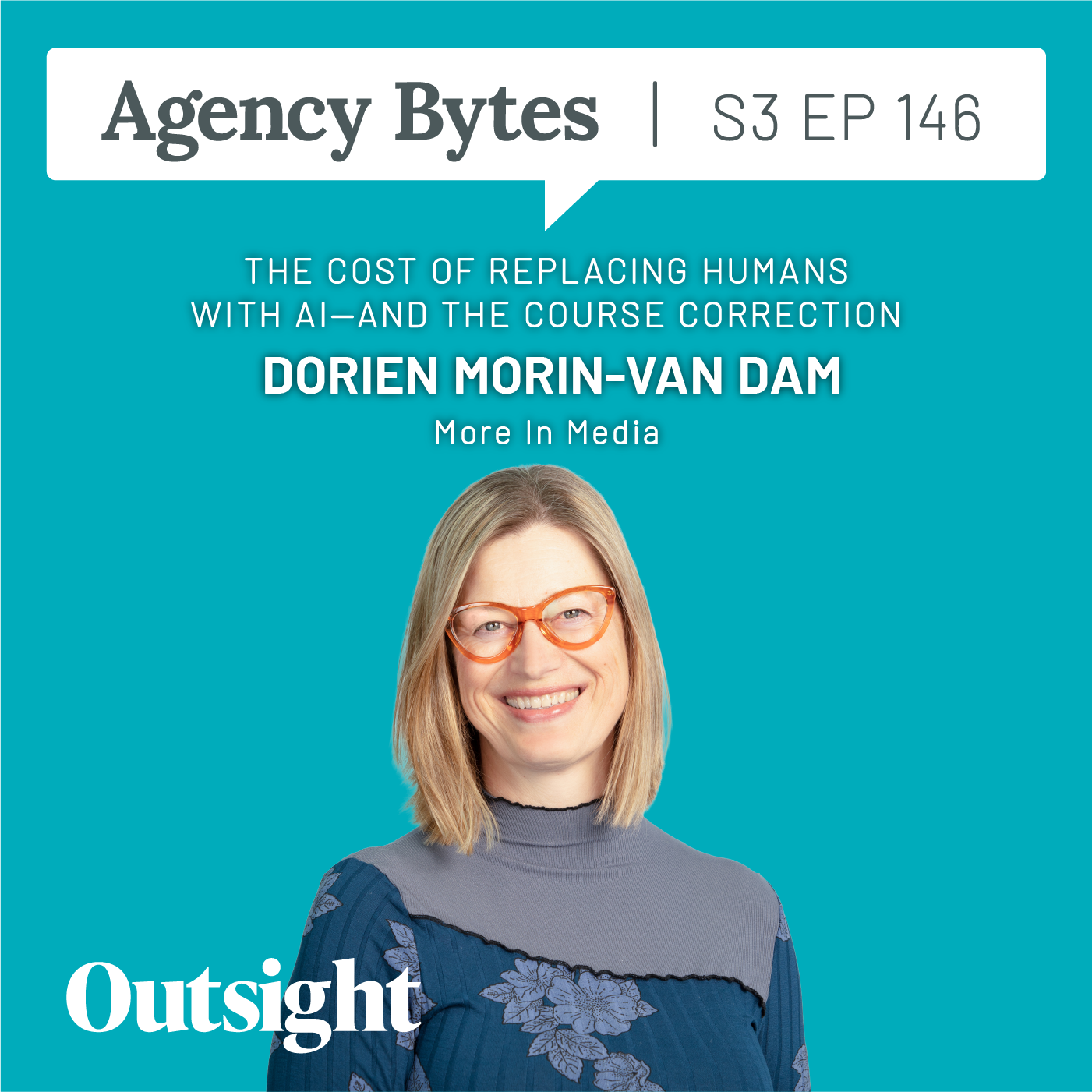
Ep 146 – Dorien Morin-van Dam, More In Media – The Cost of Replacing Humans With AI—and the Course Correction
In episode 146, I’m joined by Doreen Morin-van Dam, a content strategist with more than 15 years of experience helping brands grow through smart, sustainable marketing. Doreen works with teams on how to use AI responsibly and effectively, hosts the Strategy Talks video podcast, and is known for blending emerging tech with deeply human content strategies.
We dig into what really happened when companies rushed to replace humans with AI in 2025—and why many of them quietly reversed course by Q4. Doreen shares what she’s seeing brands regret most, how “AI slop” became a real problem, and why human-led content is becoming a competitive advantage again. We also explore how agencies can use AI as a strategic partner (not a shortcut), why long-form content matters more than ever, and how organic and paid media must work together. This is a grounded, practical conversation for agency owners trying to navigate AI without losing trust, quality, or their voice.
Key Bytes
• Why replacing humans with AI backfired for many brands in 2025
• How AI slop diluted trust, performance, and differentiation
• Why humans must remain the source of truth in content strategy
• How to use AI to analyze, enhance, and scale—not replace—expertise
• Why long-form, opinionated content performs better with LLMs
• How organic social still drives testing, trust, and paid performance
• Why being different beats being “better” in crowded markets
• How agencies should rethink in-house marketing investment
Chapters
00:00 Why 2025 became the “AI correction year”
02:30 What brands got wrong when they replaced people with AI
05:45 Why agencies must treat themselves as their best client
08:55 AI avatars, ethical concerns, and consumer trust
11:30 From AI slop to human-led strategy
15:05 Humans as the source of truth in content
19:45 Why long-form content matters for AI discovery
21:20 Organic social isn’t dead—it’s misunderstood
26:25 Organic + paid: why they must work together
28:00 Rapid-fire questions and practical takeaways
Dorien Morin-van Dam is a Vermont-based content strategist with over 15 years of experience helping brands grow through smart, sustainable strategies. A Certified Social Media Manager and Agile Marketer, she also consults on AI strategy for small businesses, showing teams how to use AI in marketing responsibly and effectively. Dorien turns organic content and emerging tech into measurable results, speaks internationally, and hosts the Strategy Talks video podcast. You’ll recognize her on stage and online by her signature orange glasses, a nod to her Dutch heritage.
https://www.linkedin.com/in/moreinmedia/
https://www.youtube.com/@DorienMorinVanDam/podcasts
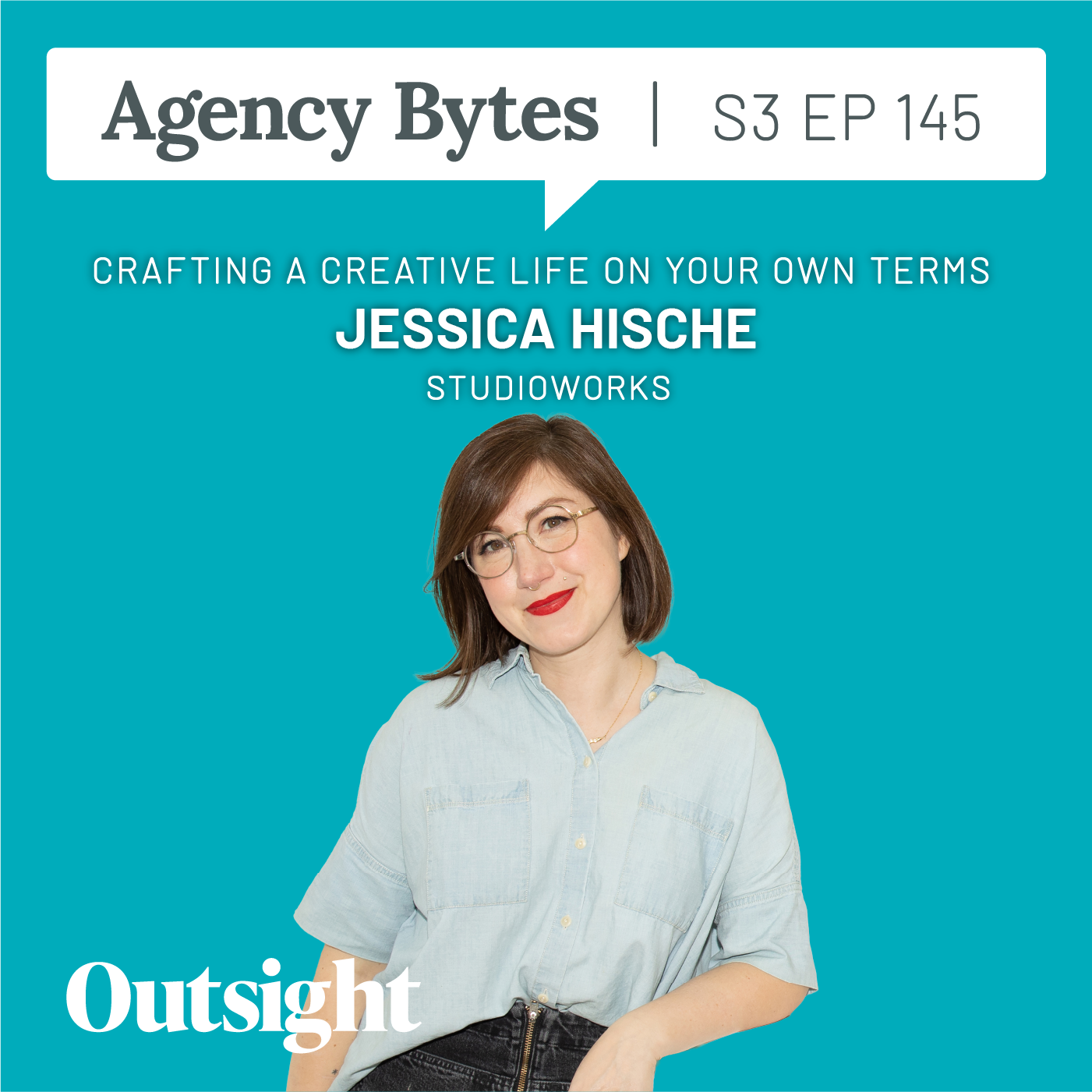
Ep 145 – Jessica Hische, Studioworks – Crafting a Creative Life on Your Own Terms
In episode 145, I sit down with Jessica Hische—a world-renowned lettering artist, New York Times bestselling author, and one of the most thoughtful creative voices of our generation. And full transparency: I’ve been a huge fan of Jessica’s work for a long time. Her ability to pair obsessive craft with clarity, intention, and humanity has influenced how I think about creative work for years.
This conversation goes far beyond tactics or tools. We dig into what it really means to answer a creative calling—and then protect it. Jessica shares how she’s built a career that honors her instincts, values her time, and stays deeply connected to her craft, without burning out or selling out. We talk about the choices she’s made to stay true to her creative voice, even when external pressure—clients, platforms, trends, or scale—could easily pull things off course.
We also explore the less romantic but absolutely essential side of creative freedom: boundaries, systems, pricing, and self-advocacy. Jessica opens up about how she’s learned to put structure around her work not as a constraint, but as a way to preserve joy, sustainability, and long-term creative integrity. Whether it’s choosing the right projects, saying no without guilt, or building tools that support creatives instead of exploiting them, her through-line is clear: creativity thrives when it’s respected.
For agency owners and creative leaders, this episode is a powerful reminder that building a business—or a career—on your own terms isn’t about sacrificing ambition. It’s about defining success for yourself, staying grounded in your craft, and making intentional choices that allow your work, and your life, to evolve together.
This one felt special to record—and I think it’ll resonate deeply with anyone trying to build something meaningful, creatively and personally.
Key Bytes
• Why answering a creative calling is an ongoing commitment, not a one-time decision
• How staying true to your craft doesn’t require self-sacrifice
• The role boundaries and structure play in long-term creative freedom
• Why defining success for yourself is the real creative advantage
• How creatives can grow without burning out or losing their voice
Chapters
00:00 Following a creative calling
06:40 Staying true to your craft over time
14:10 Defining success on your own terms
22:35 Boundaries, pricing, and protecting creative energy
31:20 Structure as a support, not a constraint
40:05 Evolving creatively without losing yourself
48:30 Advice for creatives building sustainable careers
Jessica Hische is a lettering artist and New York Times Best-selling author based in Oakland, California. She specializes in typographical work for logos, film, books, and other commercial applications. Her clients include Wes Anderson, The United States Postal Service, Target, Hallmark, and Penguin Books and her work has been featured again and again in design and illustration annuals both in the US and internationally. She’s been named a Print Magazine New Visual Artist (20 under 30), one of Forbes 30 under 30 in Art and Design, an ADC Young Gun, a “Person to Watch” by GD USA, and an Adweek “Creative 100”. She's also the co-founder of Studioworks, invoicing software for creatives by creatives.
@jessicahische (threads and instagram)
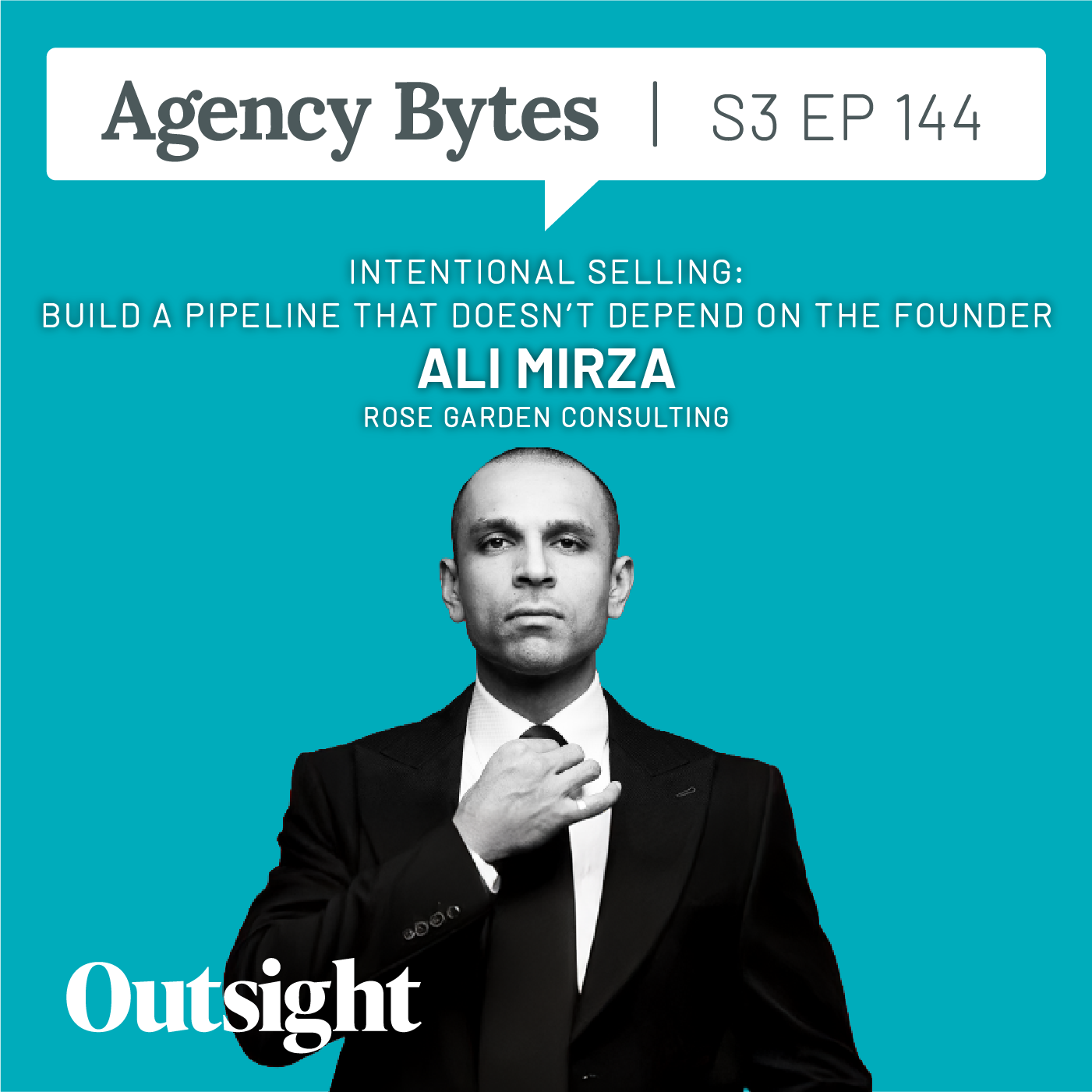
Ep 144 – Ali Mirza, Rose Garden Consulting – Intentional Selling: Build a Pipeline That Doesn’t Depend on the Founder
In episode 144, I’m joined by Ali Mirza, a sales expert who’s personally closed over $450 million in revenue and advised hundreds of high-growth companies, including multiple Inc. 500 winners and successful exits.
Ali and I dig into what’s really broken in agency sales today — from why “more leads” isn’t the answer, to how founders unintentionally sabotage deals, to the mindset shifts required to close larger, more confident engagements. This conversation is especially relevant for agency owners who are great at delivery but feel stuck, uncomfortable, or inconsistent when it comes to selling.
We talk candidly about sales systems vs. sales personalities, the danger of winging it, and how agencies can move from reactive selling to intentional, scalable growth without becoming someone they’re not.
Key Bytes
• Why “just getting more leads” rarely fixes agency sales problems
• The hidden mindset traps that keep agency owners underpricing
• How confidence (not pressure) actually drives better close rates
• The difference between selling expertise vs. selling outcomes
• Why inconsistent sales processes hurt valuation and scalability
Chapters
00:00 Why agency sales feels harder than it should
04:32 The biggest sales myths agency owners believe
09:15 Why confidence matters more than scripts
14:40 Selling outcomes vs. selling services
20:05 How founders accidentally sabotage deals
26:18 Pricing fear and the psychology behind it
32:10 Building a repeatable sales process
38:45 What great agency sales leadership really looks like
44:20 Final advice for agency owners who hate selling
Ali Mirza is a sales expert who has personally closed over $450 million in sales with multiple Inc. 500 companies and high-growth startups.
His work has been featured in Inc., Forbes, Huffington Post, Business Insider, and more. He has consulted for hundreds of companies, with 17 earning the Inc. 500 Fastest Growing Companies award and three successfully acquired. He is president of Atlanta-based consulting firm, Rose Garden.
Connect with Ali:
IG: @alimirza.rgc
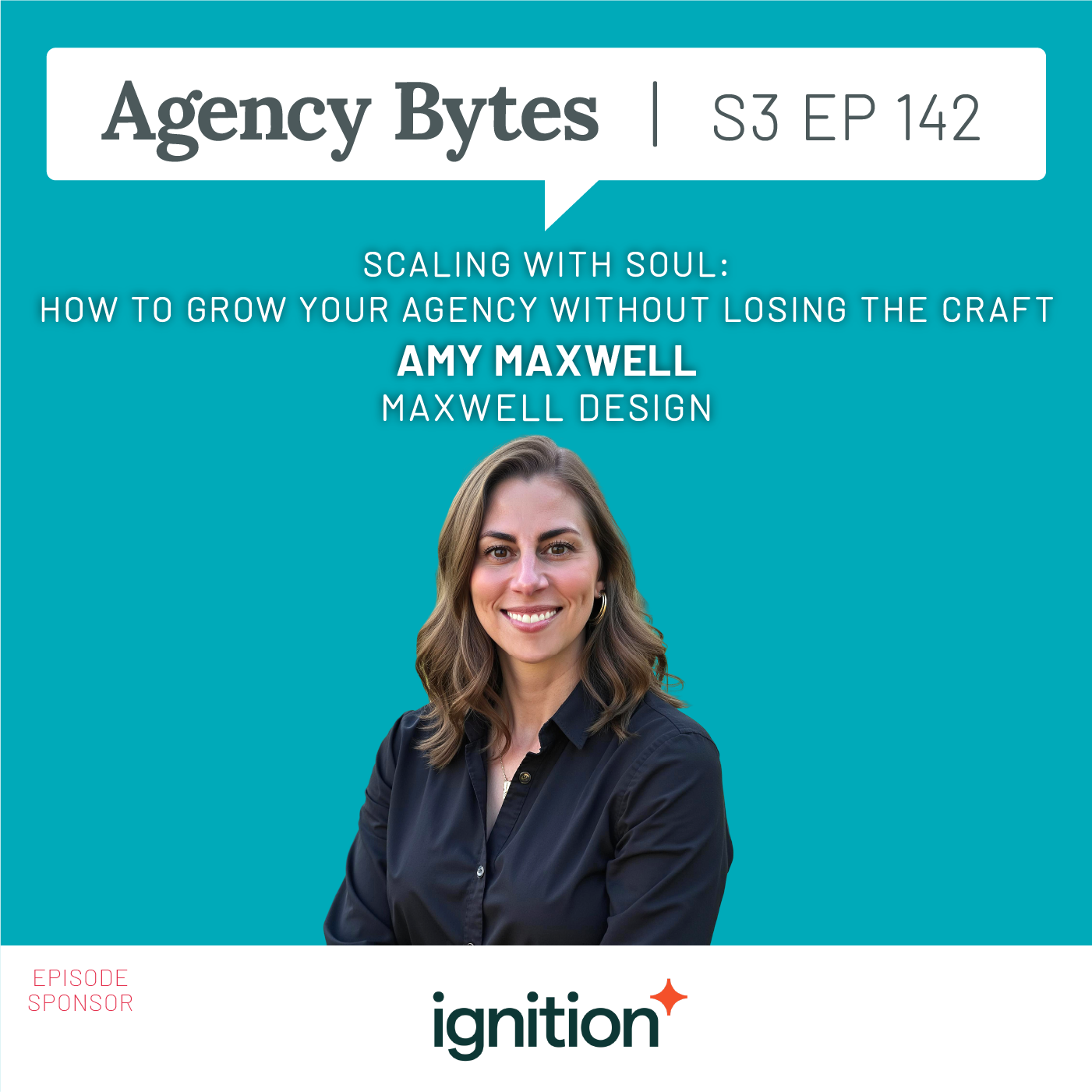
Ep 142 – Amy Maxwell, Maxwell Design – Scaling With Soul: How to Grow Your Agency Without Losing the Craft
THIS EPISODE IS SPONSORED BY IGNITION. START YOUR FREE 14 DAY TRIAL ignitionapp.info/agencybytes-trial Use Code OUTSIGHT25 to save 50% off!
In episode 142, I sit down with Amy Maxwell, founder and creative director of Maxwell Design, to talk about the real tension small creative shops face: how do you grow without sacrificing the craft that made you successful in the first place?
We dig into what it looks like to evolve from “hands-on designer” to “agency leader,” how to protect quality as you add capacity, and how to make smart choices about clients, process, and scope so growth doesn’t turn into chaos. If you want to scale with intention (and still love the work), this one’s for you.
Key Bytes
• Scaling doesn’t have to mean sacrificing creative quality
• Your process is what protects the craft as you grow
• “Better clients” often solves what “more clients” can’t
• You can stay hands-on without being the bottleneck
• The right constraints create consistency, not limitation
• Hiring should reduce friction, not add management drag
• Clear scope and boundaries prevent quiet burnout
Chapters
00:00 Intro: scaling without losing the craft
02:10 Amy’s origin story and building Maxwell Design
06:20 The “stay small” choice and what it protects
11:05 When growth starts to strain quality (warning signs)
16:10 Processes that keep creative standards high
22:30 Team structure: support roles vs creative roles
28:40 Client fit, boundaries, and saying “no” earlier
34:15 Staying fulfilled while the business grows
40:20 Rapid-fire questions and wrap-up
Amy—Creative Director + Founder of Maxwell Design—has spent the last two decades helping businesses look their best. She’s an award-winning designer with a knack for reading minds and creating delightful visual experiences. Her solution-focused approach makes her someone you’ll want in any room. And her small (but mighty) team comes with some major design chops.
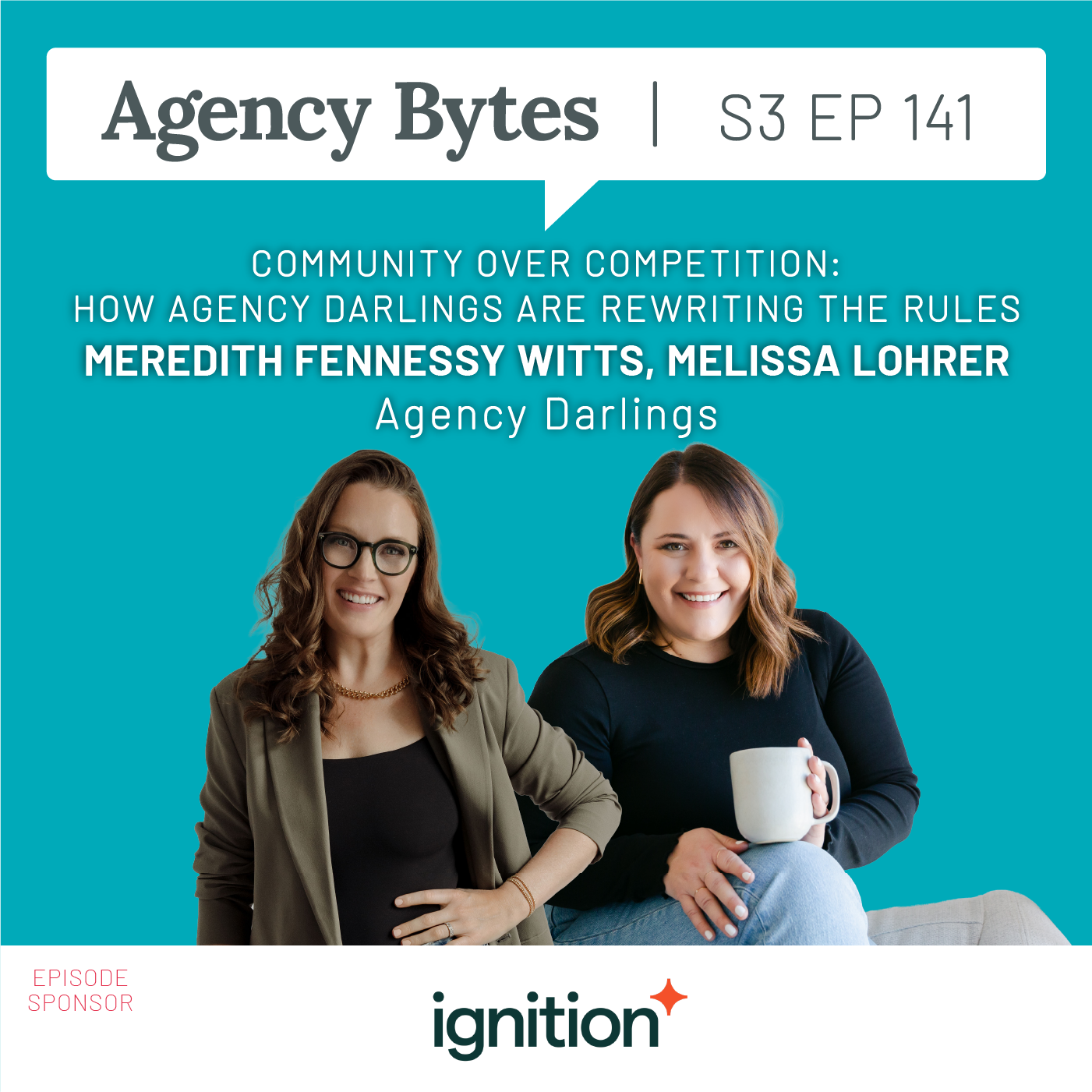
Ep 141 – Meredith Fennessy Witts + Melissa Lohrer, Agency Darlings – Community Over Competition: How Agency Darlings Are Rewriting the Rules
THIS EPISODE IS SPONSORED BY IGNITION. START YOUR FREE 14 DAY TRIAL ignitionapp.info/agencybytes-trial Use Code OUTSIGHT25 to save 50% off!
In episode 141, I sit down with Melissa and Meredith, the hosts of the Agency Darlings podcast and longtime agency operators, to unpack why so many agency owners feel burned out, stuck, or disillusioned by the traditional agency growth advice that’s been circulating for decades.
We talk candidly about the “bro playbook” — hustle culture, ego-driven leadership, top-down decision making, and growth at all costs — and why it often leads to unhealthy teams, poor margins, and miserable owners. Melissa and Meredith share what they’ve learned from years inside agencies about what actually drives sustainable growth: emotional intelligence, clear communication, strong operations, and leadership that prioritizes people alongside profit.
This episode is a refreshing, grounded look at agency leadership through a more human lens — one that challenges outdated norms and offers agency owners permission to build businesses that align with who they actually are.
Key Bytes
• Why the traditional agency “bro playbook” is failing modern agencies• The hidden cost of hustle culture on owners and teams• How emotional intelligence impacts agency growth and retention• What healthier leadership looks like inside agencies• Redefining success beyond revenue and headcount
Chapters
00:00 Why the traditional agency playbook feels broken05:12 The origins of hustle culture in agencies11:04 Masculine-driven leadership norms and their impact17:32 Emotional intelligence as a growth lever23:58 Building healthier agency cultures30:41 Operator-led leadership vs. ego-led leadership37:10 Sustainable growth without burnout43:26 Redefining success as an agency owner49:12 Advice for owners ready to do things differently
Each with over 15 years of experience in the agency space and deep-rooted connections within the industry, Melissa and Meredith bring actionable insights, expert advice, and candid conversations that challenge the conventional, masculine-driven approaches to agency growth.
Contact Meredith & Melissa:www.agencydarlings.comhttps://bit.ly/MWDarlingshttps://waverlyave.comhttps://instagram.com/waverlyave.cohttps://www.lecheile.co/contacthttps://www.instagram.com/lecheile.co/
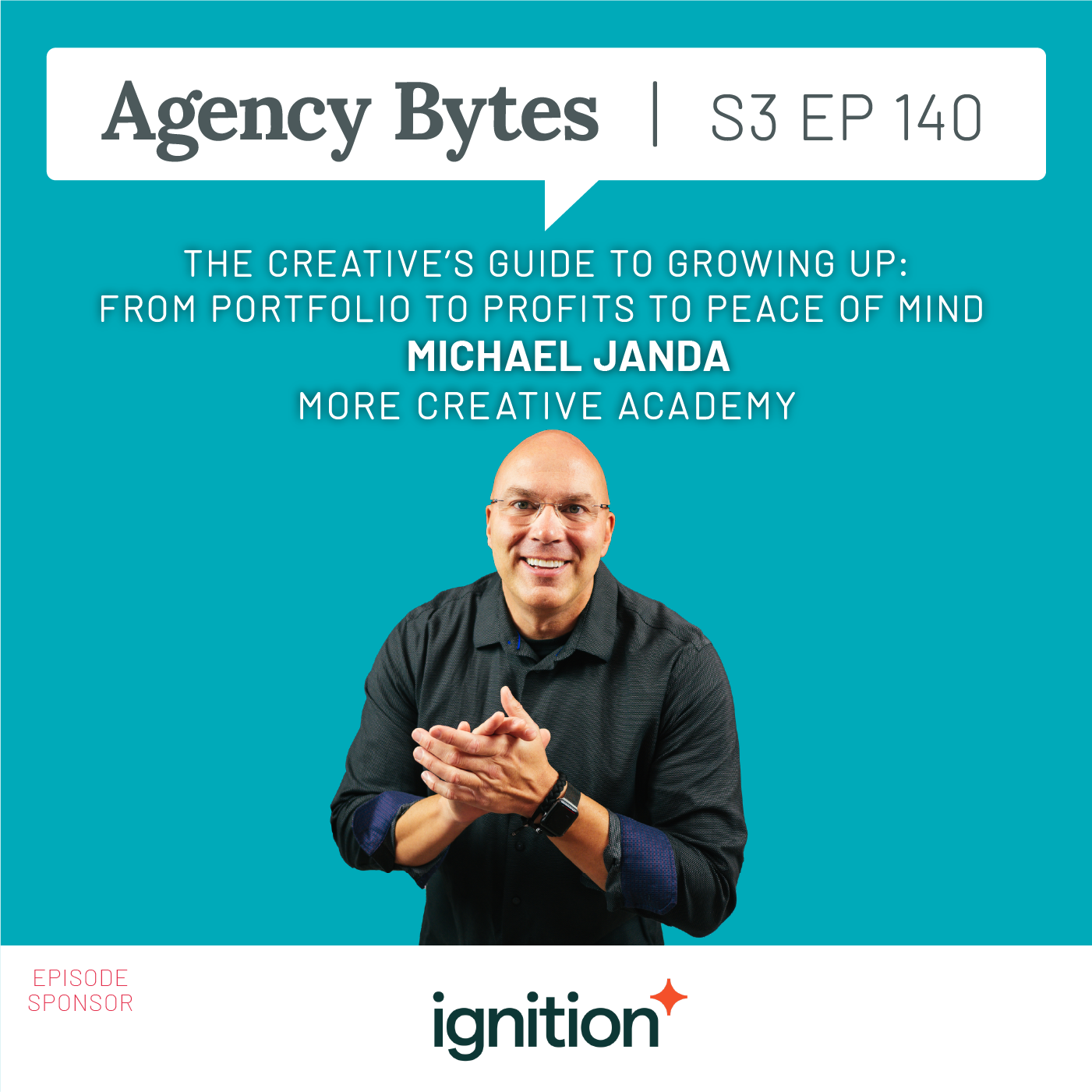
Ep 140 – Michael Janda, More Creative Academy – The Creative’s Guide to Growing Up: From Portfolio to Profits to Peace of Mind
THIS EPISODE IS SPONSORED BY IGNITION. START YOUR FREE 14 DAY TRIAL ignitionapp.info/agencybytes-trial Use Code OUTSIGHT25 to save 50% off!
In episode 140, I sit down with Michael Janda—agency founder, bestselling author, and one of the most respected voices helping creatives master the business side of creativity. Michael built and sold Riser, worked with giants like Disney and Google, and later led creative teams at Fox before dedicating his career to teaching creatives how to price, position, and run their businesses without burning out.
We dig into the mental and operational “growing up” that every creative eventually faces: getting past portfolio thinking, charging confidently, understanding value, eliminating chaos, and building a more peaceful (and profitable) creative life. Michael’s straight-talk wisdom hits every agency owner exactly where they need it—no fluff, no ego, just clarity.
Key Bytes
• Why creatives struggle with pricing — and how to fix it
• The mindset shift from freelancer to business owner
• How Michael positioned his agency to win massive clients
• The surprising relationship between process, profit, and peace
• What creatives get wrong about value
• Why “portfolio thinking” holds owners back
• How to build a business that supports your life, not the other way around
Chapters
00:01 Welcome + Michael’s background and agency journey
04:12 From creative chaos to building processes that scale
09:45 Why pricing is emotional—and how to make it objective
14:30 Portfolio vs. business owner mindset
19:58 Finding ideal clients and positioning that works
25:21 How Michael sold his agency and what he learned
31:44 The psychology of creative profitability
38:10 Achieving peace of mind as an owner
44:22 Michael’s advice for creatives who feel “stuck”
Michael Janda is an award-winning creative director, agency founder, and bestselling author.
He built the creative agency Riser with clients like Disney, Google, Warner Bros., and ABC, then sold the business after 13 successful years. Before that, he served as a creative director at Fox. Michael
is the author of Burn Your Portfolio and The Psychology of Graphic Design Pricing. Today, he shares practical, no-fluff strategies to help creative professionals master business, pricing, and growth.
Community: https://morecreativeacademy.com
Instagram: https://instagram.com/morejanda
YouTube: https://youtube.com/morejanda
LinkedIn: https://linkedin.com/in/morejanda
Website: https://michaeljanda.com
Courses: https://morejanda.teachable.com

Ep 132 – Leah Leaves, Alderaan Operations Solutions – Break the Bottleneck: How Operators Reduce Burnout and Unlock Scale
In episode 132, I talk with Leah Leaves, founder of Alderaan Operations Solutions, where she helps remote digital agencies grow without the grind. Known for her no-fluff, systems-first approach, Leah and her team embed expert operations managers directly into agencies to break bottlenecks, reduce burnout, and build businesses that can scale without the founder in every decision.
We dig into what causes owners to become the bottleneck, the difference between goals, systems, and team accountability, and how every agency—no matter the size—can start building a foundation that prevents burnout and supports growth. Leah also shares how to identify when it’s time to bring in an operator, how to delegate effectively, and why even the best creative agencies need structure to thrive. We wrap by exploring how AI fits into internal operations and why every agency needs an AI Ops roadmap, even if it’s just six months ahead.
Key Bytes
• Burnout often begins with unclear goals and missing systems; clarity is the antidote.
• Leah outlines four agency owner archetypes—the Trusting Optimist, Firefighting Founder, Reluctant Gatekeeper, and Visionary Leader—and how operators help each evolve.
• Delegation isn’t dumping tasks; it’s empowering your team with context and ownership.
• Documenting the “why” behind your systems drives consistency and accountability.
• Operators create the scaffolding for scale—allowing founders to focus on vision, not firefighting.
• Every agency, regardless of size, benefits from an AI Ops roadmap to guide internal efficiency.
• Start with what you already have—processes, checklists, or recurring workflows—and build from there.
• Systems don’t kill creativity; they protect it by removing chaos and decision fatigue.
Chapters
00:00 Intro and welcome with guest Leah Leaves, founder of Alderaan Operations Solutions
02:00 The Star Wars origin of “Alderaan” and Leah’s path from journalism to operations
05:30 From creative to systems thinker: finding flow in operations
08:00 How unclear goals and missing systems cause bottlenecks
10:00 Guardrails vs. micromanagement: empowering the team without overengineering
13:00 The burnout cycle and why delegation is a creative act
15:00 The four types of agency owners and their operational challenges
20:00 Shifting from bottleneck to visionary: the operator’s role in scaling
23:30 Why every agency needs an AI ops roadmap
26:30 Putting “robots” in the org chart and making automation work
29:00 Low-hanging AI wins: onboarding, recruiting, and workflow automation
32:00 Rapid-fire Q&A: distilling systems, theme songs, and unexpected client wins
34:45 Closing thoughts and where to find Leah
Leah Leaves is the Founder of Alderaan Operations Solutions, where she helps remote digital marketing agencies grow without the grind. Known for her no-fluff, systems-first approach, she and her team embed expert Operations Managers directly into agencies to break bottlenecks, reduce burnout, and build businesses that can scale without the founder in every decision.
https://www.linkedin.com/in/1eah1eaves/
https://alderaanenterprise.com/
http://agencyownerquiz.com/
THIS EPISODE IS SPONSORED BY IGNITION. START YOUR FREE 14 DAY TRIAL ignitionapp.info/agencybytes-trial Use Code OUTSIGH25 to save 50% off!

Ep 130 – Peter Lang, Digital Agency Business – Buy, Don’t Build! Using M&A to Scale Your Agency
In episode 130, I sit down with Peter Lang—co-founder of Digital Agency Business and AVA, and longtime agency acquirer—to unpack how agency owners can use M&A as a growth superpower. Peter shares the seven-day deal that doubled his agency’s revenue, the due-diligence signals that actually matter (talent, client stickiness, and contracts), why most M&A fails on culture not math, and how AI is reshaping hiring and service models. We also get into founder identity after the sale, what “professional maturity” looks like, and why many owners are really capital allocators in the making.
Key Bytes
• M&A can compress years of organic growth into months—if you underwrite people, clients, and terms before the numbers.
• Culture fit and integration planning beat fancy spreadsheets; most failed deals are value misalignment, not valuation.
• AI is wiping out entry-level tasks first; the winners redeploy A-players and teach clients how to use AI, not hide from it.
• Founder-led sales can’t be the only engine; build repeatable sales capacity that survives distractions.
• You already “work for” whoever pays you—selling changes the customer, not your agency DNA.
• Treat time like capital: budget it, forecast it, and review it like an effective executive.
Chapters
00:00 Cold open, quick re-intro
01:08 The seven-day deal that doubled revenue
03:32 Doing three deals in 90 days during COVID
06:36 Common seller misconceptions and Peter’s deal lens
09:19 Endurance mindset, calendars, and operating like an athlete
13:46 What buyers actually look for beyond the numbers
17:43 AI’s impact on talent, delivery, and survival to 2027
22:10 Life after the sale and “professional maturity”
24:51 Rapid fire: celebrating wins, the race that changed him, dream acquisition
27:45 Where to learn more (digitalagencybusiness.com)
Resources mentioned
• Effective Executive by Peter Drucker (time tracking and retrospective)
• GrowthHackers community (context on Peter’s portfolio)
• digitalagencybusiness.com (Peter’s M&A training and upcoming book)
Peter Lang is an entrepreneur, investor, and philanthropist with over 15 years of experience building, buying, and selling companies across online publishing, media, advertising, e-commerce, and consulting. He’s the co-founder and Chief M&A Officer at AVA, a fast-growing digital agency holding company acquiring businesses in the $1–10 million range.
Peter also runs Digital Agency Business (DAB), an e-learning company that trains entrepreneurs to launch and scale their own agencies. A former CEO of Uhuru Network and advisor to multiple companies, Peter’s passion lies in using mergers and acquisitions to accelerate growth. An endurance athlete and family man, he lives by the belief that anything is achievable with hard work.
Contact Peter:

Ep 129 - Natasha Golinsky, On Purpose Projects – Mindset Matters: The Key to Entrepreneurial Success
In episode 129, I talk with Natasha Golinski, founder of On Purpose Projects, a custom web and e-commerce dev agency. Natasha is a three-time Canada Women of Influence nominee, a mom of three, and a breast cancer survivor—and she’s built her business around the belief that mindset is everything.
We dig into how she went from “accidental agency owner” to leading a zero-meeting, all-contractor team for over a decade, and why journaling, EFT (tapping), and surrounding yourself with the right people are critical to surviving the entrepreneurial rollercoaster. Natasha also shares how a cancer diagnosis forced her to hire ops support—and ultimately led to one of her agency’s biggest months ever.
This episode is a masterclass in grit, leadership, and the mental game of entrepreneurship.
Key Bytes
• Mindset is the job. Natasha starts most days with journaling and EFT to reset anxiety and focus.• Zero meetings, high loyalty. A culture of respect, gratitude, and no drama keeps her contractor team thriving.• Protect your people. Leadership means absorbing the stress and passing the praise.• Say no early. Guardrails in discovery protect the team from toxic clients.• Crisis as catalyst. Cancer forced Natasha to let go of ops—and it unlocked growth.• Community matters. No one is self-made—surround yourself with peers who lift you up.• Focus sharpens delivery. On Purpose Projects does dev only—like a food truck that just serves crepes.
Chapters
00:00 Welcome & Natasha’s background02:12 Accidental agency beginnings04:45 Mindset, marketing, and money: her founder lane07:30 Morning pages & EFT as daily reset tools11:05 Cancer diagnosis, hiring ops, and a breakthrough month15:20 Building loyalty in a zero-meeting contractor culture20:22 Client red flags & protecting your team23:50 Why no one is self-made: the role of community26:30 Rapid-fire fun: karaoke, first impressions, food truck metaphor28:55 Closing thoughts
Natasha Golinsky is the founder of an award-winning web development and ecommerce agency, a three-time nominee for the Canada Women of Influence® Award, and a tireless champion of female agency owners. Natasha’s also a mom of three and a breast cancer survivor who brings grit, heart, and a deep sense of purpose to everything she does. I’m thrilled to dig into her journey, her mission, and the lessons she’s learned along the way. Natasha, welcome to the show.
Award winning web development & ecommerce agency founder | Champion & connector of female agency owners | 3x nominee Canada Women of Influence® Award | Breast Cancer Butt-Kicker | Mom x 3

Ep 120 – Greg Bellinger, White Rabbit – What Happens When You Niche Hard and Go All In
In episode 120, I sit down with Greg Bellinger, co-founder and CEO of White Rabbit, a web and mobile development agency with nearly 100 in-house employees spread across Colombia, India, and the U.S. Greg shares his journey from frontend developer to visionary CEO and breaks down how White Rabbit scaled by staying focused on one niche—supporting other agencies.
We explore why White Rabbit only hires full-time employees, how niching into agency delivery gave them a competitive edge, and the strategic thinking behind launching their own internal project financial software. Greg also talks about his passion for creation, not just in code but in culture, leadership, and future products. This one’s full of takeaways for agency owners looking to scale with purpose.
Key Bytes
• Greg shares why they only hire full-time employees and the cultural benefits that come with it
• He explains how niching into working with agencies helped them scale more efficiently
• Greg reflects on stepping away from product management and letting his leadership team shine
• He talks about the challenges of managing across three countries and how they keep their culture unified
• Greg reveals details about their custom-built project management and financial tool
• He offers insight into people management, tough conversations, and protecting your energy
• He shares his personal philosophy of “create,” from coding to building culture
• Greg discusses what entrepreneurship means to him and how it’s been part of his DNA from the start
Chapters
00:00 Welcome and guest intro
01:00 The origin of White Rabbit and its full-time hiring philosophy
02:30 Transitioning out of coding and project management
06:00 Working exclusively with agencies vs. going direct
07:15 Niching and its impact on growth and clarity
10:00 Scaling globally: why Colombia, India, and the U.S.
12:00 Uniting culture across three countries
14:00 Vision for the future: stepping back, launching products
16:30 Building internal software for project and financial management
19:00 Lessons in people management and entrepreneurship
25:00 Rapid fire: guilty pleasures, two-word advice, and dream hire
Greg Bellinger is the Co-Founder and CEO of White Rabbit Group, a web and mobile development agency with a fully in-house team of nearly 100 employees across three countries. His passion for technology began in childhood, leading him to hand-code his first websites in 2008. In 2016, he co-founded White Rabbit Group, building it into a trusted development partner for world-class agencies and creatives. Under his leadership, the company has earned a reputation for delivering high-quality digital solutions while fostering a close culture of technical experts.
Contact Greg:

Ep 119 – Jessica Malnik – Building Your B2B Content Moat
In episode 119, I sit down with Jessica Malnik, a B2B messaging strategist who’s helped over 75 founders and lean marketing teams craft content that actually gets read—and drives results. We talk about the risks of over-commoditized content in the age of AI and why a flood of “cheap” output isn’t a strategy. Jessica walks me through her signature framework, the Marketing MOAT, which focuses on Messaging, Distribution, and Content Efficiency.
She also shares practical, low-lift ways agencies can build content machines, maximize existing assets, and stay consistent without burning out. We even talk about content imposter syndrome, the curse of knowledge, and why you don’t have to be totally unique—you just need to show up as yourself.
If you’ve ever struggled with creating content that converts (and keeps converting), this episode is packed with clarity, systems, and smart takes that’ll help you raise your signal-to-noise ratio.
Key Bytes
• Messaging without a unique perspective leads to content that gets ignored
• AI-only content creation can dilute your brand and commoditize your services
• Her “Marketing MOAT” framework focuses on messaging, distribution, and content efficiency
• Distribution must be built into strategy from the beginning, not as an afterthought
• Agencies should reuse and repurpose evergreen content instead of always creating new
• Consistency (3x/week on LinkedIn) matters more than frequency spikes
• Authenticity in content doesn’t mean oversharing—it means resonance
• Set goals based on team size, budget, and business stage, then reverse engineer your strategy
Chapters
00:01 Welcome and intro to Jessica Malnik
01:46 Common agency messaging mistakes
03:26 Why AI-only content is risky for agencies
05:14 Jessica’s Marketing MOAT framework explained
07:21 How to develop “spiky” messaging and content positioning
10:34 Distribution strategy: where your audience actually is
14:04 Own your content—don’t rely only on social algorithms
15:09 Content efficiency and repurposing systems
19:00 Best practices for publishing frequency
21:16 Balancing personal and professional content
22:28 Reverse engineering content strategy based on goals
23:41 Rapid Fire Q&A with Jessica
Jessica Malnik has helped over 75 B2B founders and lean marketing teams fix their positioning and craft messaging people actually read and respond to.
I’ve spoken at half a dozen in-person conferences in the U.S., Australia, and Thailand, as well as dozens of virtual webinars, workshops, and podcast guest appearances.
I’ve also been featured in WSJ, The Next Web, MicroConf, Wynter, SXSW, and MSN UK, among many others.
Contact Jessica:

Ep 118 – Jamie Brindle – From Freelancer to Entrelancer: Building a Business That Scales
Ep 118 – Jamie Brindle – From Freelancer to Entrelancer: Building a Business That Scales
In episode 118, I’m joined by Jamie Brindle—a freelancer, strategist, and creator who’s built a half-million-strong audience around helping creative solopreneurs build sustainable, scalable freelance businesses. In this conversation, Jamie breaks down what it means to be an “Entrelancer”—a hybrid of entrepreneur and freelancer—and why the traditional view of freelancing is overdue for a reboot.
We talk about why having an audience builds instant trust, how freelancers can evolve into business owners without employees, and the myths around websites and portfolios that keep too many creatives stuck in planning mode instead of taking action. Jamie also shares a powerful framework for moving strangers into long-term client relationships—and why every freelancer should be thinking like a strategist, not just a task-taker.
Whether you’re freelancing, running an agency, or somewhere in between, this one’s packed with fresh thinking.
Key Bytes
• Jamie shares the origin of the term “Entrelancer”—and how it reflects a more modern, business-minded freelancer.
• He explains how their TikTok content (originally not for clients) unexpectedly opened doors to Fortune 100 opportunities.
• We dig into the importance of digital products, productized services, and building systems to support time freedom.
• Jamie outlines the four stages of the customer journey: Stranger → Lead → Client → Client for Life.
• He gives a masterclass in how to manufacture delight, over-deliver, and secure repeat work.
• We challenge the sacred cows of freelancer websites and portfolios—and why Jamie believes they’re massive time-wasters.
• Sales anxiety? Jamie offers a grounded, simple mindset shift that removes pressure and focuses on being helpful.
• He explains how positioning yourself as a solution—not a task-taker—is the unlock to charging more and building authority.
Chapters
00:00 Welcome and Intro to Jamie Brindle
01:00 The accidental power of TikTok and building trust
04:30 Redefining success as a freelancer
07:00 “Entrelancer” vs. freelancer: What’s the difference?
11:40 Scaling without employees: Productized and digital offers
13:00 Pivoting from video work to social media consulting
15:25 Lessons from shifting services and getting back in the field
19:30 Jamie’s four stages of the customer journey
24:00 Reframing sales: It’s just solving a problem
28:00 Positioning yourself as a strategic partner
34:00 Why portfolios and websites are the biggest time wasters
37:00 Final thoughts and closing
Jamie Brindle is a freelancer who gives advice to over half a million other creatives on social media about building a scalable and sustainable freelance business.
Contact Jamie:
@thejamiebrindle on all socials

Ep 117 – Wanda Allen, Follow Up Sales – Overcoming the Fear of Follow-Up
In episode 117, I sit down with Wanda Allen, international speaker, coach, and author of Follow Up Sales Strategies. With 25 years in the corporate world and a background in business banking, Wanda developed a systemized approach to sales follow-up that now helps business owners and sales professionals increase their close rates.
We dive into the psychology behind why so many people avoid follow-up, the fears that hold them back (hint: it’s not really about time), and how a simple shift in mindset and process can transform your sales pipeline. Wanda shares data-backed insights, actionable tips for improving follow-up cadence, and even debunks myths about being “pushy.” Whether you’re in active outreach or avoiding the phone like the plague, this episode will motivate you to reframe your follow-up game—and pick up the phone with purpose.
We also talk about her book-writing journey, the importance of believing in the value you bring, and a bucket-list dream that has her heading south of the border.
Key Bytes:
• 98% of sales don’t happen on the first contact—follow-up is essential.
• Fear of being “pushy” and fear of rejection are the top two mindset blocks around follow-up.
• 80% of sales happen between the 5th and 12th contact—most people quit after 2.
• Follow-up is a form of service, not pressure—it shows interest and professionalism.
• The phone is the most efficient tool in sales, yet it’s the most underused.
• You can’t build trust without consistent, committed follow-up.
• Stop assuming silence means disinterest—prospects are often just busy.
• Confidence in your pricing comes from believing in your value.
Chapters
00:01 – Introducing Wanda Allen and the importance of follow-up
01:04 – From corporate banking to follow-up systems expert
03:35 – Writing two books and why her first was retired
06:07 – The real reason people don’t follow up: mindset and fear
07:59 – How to prioritize follow-up and overcome procrastination
11:00 – Why consistent follow-up beats your competition
14:12 – Action over anxiety: staying out of your head during follow-up
16:18 – The forgotten power of the phone in today’s sales world
Wanda Allen is an international speaker, coach and corporate trainer. She's also the author of Follow Up Savvy and Follow Up Sales Strategies. Wanda had a 25 year corporate career where she held the position of Senior Vice President for 15 years. She has a strong skill set for developing systems and applied this skill to the follow up process. She's an expert in helping entrepreneurs, business owners and sales professionals increase pipelines, improve sales performance and strengthen relationships by developing strong follow up skills.
Contact Wanda:
https://www.followupsalesstrategies.com/

Ep 112 – Jay Owen, Business Builders – Slow Growth, Strong Culture
Ep 112 – Jay Owen, Business Builders – Slow Growth, Strong Culture
In episode 112 of Agency Bytes, I sit down with Jay Owen, founder of the multimillion-dollar agency Business Builders and the community Agency Builders. Jay started his web design business at just 17 and has spent the last 26 years growing it—intentionally and steadily—into a values-driven company focused on people over ego and sustainable growth over fast wins.
We dive into the long game of agency leadership, building a business that can thrive without you, and the fulfillment that comes from creating jobs that others love. Jay shares how his faith and values guide the way he leads, the role community has played in his journey, and why slow growth might just be the secret weapon nobody talks about. Whether you’re scaling your team, wrestling with niching, or thinking about legacy, this episode is full of wisdom for the road ahead.
Key Bytes
• Jay Owen started his entrepreneurial journey at a young age.
• Slow growth can lead to more sustainable success.
• Creating job opportunities for others is a key motivation.
• Community is essential for agency leaders.
• Collaboration over competition fosters growth.
• Integrating personal values into business is important.
• Niche down or maintain variety based on personal preference.
• Productization can enhance agency efficiency and profitability.
• Having a support system prevents burnout.
• Building a strong team is crucial for agency longevity.
Chapters
00:00 The Entrepreneurial Spirit Begins
02:37 Navigating the Hills and Valleys of Business
05:35 Building a Team and Creating Opportunities
08:54 The Importance of Community Over Competition
12:50 Creating a Supportive Environment
16:56 Integrating Personal Values into Business
20:56 Niche vs. Variety in Agency Growth
23:32 Productization and Agency Wisdom
Jay Owen started a web design company at 17 years old that has grown to a multi-million dollar agency and still growing 26 years later. He’s the author of Building a Business that Lasts and Host of a Podcast by the same name. Jay founded Agency Builders, a community to help agency leaders grow and scale in a healthy way.
https://agencybuildersretreat.com/
https://aiwithjay.com/