
Agency Bytes Podcast
Agency Bytes is a video podcast series that packs a ton of important agency information on one topic, from one expert into a 25-minute brief.
Why 25 minutes?
Because who has the attention span for much more these days, and you can squeeze in a listen between meetings with time for a bathroom break or coffee refill before your next meeting.
Easily find the episode you’re looking for with the Podcast Search feature - type in a guest name, topic, or episode number and voila!
Listen & subscribe on the platform of your choice
Subscribe for email delivery each week
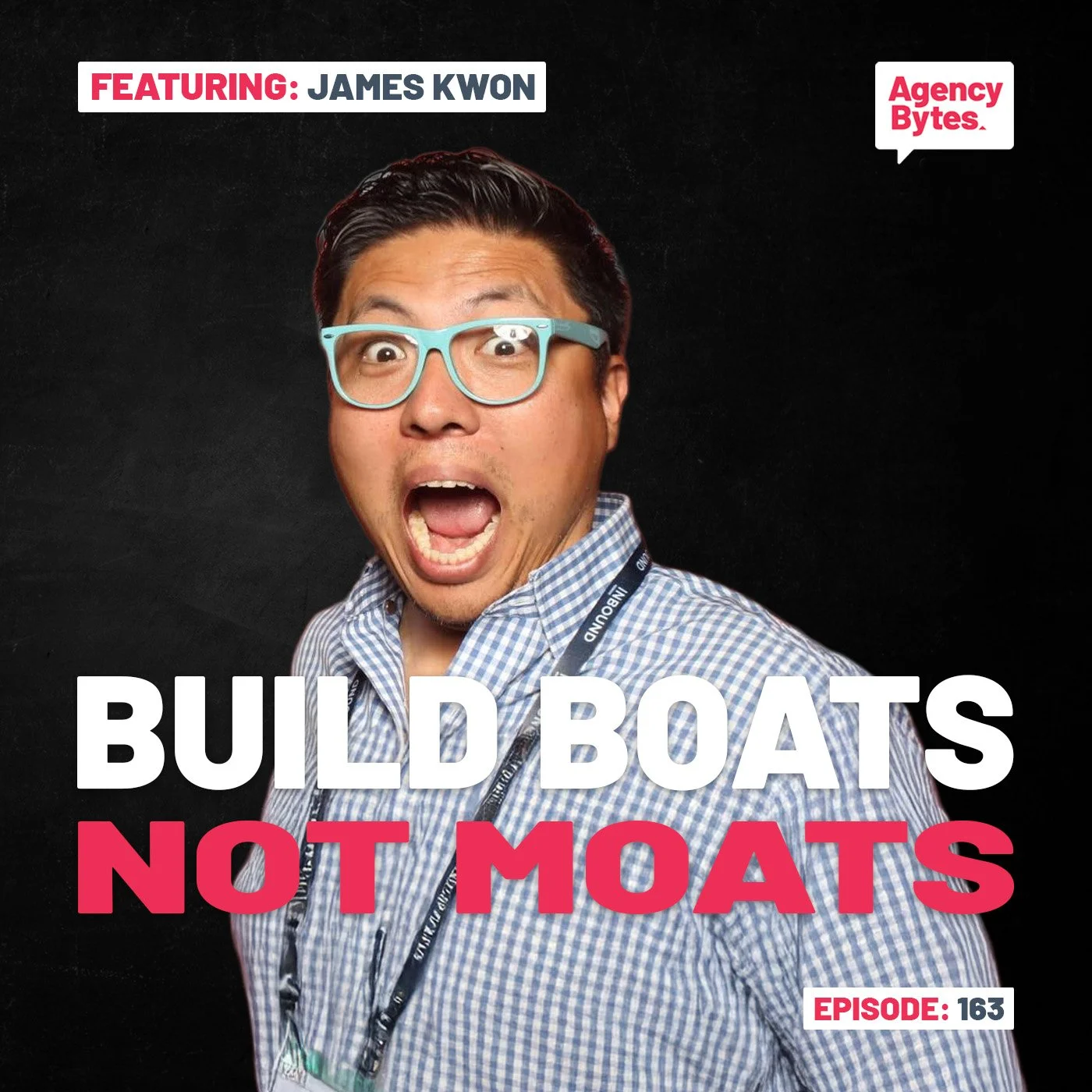
Ep 163 – James Kwon, Figmints – Boats, Not Moats - How AI Is Forcing Agencies to Build Products
James Kwon built Figmints into a fifteen-year, twenty-person agency by treating it as both a services shop and a product lab, and one of those internal products just sold for almost nine figures. In this episode, he opens up about the acquisition that shaped his approach to M&A, the AI-driven shift from moats to boats, and the day he had three hundred dollars left in the bank account. He also breaks down Slices, his own pay-for-performance model that turned a fifty-thousand-dollar hire into someone earning six figures. It's a conversation about building an agency that can grow, sell, or just work better for the people inside it.
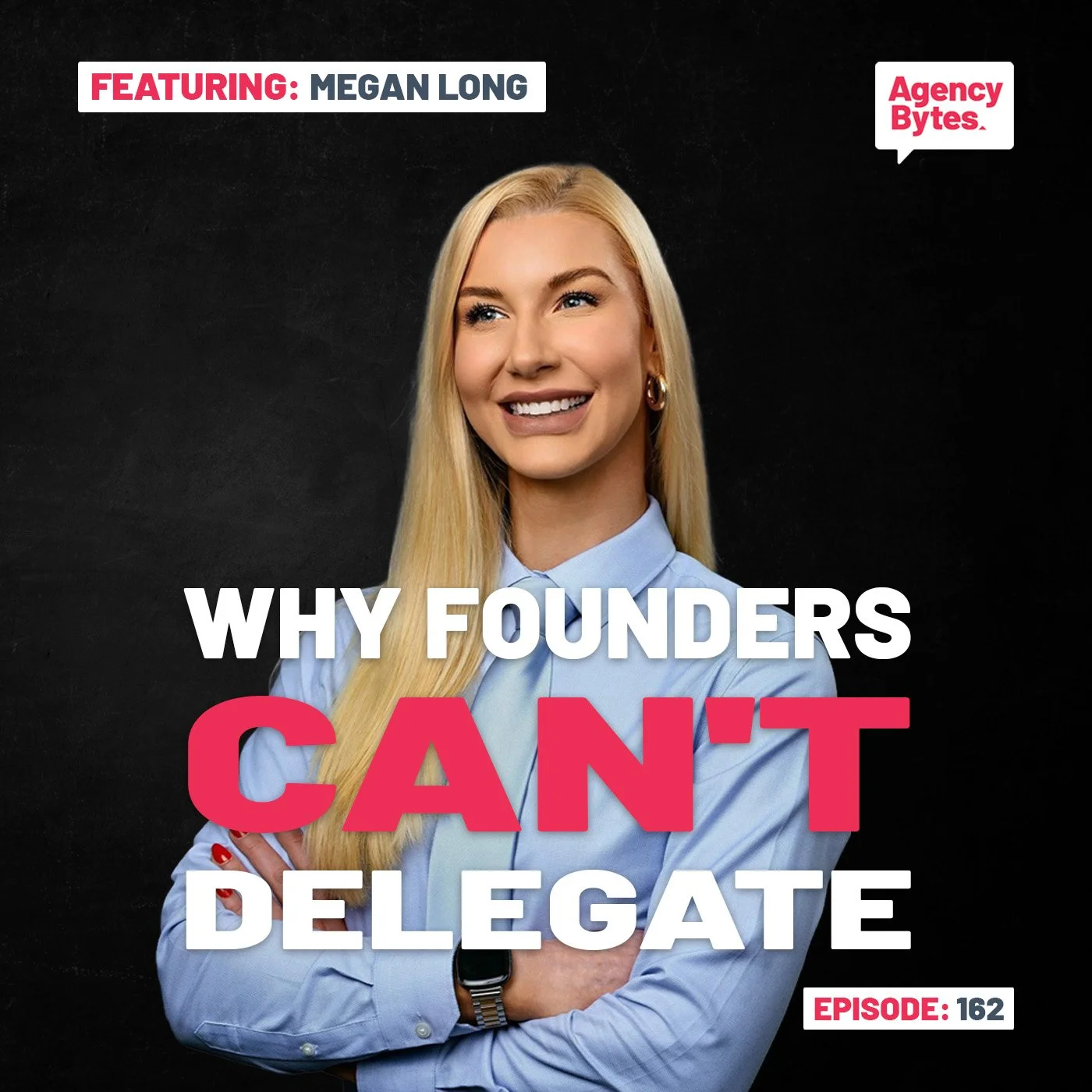
Ep 162 – Megan Long, Second First – What Agency Owners Get Wrong About Delegating to Their Right-Hand Leader
Every founder has a blind spot when it comes to delegation, and it usually shows up as the same bad habit: pulling things back onto their own plate the moment they let go. In this episode, Megan Long of Second First joins me to talk about the role most agencies get wrong from day one, the second-in-command. We dig into why the "sexy resume" hire almost always fails, why the best partnerships look more like a shared Venn diagram than a pair of opposites, and what it actually takes for a founder to leave for a month and come back to a business that grew without them.
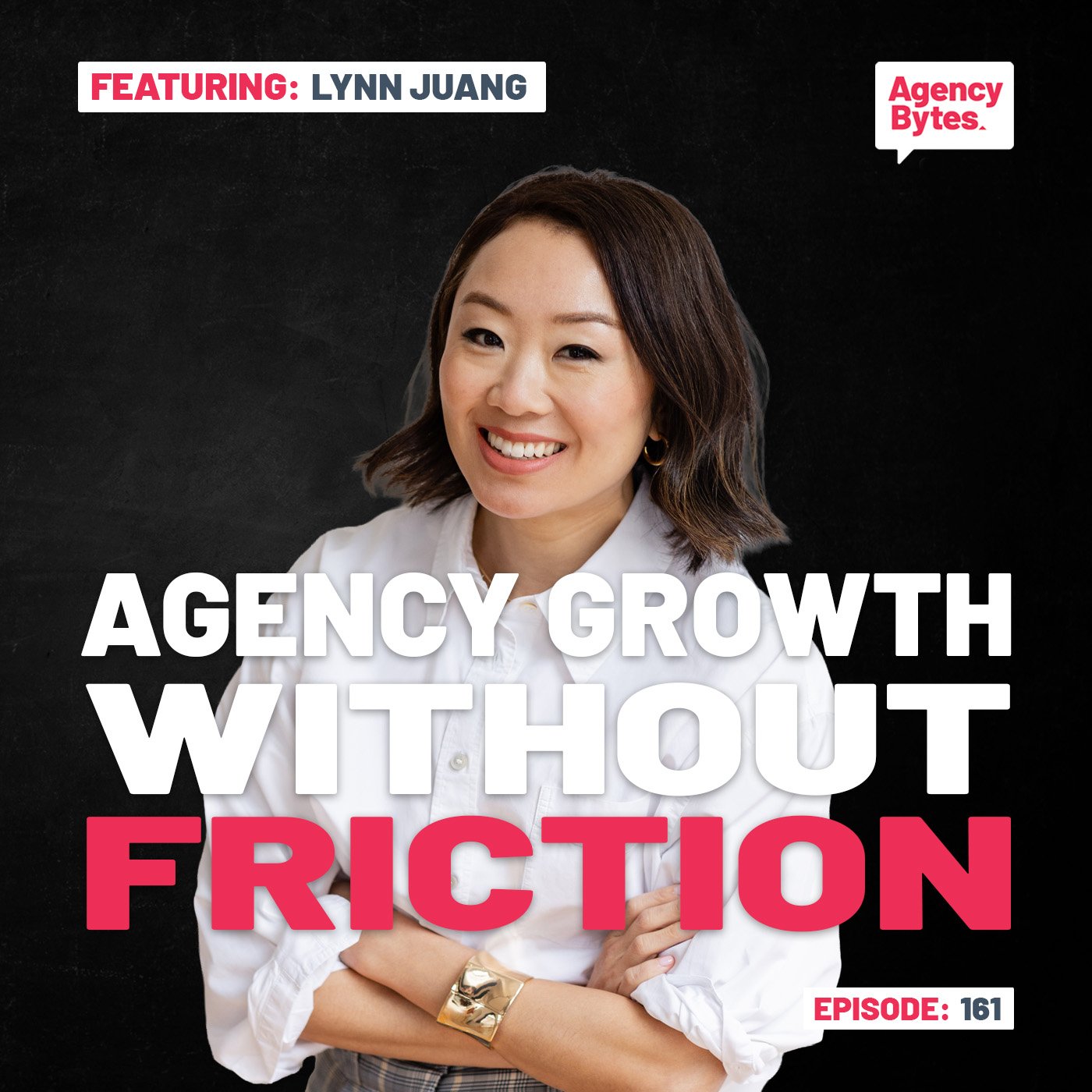
Ep 161 – Lynn Juang, Frameworks Consulting – Agency Growth Without the Friction
Lynn Juang spent two decades climbing from client services to COO before deciding she'd rather help founders run their agencies than run one herself. In episode 161, she breaks down why agency growth doesn't have to come with friction, and what actually separates a business that looks successful from a company built to last.
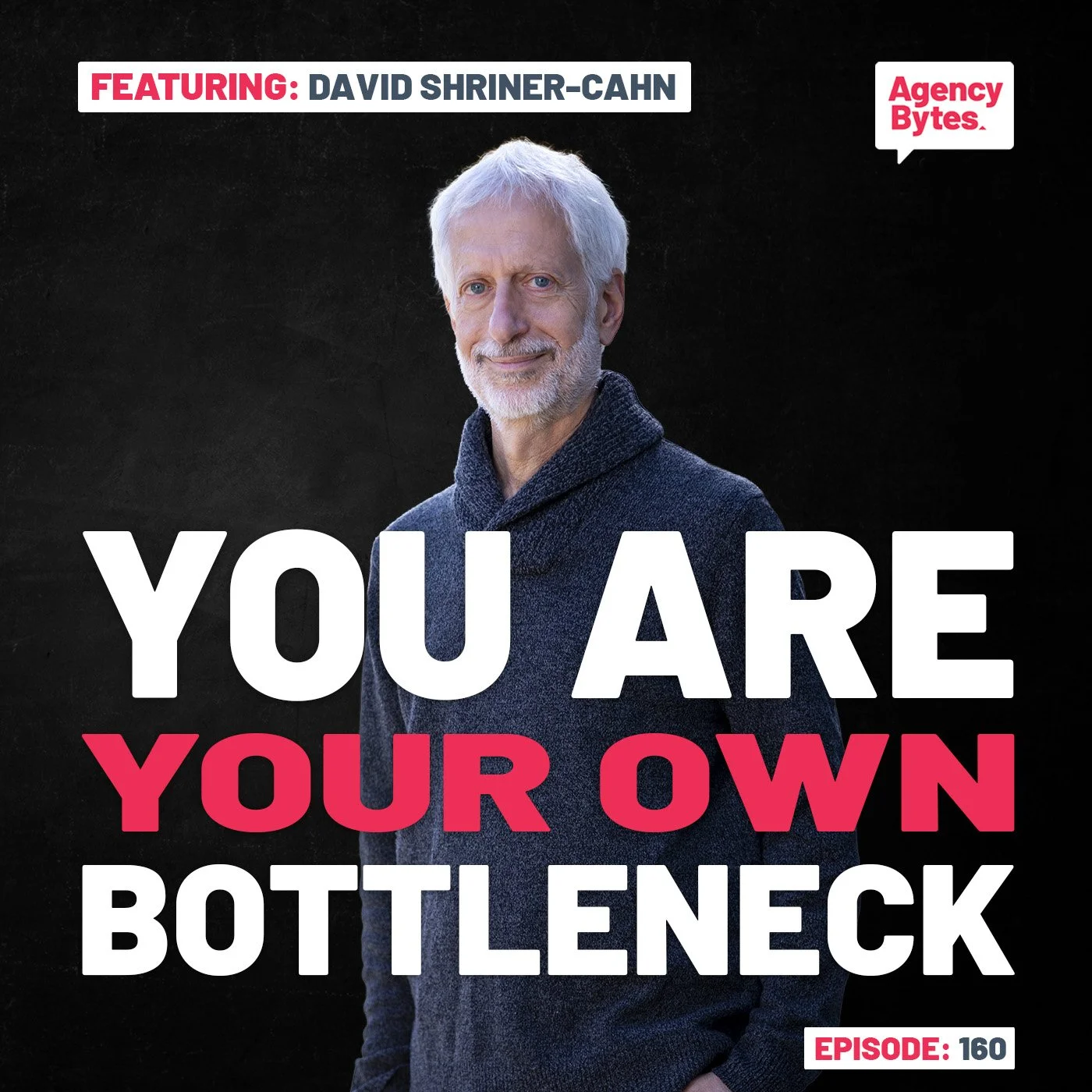
Ep 160 – David Shriner-Cahn, Smashing the Plateau – You Are Your Own Bottleneck — Here's How to Get Out of Your Own Way
Every solopreneur hits a ceiling — the question is whether you know it's there. In episode 160, David Shriner-Cahn of Smashing the Plateau joins me to talk about why expertise-based businesses stall out, and how a trusted peer group can show you the blind spot you can't see for yourself. We get into pricing fear, the discipline of ninety-day objectives, and why a weekly cadence might be the most underrated growth lever you're not using.
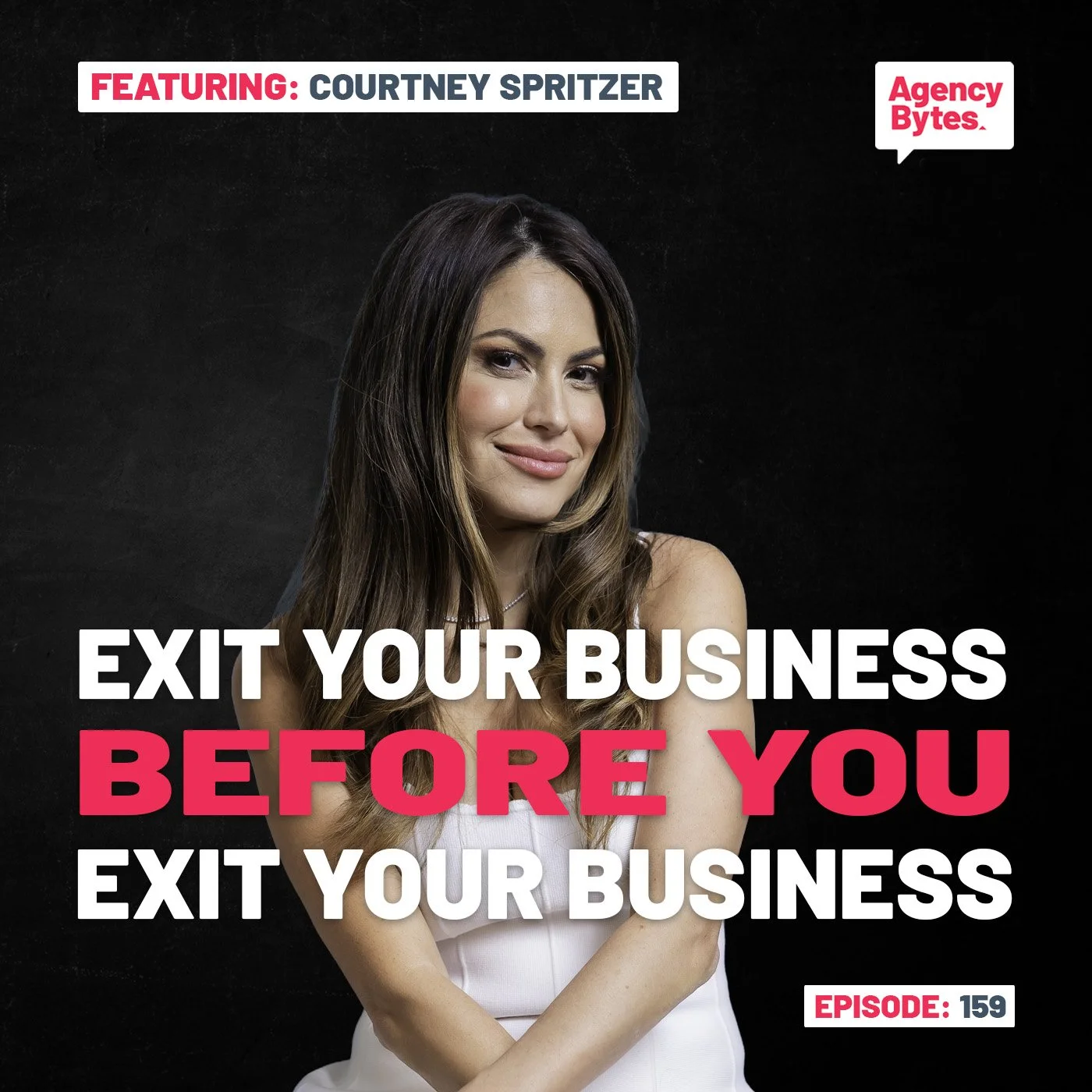
Ep 159 – Courtney Spritzer, Entreprenista - How Courtney Spritzer Built and Sold a Marketing Agency, Then Built a 3,700-Member Community
Courtney Spritzer built SocialFly from a bootstrapped side hustle into an agency worth acquiring, then walked away from it entirely. In this episode, she breaks down what it actually takes to prepare an agency for a sale years before you're ready to sell, and why owner dependency kills more deals than anything else. She also shares how Entreprenista grew from a podcast into a 3,700-member community for women founders. It's a candid look at building a business that can run without you.
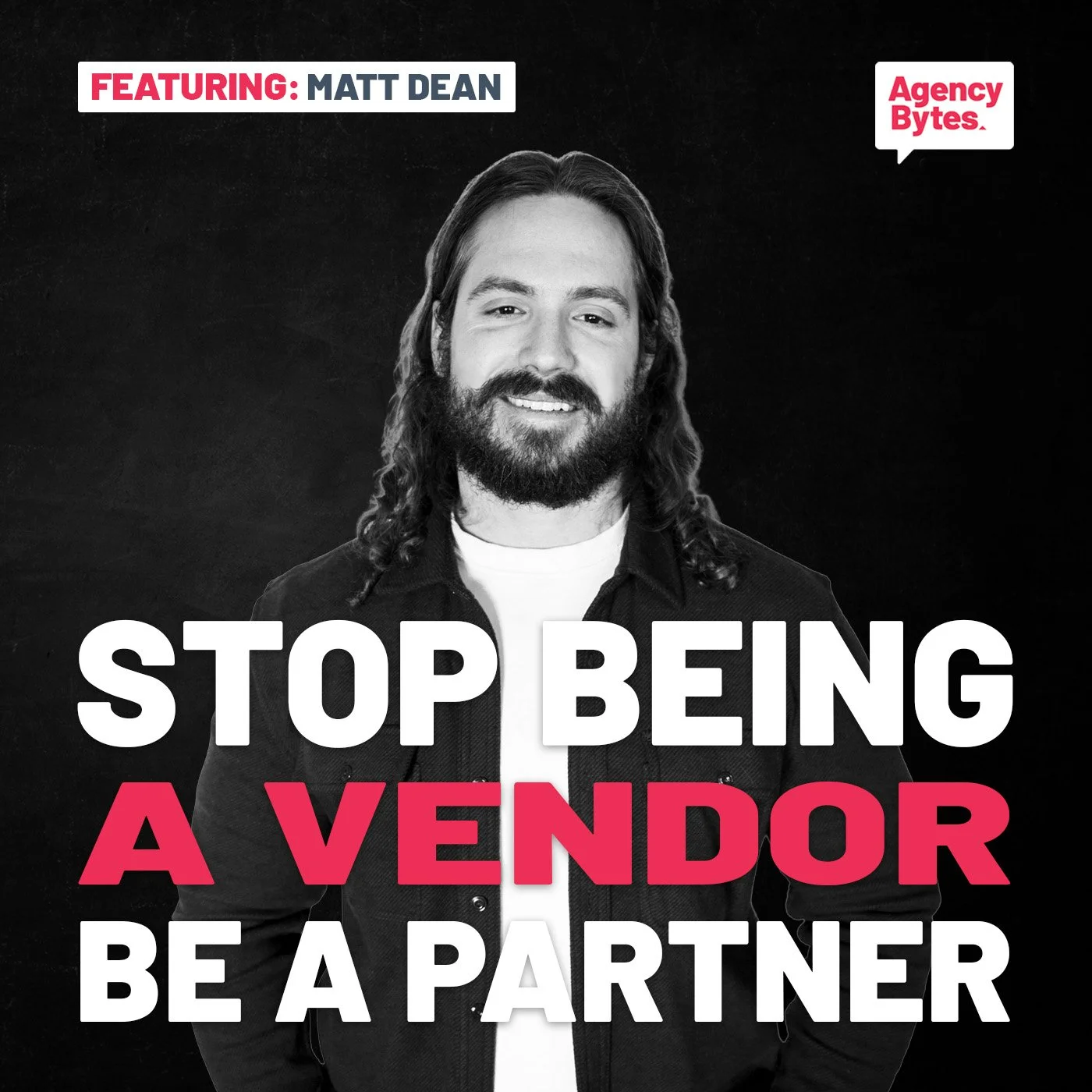
Ep 158 – How Matt Dean Built a Commercial Real Estate Branding Agency by Going All In on One Niche
Matt Dean set a goal at 19 to own an agency by 30. Five years after launching Dean & Co. with his wife Jackie, he's built one of the most in-demand branding studios in commercial real estate, working across seventeen states, by refusing to be a generalist and refusing to be called a vendor.
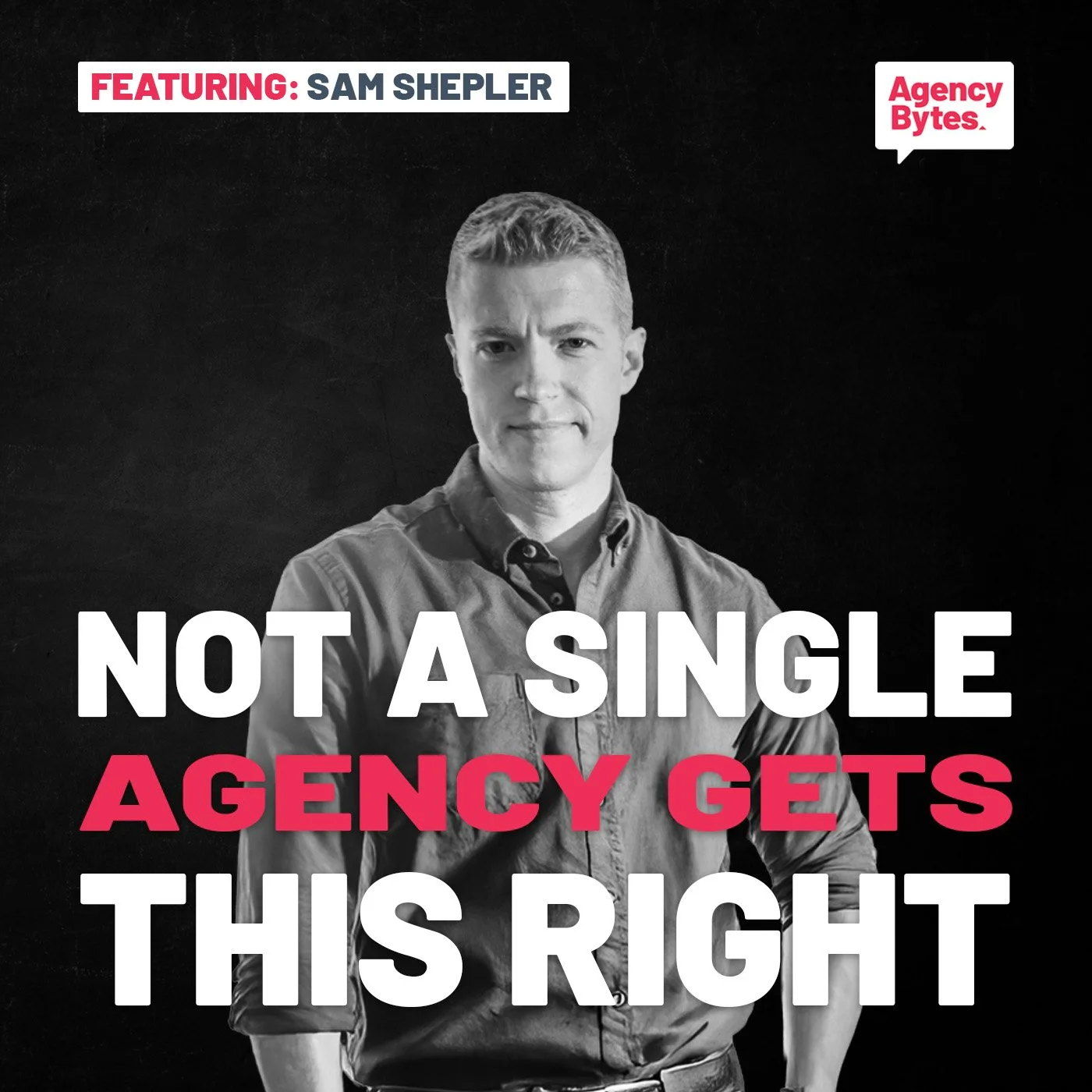
Ep 157 – How Sam Shepler Grew StorysSnap Through Acquisitions Instead of Retainers
Sam Shepler, founder and CEO of StorySnap, joins me to unpack why he's never chased retainers in the B2B video space and how gross margin, not billing structure, actually determines whether an agency can scale. We talk about why feast-or-famine is really a symptom of weak lead flow, not a billing problem, and why his best acquisitions add new capability instead of just new revenue. Sam also breaks down the gross margin mistake he sees in nearly every agency P&L he reviews, and why pulling revenue forward matters more than the comfort of predictable monthly billing.
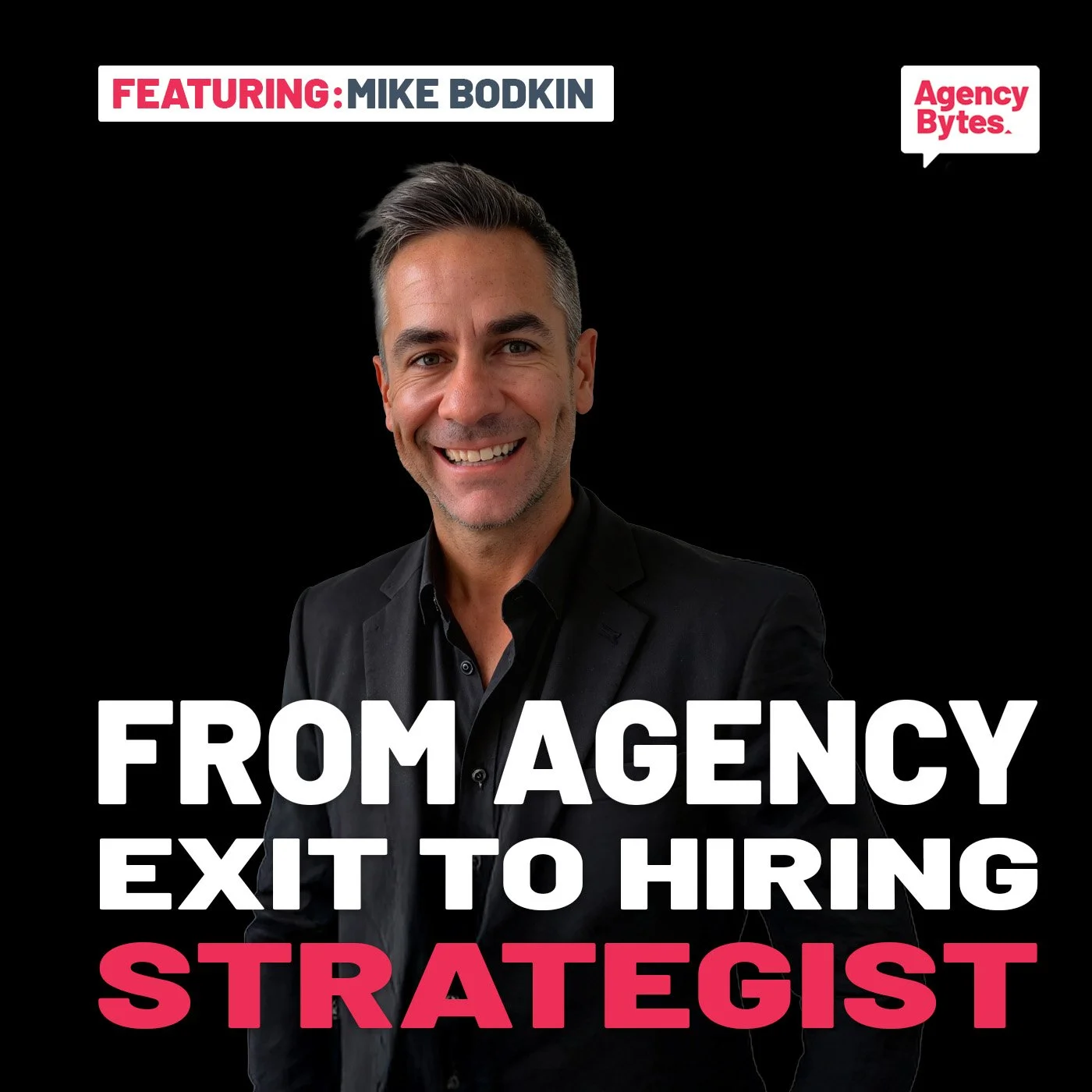
Ep 154 – Mike Bodkin, Talent Scout – How to Build a Sellable Agency — and a Smarter Way to Hire
Mike Bodkin spent nearly a decade building Giant Propeller before a partnership unraveled and an unexpected offer pulled him into an exit he never planned. In this episode, he unpacks what made his agency sellable, why integration is never clean, and how a near-shore talent model became the business he runs today.
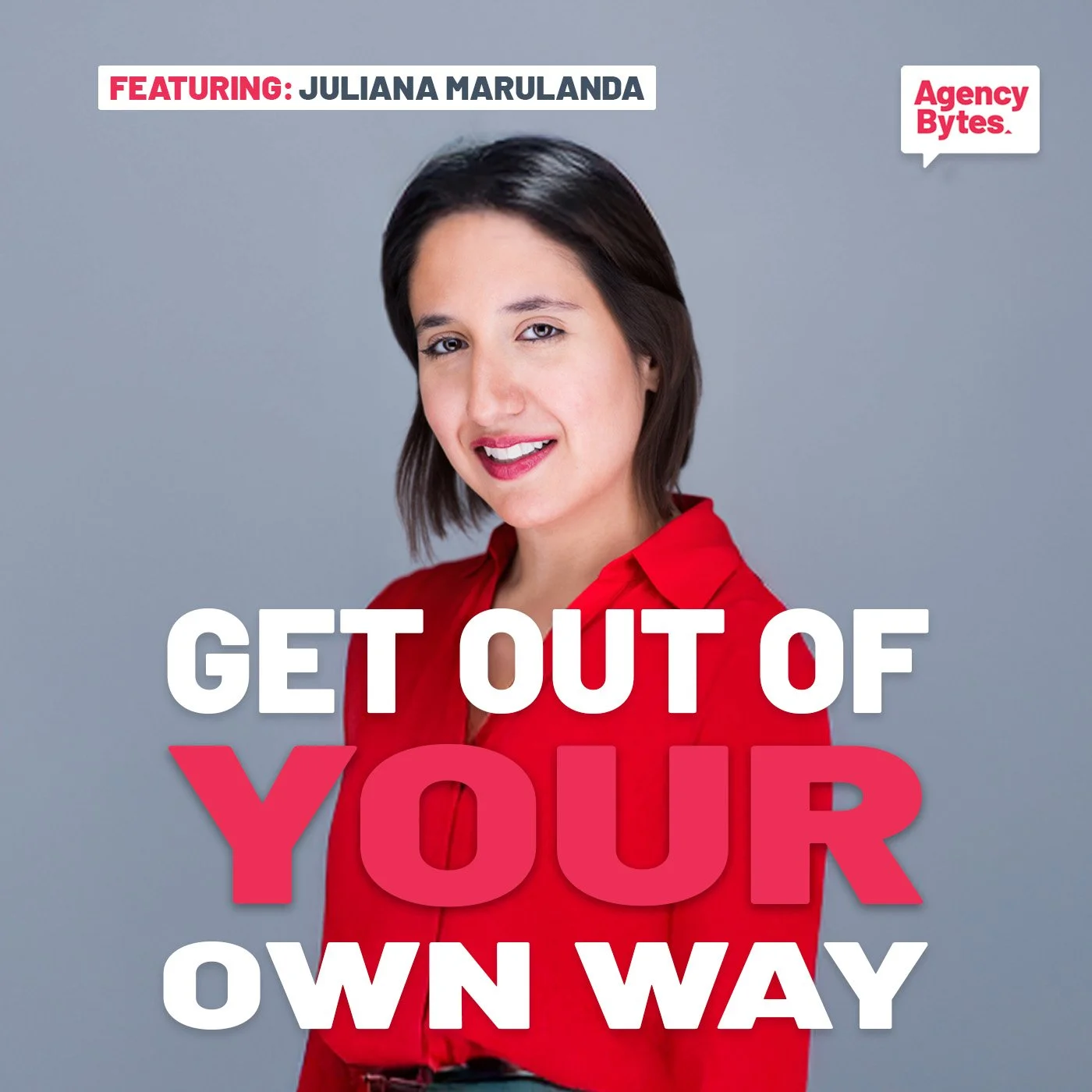
Ep 153 – Juliana Marulanda, Scaletime – You Can’t Scale Chaos
Scale gets thrown around like a vanity metric, but Juliana reframes it as something quieter and more powerful: the freedom to choose what you do with your day. Her SCALE framework walks owners from seeing what's actually happening in the business all the way to designing an exit — on their own terms, whether they ever sell or not.
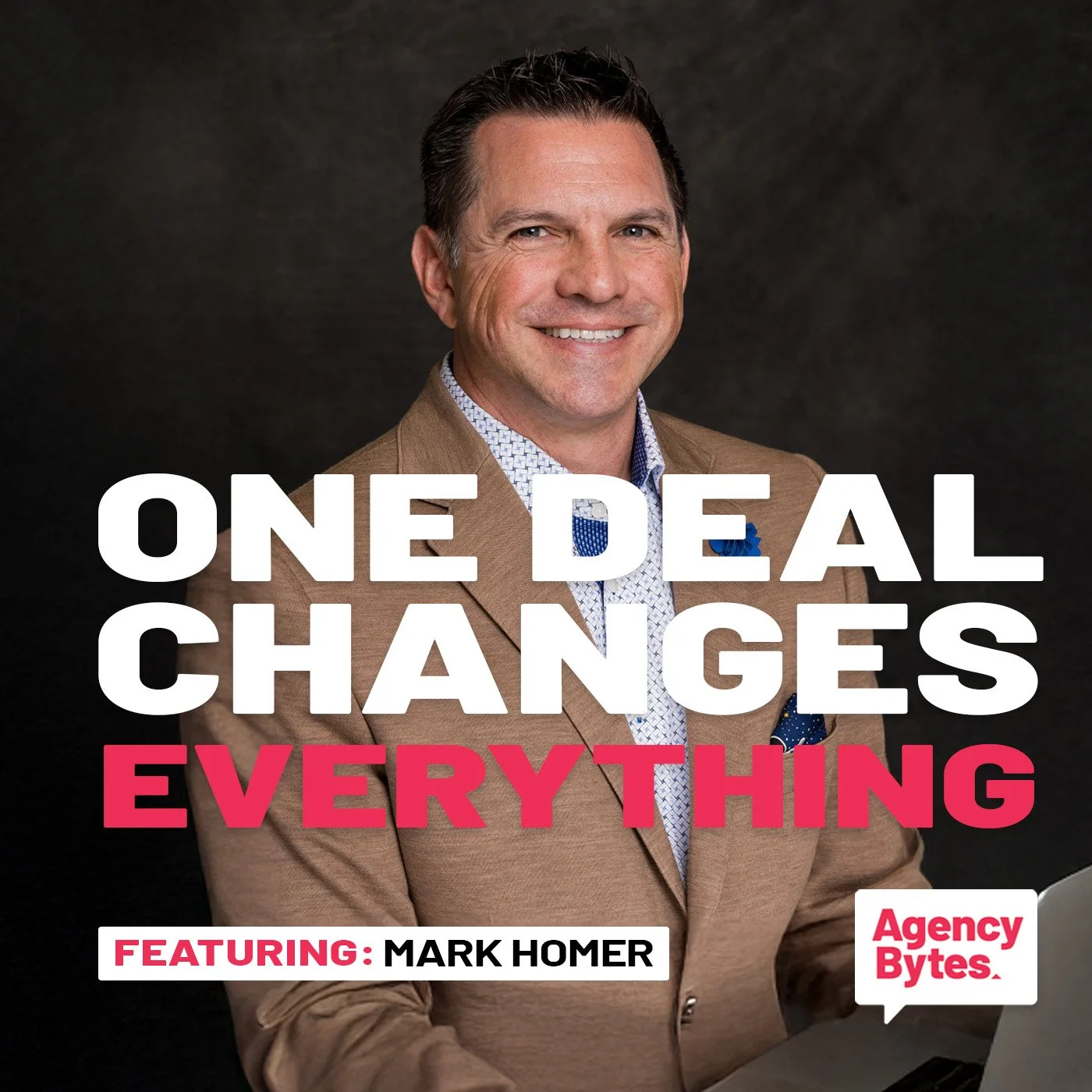
Ep. 151 – How Mark Homer Buys & Sells Agencies Without a Pile of Cash
In episode 151, I sit down with Mark Homer of Grandin Holdings to demystify M&A for agency owners. We bust the myth that you need a pile of cash to buy an agency, dig into why your network is your best source of deals, and talk through what actually makes a business sellable — and worth keeping. If you've ever assumed M&A wasn't for you, this one will change your mind.
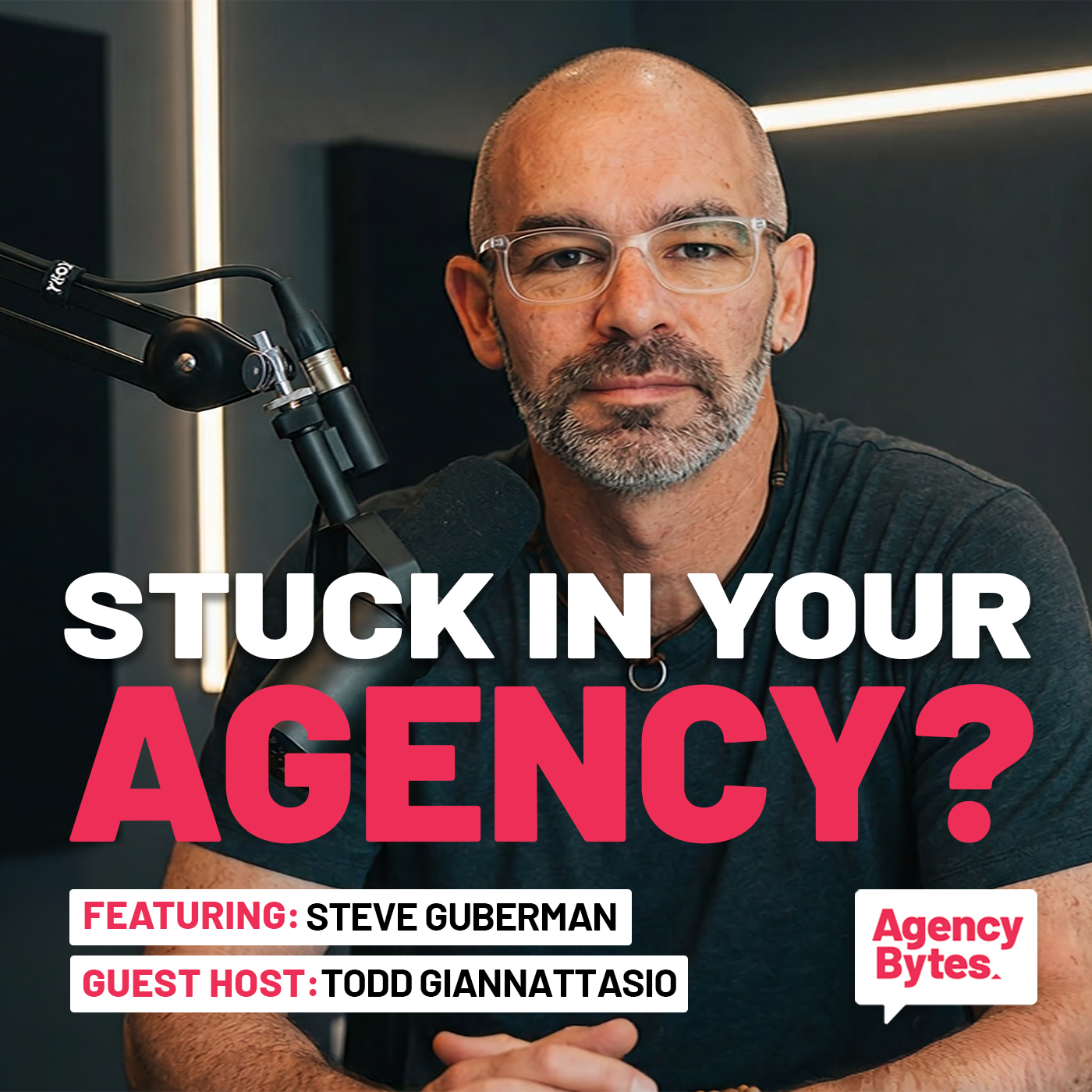
How Steve Guberman Built, Sold, and Reinvented His Agency — Season 4 Kickoff
In episode 150, I flipped the mic. To kick off Season 4, I handed the host chair to my friend Todd Giannattasio of Tresnic Media — a returning guest from episode 10, and the guy who helped me name Agency Outsight in the first place.
This one's more personal than most. Todd walks me through my journey from screw-off art kid to graphic designer to accidental agency owner, the acquisition that should have been the first of many, selling my agency, and the grief that ultimately reshaped how I think about purpose, work, and what a business is really for. We get into the asset mindset, programmatic M&A as a growth lever, why most founders pay themselves last (and shouldn't), and the copycat goals that keep agency owners chasing someone else's dream.
If you've ever wondered what's actually on the other side of an exit — or whether you're building a business or just a really demanding job — this is the conversation.
Key Bytes
• Most agency founders accidentally build a job, not an asset — and the difference shows up the day you try to sell.
• Programmatic M&A unlocks exponential growth that organic effort simply can't match.
• Buying talent is faster, safer, and more predictable than hiring it.
• You don't need a truckload of cash to acquire — SBA loans, earnouts, and seller financing make deals possible at almost any size.
• Paying yourself last isn't noble — it's a habit that quietly devalues the business you built.
• Copycat revenue goals pull founders into chasing numbers that mean nothing to their actual life.
• Grief, burnout, and life events have a way of forcing the clarity most founders avoid.
• Creative empathy — not tactics — is still the most underrated edge agency owners have.
Chapters
00:00 Flipping the mic: why Todd is interviewing me
02:47 From screw-off art kid to graphic designer
05:30 Starting the agency with ego and no business plan
08:25 The acquisition I should have repeated four times
11:00 Selling the agency and what came after
14:30 Grief, COVID, and finding purpose in the garden
17:10 Launching Agency Outsight and pricing it on instinct
21:40 The asset mindset: building enterprise value
26:00 Programmatic M&A as the real growth lever
30:15 Why founders pay themselves last (and shouldn't)
33:00 Copycat goals and chasing someone else's dream
36:00 Rapid-fire questions and closing thoughts
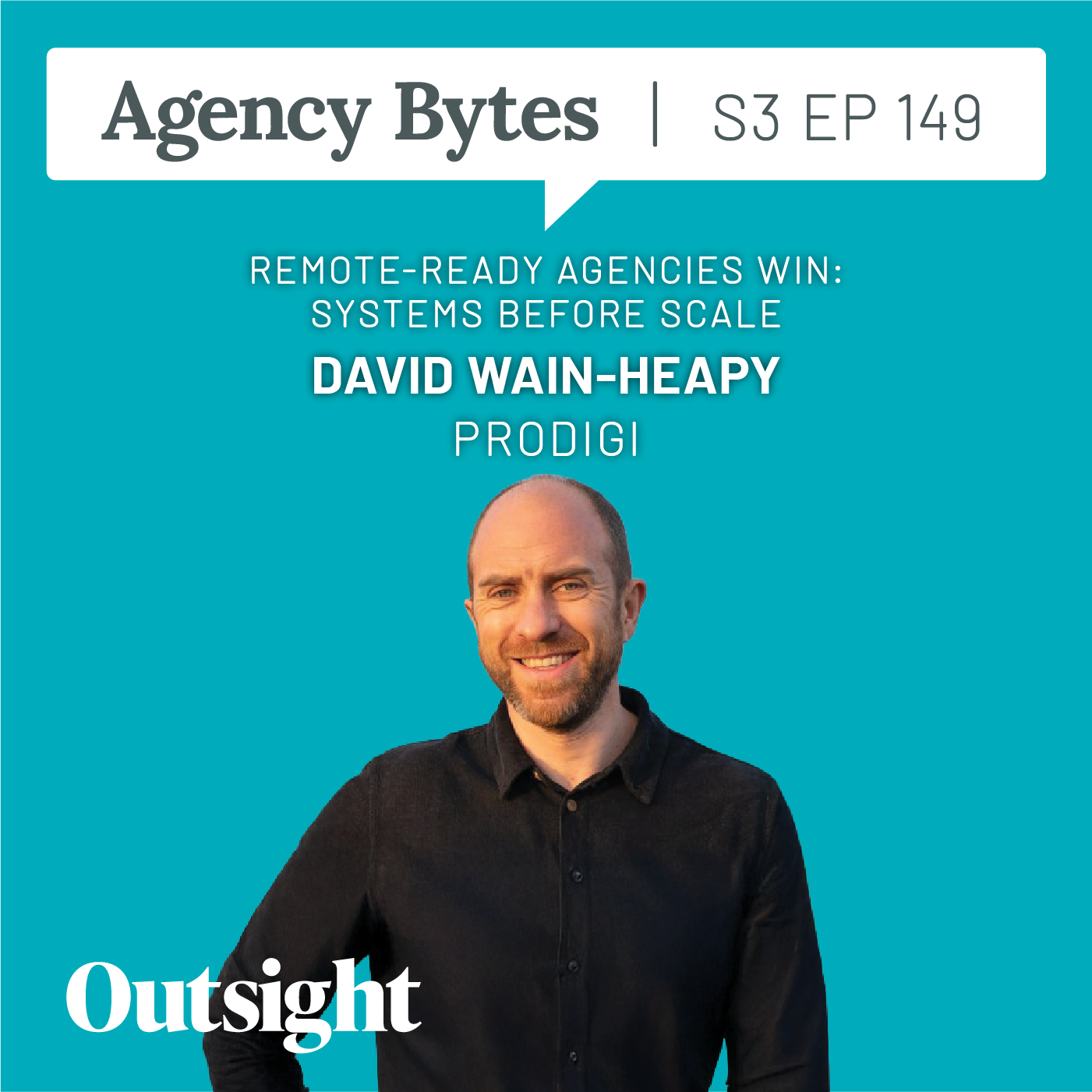
Ep 149 – David Wain-Heapy, Prodigi – Remote-Ready Agencies Win: Systems Before Scale
In episode 149, I sit down with David Wain-Heapy, founder of Prodigy, a company that helps agencies and digital businesses build flexible, scalable remote teams through global talent sourcing.
David spent 14 years building and running a Magento-focused e-commerce agency out of central London before selling it to Brave Bison PLC. We talk through what that exit process actually looked like, why the right acquirer matters as much as the right offer, and how building systems independent of the founders made the transition possible.
From there, we get into the real substance of what David does now: helping agencies shift from an outsourcing mindset to an offshore hiring mindset. There's a difference, and it matters. Agency owners will come away with a clearer framework for when and how to integrate global talent, how to think about time zones, which roles translate well offshore, and what AI is actually doing — and not yet doing — to development teams in agencies right now.
Key Bytes
• Outsourcing and offshore hiring are not the same thing — one is a handoff, the other is a hire.
• The fix for a failed first attempt wasn't better talent, it was better integration — sprints, tools, and cadence.
• Building a business that runs independently of you isn't just good leadership, it's what makes you acquirable.
• The right acquirer matters as much as the right offer — alignment on team and culture is what made a six-month handoff possible.
• East Coast agencies fit well with Eastern European talent; West Coast agencies are better served by South and Central America.
• AI handles contained tasks well, but it still can't hold the context of an enterprise-scale project.
• The people who will thrive in an AI-augmented world are the ones who bring real creativity — the architects and problem-solvers, not just the executors.
Chapters
00:00 Why this conversation matters for agency owners right now
01:45 David's 14-year agency journey and building in a competitive London market
05:10 The first attempt at offshore talent and why it failed
08:30 Selling to Brave Bison: what the exit process actually looked like
13:15 Choosing the right acquirer and making a clean handoff
17:00 Outsourcing vs. offshore hiring: why the mindset shift changes everything
21:30 How to think about time zones when sourcing global talent
24:45 What systems agencies need before hiring offshore
28:00 Where AI is actually helping agency dev teams right now
33:20 Which roles work well offshore and which don't
37:50 Rapid fire: surfing in Bristol, letting go of control, and a risky bet that paid off
David Wain-Heapy is an experienced founder currently focused on building remote teams for digital businesses with Prodigi.
Having sold my digital agency to Brave Bison PLC, I am now working to provide a flexible and scalable solution that enables companies to take control of hiring by looking at a global talent pool.
I have many years experience building globally distributed teams of digital professionals and leading them to help great businesses win in the race for attention and accelerate their digital growth.
Contact David:
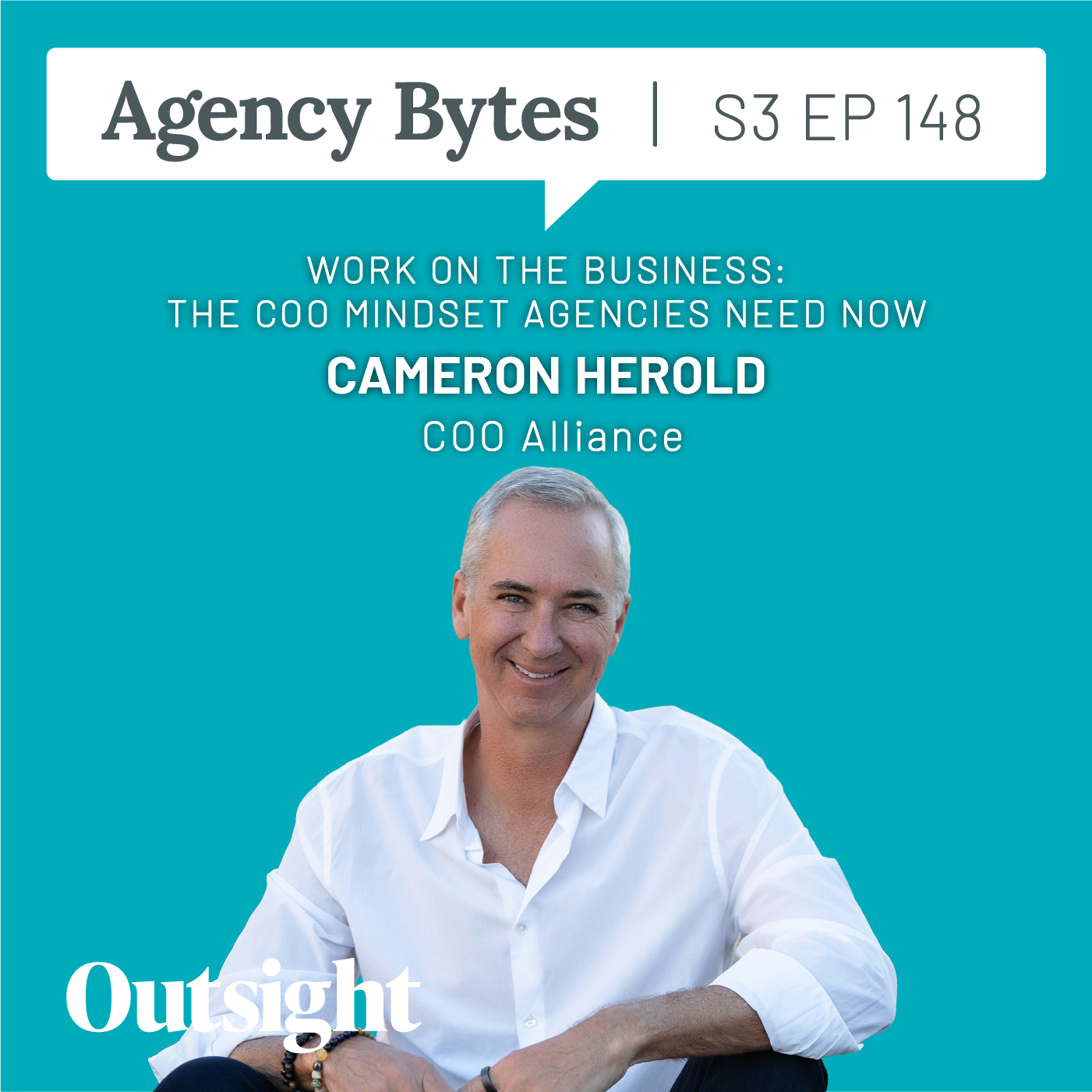
Ep 148 – Cameron Herold, COO Alliance – Work On the Business: The COO Mindset Agencies Need Now
In episode 148, I sit down with Cameron Herold, founder of COO Alliance and one of the most recognized voices in operational leadership, to talk about the mindset shift agency owners desperately need right now: stepping into the role of CEO and building a true COO mindset inside their business.
Cameron has helped scale companies like 1-800-GOT-JUNK and advised hundreds of growth-stage businesses, and in this conversation, we unpack what it really means to work on the business instead of being trapped inside it. We talk about the operator’s lens, how founders accidentally become bottlenecks, and why operational maturity is often the difference between a lifestyle business and a scalable asset.
If you’re an agency owner who feels stretched thin, stuck in delivery, or unsure how to elevate your leadership team, this one is a masterclass in stepping up and leveling up.
Key Bytes
• The CEO’s job is vision. The COO’s job is execution. Most agency owners are trying to do both — and burning out.
• Operational discipline isn’t about bureaucracy — it’s about freeing the founder from the day-to-day.
• If you’re still the glue holding everything together, you don’t have a scalable business — you have a dependency.
• Working on the business requires intentional systems, delegation maturity, and the courage to step back.
• Strong operators build companies that can grow, sell, or run without the founder in the weeds.
Chapters
00:00 Welcome & Cameron’s Scaling Background
04:12 The Difference Between a Founder and a CEO
09:48 Why Most Agencies Don’t Truly Work “On” the Business
16:35 The COO Mindset Explained
23:10 Founders as Bottlenecks
31:42 Building Operational Discipline Without Red Tape
40:18 Hiring & Developing Strong Operators
49:03 Scaling vs. Lifestyle Businesses
57:25 Final Advice for Agency Owners
Cameron Herold is the mastermind behind the exponential growth of hundreds of companies globally. Founder of the COO Alliance, and Invest In Your Leaders training. Cameron is known as the "CEO Whisperer", and is also the former COO of 1-800-GOT-JUNK?, where he engineered the company's spectacular growth from $2 million to $106 million in revenue in just six years.
The publisher of Forbes magazine, Rich Karlgaard, stated "Cameron Herold is the best speaker I've ever heard...he hits grand slams”. Cameron is
the host of the Second In Command podcast, author of 6 bestselling books, including The Second In Command, Vivid Vision, Meetings Suck, Free PR, Double Double, and The Miracle Morning for Entrepreneurs.
Cameron is a top-rated international speaker and has been paid to speak in 26 countries and on all 7 continents, including Antarctica in early 2022.
www.cooalliance.com
www.cameronherold.com
https://www.instagram.com/cameron_herold_cooalliance
https://www.facebook.com/COOAlliance/
https://www.linkedin.com/in/cameronherold
https://www.linkedin.com/company/coo-alliance/
https://twitter.com/cooalliance
https://www.youtube.com/@CameronHerold?sub_confirmation=1
https://cooalliance.com/vivid-vision/
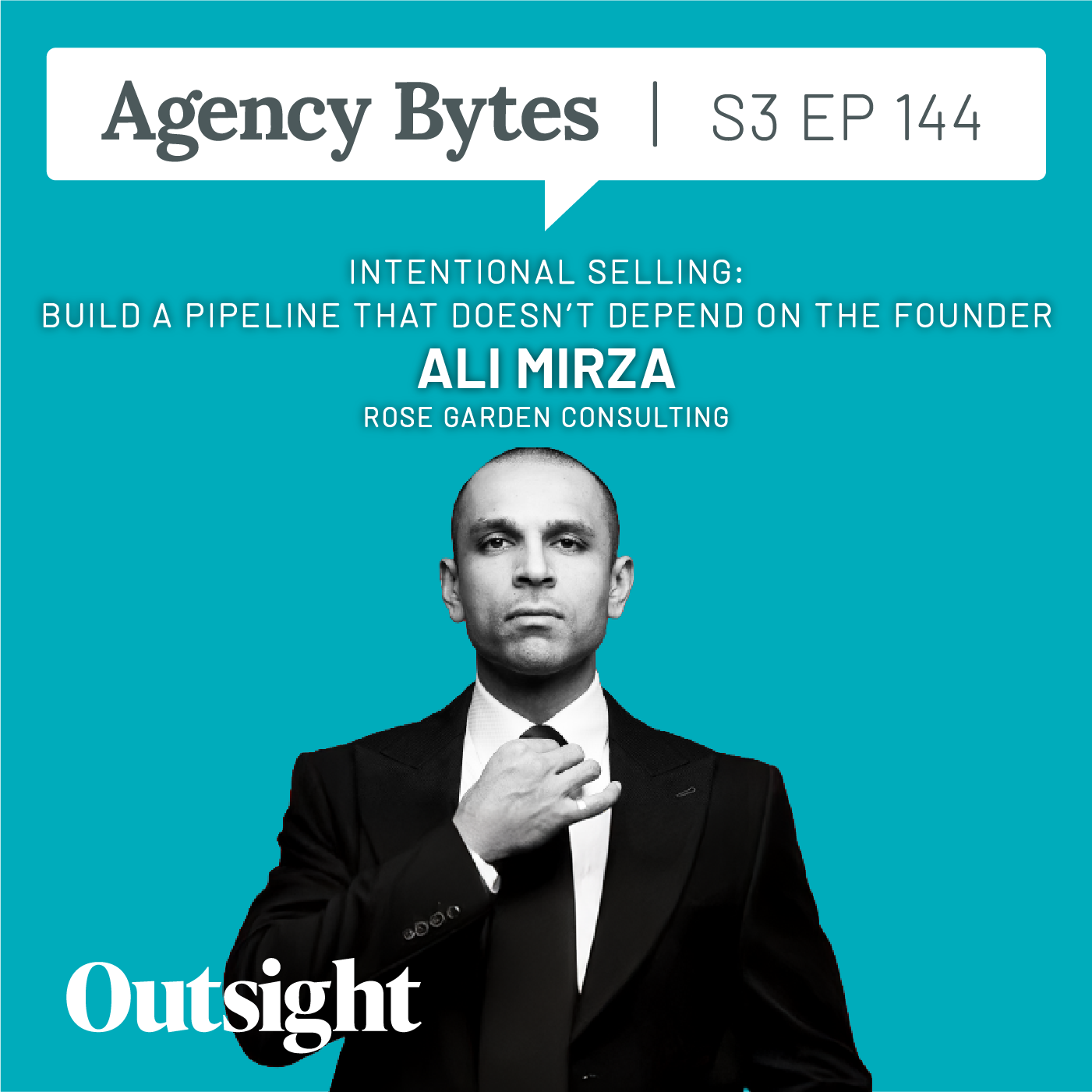
Ep 144 – Ali Mirza, Rose Garden Consulting – Intentional Selling: Build a Pipeline That Doesn’t Depend on the Founder
In episode 144, I’m joined by Ali Mirza, a sales expert who’s personally closed over $450 million in revenue and advised hundreds of high-growth companies, including multiple Inc. 500 winners and successful exits.
Ali and I dig into what’s really broken in agency sales today — from why “more leads” isn’t the answer, to how founders unintentionally sabotage deals, to the mindset shifts required to close larger, more confident engagements. This conversation is especially relevant for agency owners who are great at delivery but feel stuck, uncomfortable, or inconsistent when it comes to selling.
We talk candidly about sales systems vs. sales personalities, the danger of winging it, and how agencies can move from reactive selling to intentional, scalable growth without becoming someone they’re not.
Key Bytes
• Why “just getting more leads” rarely fixes agency sales problems
• The hidden mindset traps that keep agency owners underpricing
• How confidence (not pressure) actually drives better close rates
• The difference between selling expertise vs. selling outcomes
• Why inconsistent sales processes hurt valuation and scalability
Chapters
00:00 Why agency sales feels harder than it should
04:32 The biggest sales myths agency owners believe
09:15 Why confidence matters more than scripts
14:40 Selling outcomes vs. selling services
20:05 How founders accidentally sabotage deals
26:18 Pricing fear and the psychology behind it
32:10 Building a repeatable sales process
38:45 What great agency sales leadership really looks like
44:20 Final advice for agency owners who hate selling
Ali Mirza is a sales expert who has personally closed over $450 million in sales with multiple Inc. 500 companies and high-growth startups.
His work has been featured in Inc., Forbes, Huffington Post, Business Insider, and more. He has consulted for hundreds of companies, with 17 earning the Inc. 500 Fastest Growing Companies award and three successfully acquired. He is president of Atlanta-based consulting firm, Rose Garden.
Connect with Ali:
IG: @alimirza.rgc
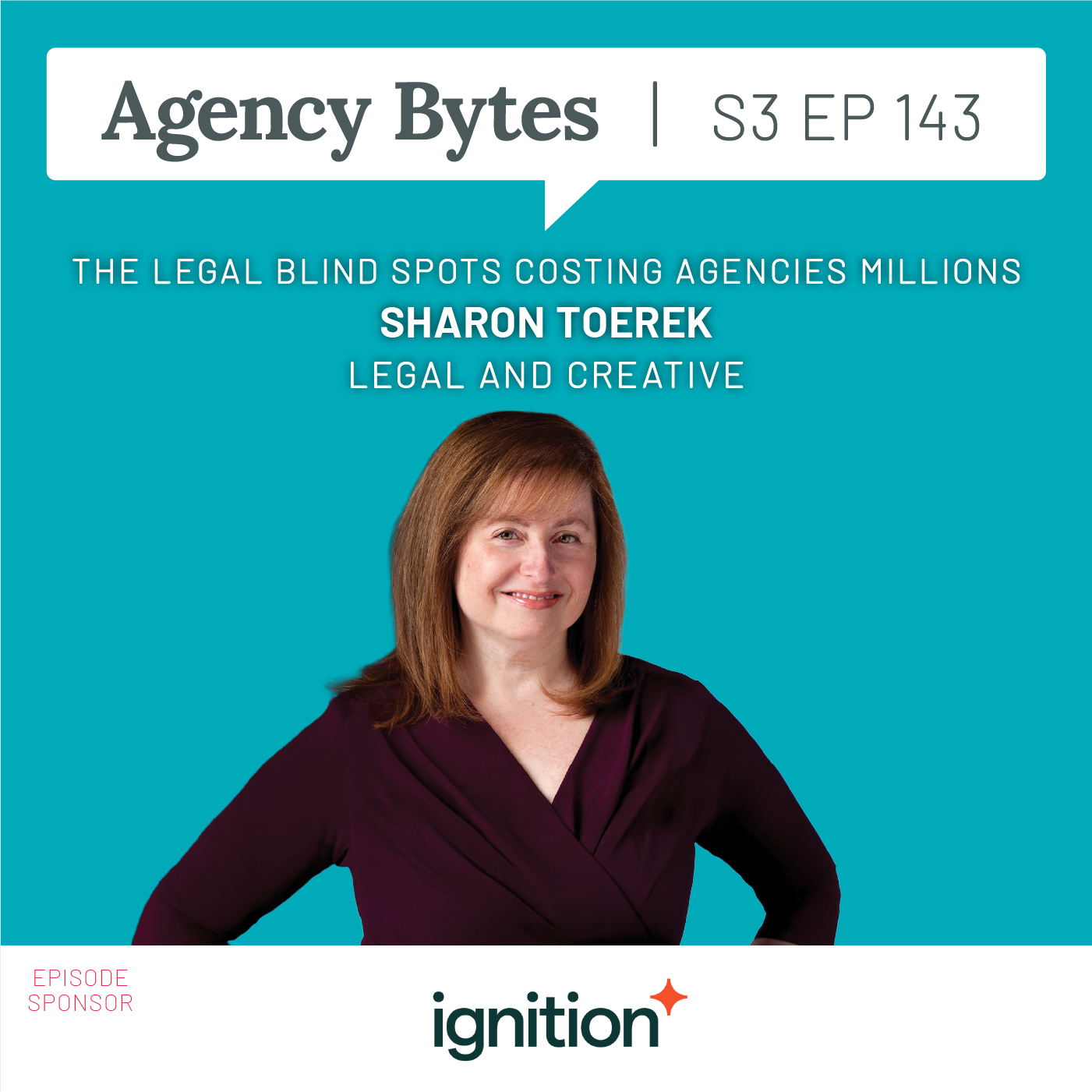
Ep 143 – Sharon Toerek, Legal and Creative – The Legal Blind Spots Costing Agencies Millions
THIS EPISODE IS SPONSORED BY IGNITION. START YOUR FREE 14 DAY TRIAL ignitionapp.info/agencybytes-trial Use Code OUTSIGHT25 to save 50% off!
In episode 143, I dig into one of the most underestimated risks in agency ownership: the legal blind spots that quietly cost agencies millions over time.
From contracts and scope creep to client disputes, IP ownership, and liability exposure, we unpack where agencies unknowingly put themselves at risk — and why most don’t realize it until it’s too late.
This conversation is a must-listen for agency owners who want to protect what they’ve built, reduce unnecessary exposure, and stop treating legal as an afterthought instead of a growth safeguard.
Key Bytes
• Most agencies don’t realize their biggest legal risks until a problem hits
• Poor contracts quietly drain profit long before lawsuits happen
• Scope creep is as much a legal issue as it is a pricing issue
• IP ownership mistakes can create long-term client and valuation problems
• Proactive legal structure is a growth advantage, not a cost center
Chapters
00:00 Why legal blind spots are so common in agencies
04:15 The contracts agencies rely on (and why they fall short)
10:20 Scope creep as a legal and financial issue
18:05 IP ownership mistakes that come back years later
26:40 Client disputes: where agencies expose themselves
34:10 Risk vs. fear: what actually matters legally
42:00 Simple fixes agency owners can make now
50:10 How legal hygiene protects valuation and exit
56:30 Final thoughts & wrap-up
Sharon Toerek is Founder of Toerek Law (doing business in the agency world as Legal + Creative), where she focuses her national law practice on helping advertising, marketing, communications and creative agencies protect their assets and turn their ideas into revenue.
Sharon provides proactive, strategic counsel to communications, marketing, advertising, digital and creative agencies on legal and business issues they face continually in their work, including:
• agency-client relationships, including agency service contracts
• agency-freelancer and agency strategic alliance relationship management
• trademark and copyright protection, enforcement and licensing
• influencer marketing negotiations and content marketing legal compliance
• advertising regulatory compliance
• AI policy and risk management for agencies
Sharon is an approved participant on the 4A's Legal Consultants Panel, and a member of the 4A’s Expert Network. She has also served as President of the American Ad Federation (AAF) Cleveland and has been elected to AAF Cleveland’s Hall of Fame.
In addition to her Firm’s work representing U.S. independent agencies, Sharon
• Created the Legal + Creative Agency Protection System, a comprehensive legal education and legal toolkit for marketing, ad and creative services agencies
• Created and hosted over 300 episodes of the agency-focused podcast The Innovative Agency, a podcast about innovation and trends in the marketing agency world
• Presents sessions on agency-critical legal topics to independent agency networks, to private agency audiences, and at industry conferences including INBOUND, Content Marketing World, MAICON, the Build a Better Agency Summit, Own It Summit, Mirren New York, and PRSA Counselors Academy.
Contact Sharon:
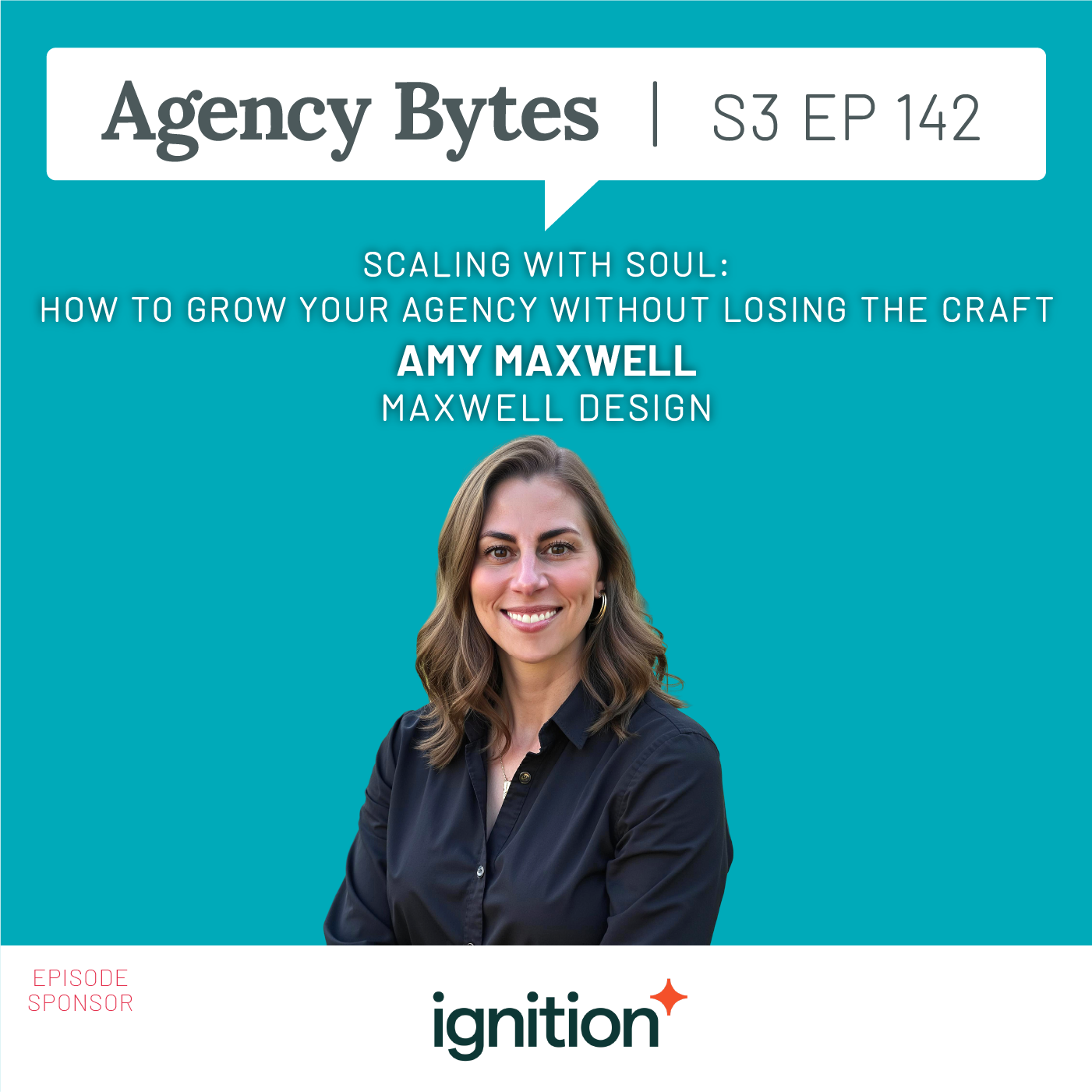
Ep 142 – Amy Maxwell, Maxwell Design – Scaling With Soul: How to Grow Your Agency Without Losing the Craft
THIS EPISODE IS SPONSORED BY IGNITION. START YOUR FREE 14 DAY TRIAL ignitionapp.info/agencybytes-trial Use Code OUTSIGHT25 to save 50% off!
In episode 142, I sit down with Amy Maxwell, founder and creative director of Maxwell Design, to talk about the real tension small creative shops face: how do you grow without sacrificing the craft that made you successful in the first place?
We dig into what it looks like to evolve from “hands-on designer” to “agency leader,” how to protect quality as you add capacity, and how to make smart choices about clients, process, and scope so growth doesn’t turn into chaos. If you want to scale with intention (and still love the work), this one’s for you.
Key Bytes
• Scaling doesn’t have to mean sacrificing creative quality
• Your process is what protects the craft as you grow
• “Better clients” often solves what “more clients” can’t
• You can stay hands-on without being the bottleneck
• The right constraints create consistency, not limitation
• Hiring should reduce friction, not add management drag
• Clear scope and boundaries prevent quiet burnout
Chapters
00:00 Intro: scaling without losing the craft
02:10 Amy’s origin story and building Maxwell Design
06:20 The “stay small” choice and what it protects
11:05 When growth starts to strain quality (warning signs)
16:10 Processes that keep creative standards high
22:30 Team structure: support roles vs creative roles
28:40 Client fit, boundaries, and saying “no” earlier
34:15 Staying fulfilled while the business grows
40:20 Rapid-fire questions and wrap-up
Amy—Creative Director + Founder of Maxwell Design—has spent the last two decades helping businesses look their best. She’s an award-winning designer with a knack for reading minds and creating delightful visual experiences. Her solution-focused approach makes her someone you’ll want in any room. And her small (but mighty) team comes with some major design chops.
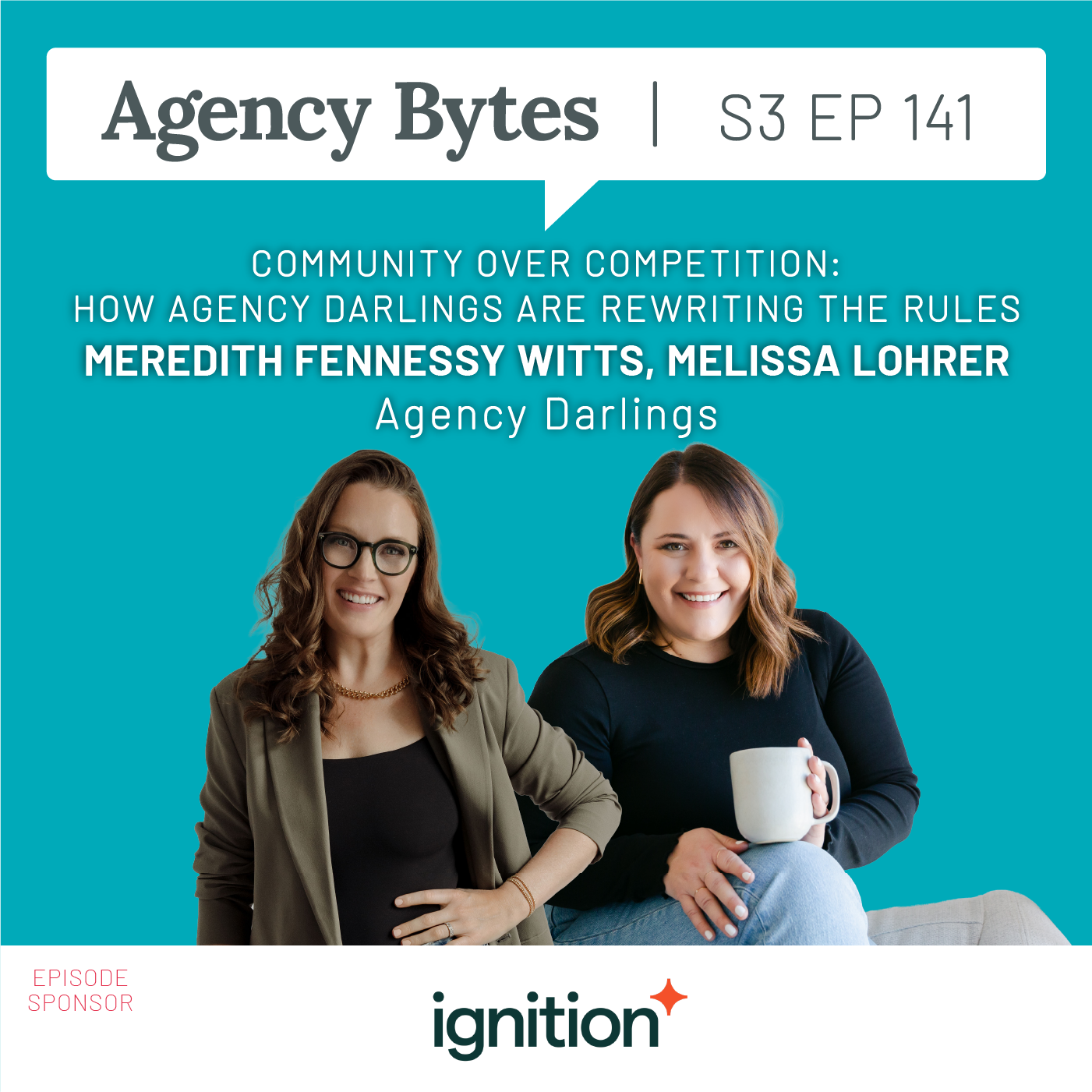
Ep 141 – Meredith Fennessy Witts + Melissa Lohrer, Agency Darlings – Community Over Competition: How Agency Darlings Are Rewriting the Rules
THIS EPISODE IS SPONSORED BY IGNITION. START YOUR FREE 14 DAY TRIAL ignitionapp.info/agencybytes-trial Use Code OUTSIGHT25 to save 50% off!
In episode 141, I sit down with Melissa and Meredith, the hosts of the Agency Darlings podcast and longtime agency operators, to unpack why so many agency owners feel burned out, stuck, or disillusioned by the traditional agency growth advice that’s been circulating for decades.
We talk candidly about the “bro playbook” — hustle culture, ego-driven leadership, top-down decision making, and growth at all costs — and why it often leads to unhealthy teams, poor margins, and miserable owners. Melissa and Meredith share what they’ve learned from years inside agencies about what actually drives sustainable growth: emotional intelligence, clear communication, strong operations, and leadership that prioritizes people alongside profit.
This episode is a refreshing, grounded look at agency leadership through a more human lens — one that challenges outdated norms and offers agency owners permission to build businesses that align with who they actually are.
Key Bytes
• Why the traditional agency “bro playbook” is failing modern agencies• The hidden cost of hustle culture on owners and teams• How emotional intelligence impacts agency growth and retention• What healthier leadership looks like inside agencies• Redefining success beyond revenue and headcount
Chapters
00:00 Why the traditional agency playbook feels broken05:12 The origins of hustle culture in agencies11:04 Masculine-driven leadership norms and their impact17:32 Emotional intelligence as a growth lever23:58 Building healthier agency cultures30:41 Operator-led leadership vs. ego-led leadership37:10 Sustainable growth without burnout43:26 Redefining success as an agency owner49:12 Advice for owners ready to do things differently
Each with over 15 years of experience in the agency space and deep-rooted connections within the industry, Melissa and Meredith bring actionable insights, expert advice, and candid conversations that challenge the conventional, masculine-driven approaches to agency growth.
Contact Meredith & Melissa:www.agencydarlings.comhttps://bit.ly/MWDarlingshttps://waverlyave.comhttps://instagram.com/waverlyave.cohttps://www.lecheile.co/contacthttps://www.instagram.com/lecheile.co/
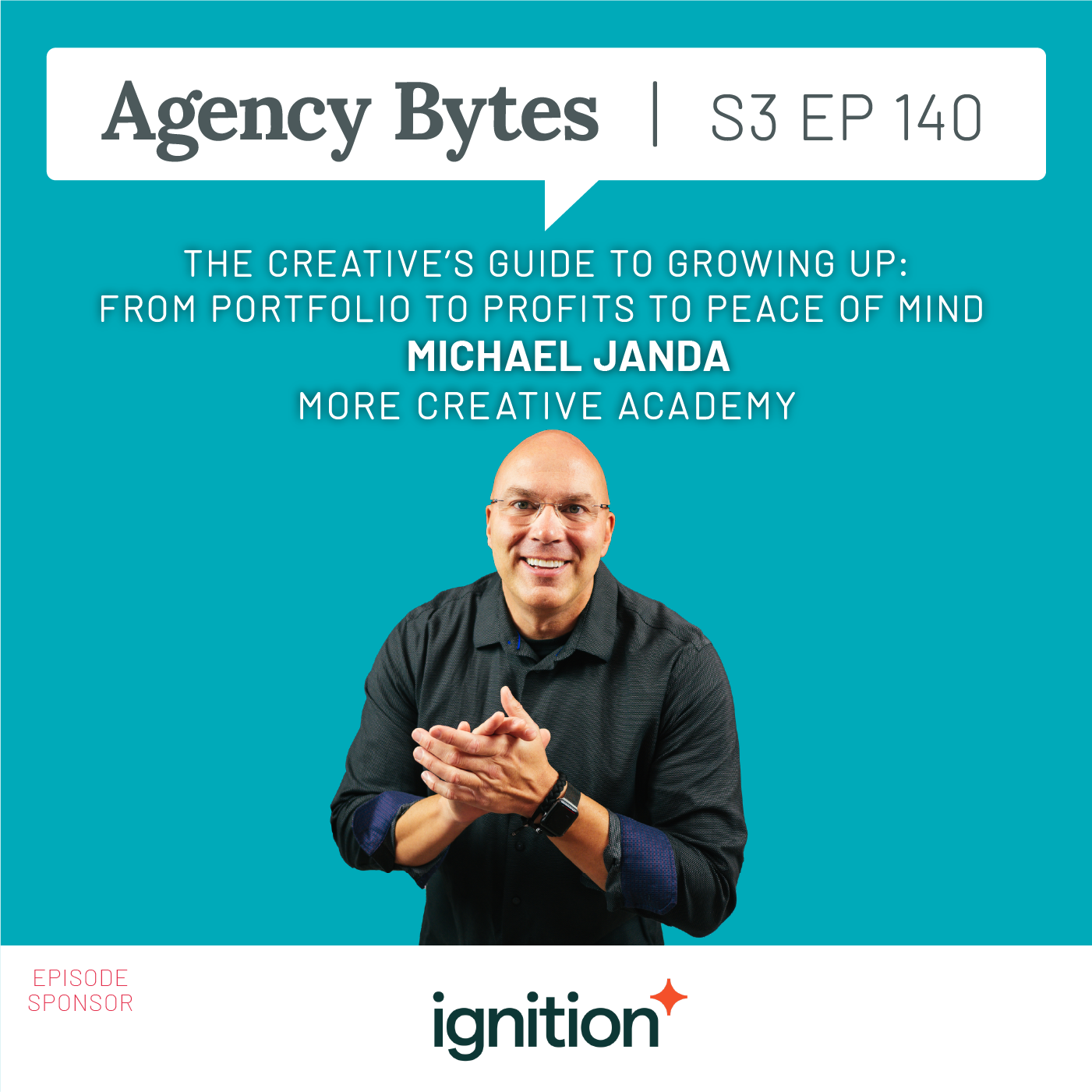
Ep 140 – Michael Janda, More Creative Academy – The Creative’s Guide to Growing Up: From Portfolio to Profits to Peace of Mind
THIS EPISODE IS SPONSORED BY IGNITION. START YOUR FREE 14 DAY TRIAL ignitionapp.info/agencybytes-trial Use Code OUTSIGHT25 to save 50% off!
In episode 140, I sit down with Michael Janda—agency founder, bestselling author, and one of the most respected voices helping creatives master the business side of creativity. Michael built and sold Riser, worked with giants like Disney and Google, and later led creative teams at Fox before dedicating his career to teaching creatives how to price, position, and run their businesses without burning out.
We dig into the mental and operational “growing up” that every creative eventually faces: getting past portfolio thinking, charging confidently, understanding value, eliminating chaos, and building a more peaceful (and profitable) creative life. Michael’s straight-talk wisdom hits every agency owner exactly where they need it—no fluff, no ego, just clarity.
Key Bytes
• Why creatives struggle with pricing — and how to fix it
• The mindset shift from freelancer to business owner
• How Michael positioned his agency to win massive clients
• The surprising relationship between process, profit, and peace
• What creatives get wrong about value
• Why “portfolio thinking” holds owners back
• How to build a business that supports your life, not the other way around
Chapters
00:01 Welcome + Michael’s background and agency journey
04:12 From creative chaos to building processes that scale
09:45 Why pricing is emotional—and how to make it objective
14:30 Portfolio vs. business owner mindset
19:58 Finding ideal clients and positioning that works
25:21 How Michael sold his agency and what he learned
31:44 The psychology of creative profitability
38:10 Achieving peace of mind as an owner
44:22 Michael’s advice for creatives who feel “stuck”
Michael Janda is an award-winning creative director, agency founder, and bestselling author.
He built the creative agency Riser with clients like Disney, Google, Warner Bros., and ABC, then sold the business after 13 successful years. Before that, he served as a creative director at Fox. Michael
is the author of Burn Your Portfolio and The Psychology of Graphic Design Pricing. Today, he shares practical, no-fluff strategies to help creative professionals master business, pricing, and growth.
Community: https://morecreativeacademy.com
Instagram: https://instagram.com/morejanda
YouTube: https://youtube.com/morejanda
LinkedIn: https://linkedin.com/in/morejanda
Website: https://michaeljanda.com
Courses: https://morejanda.teachable.com
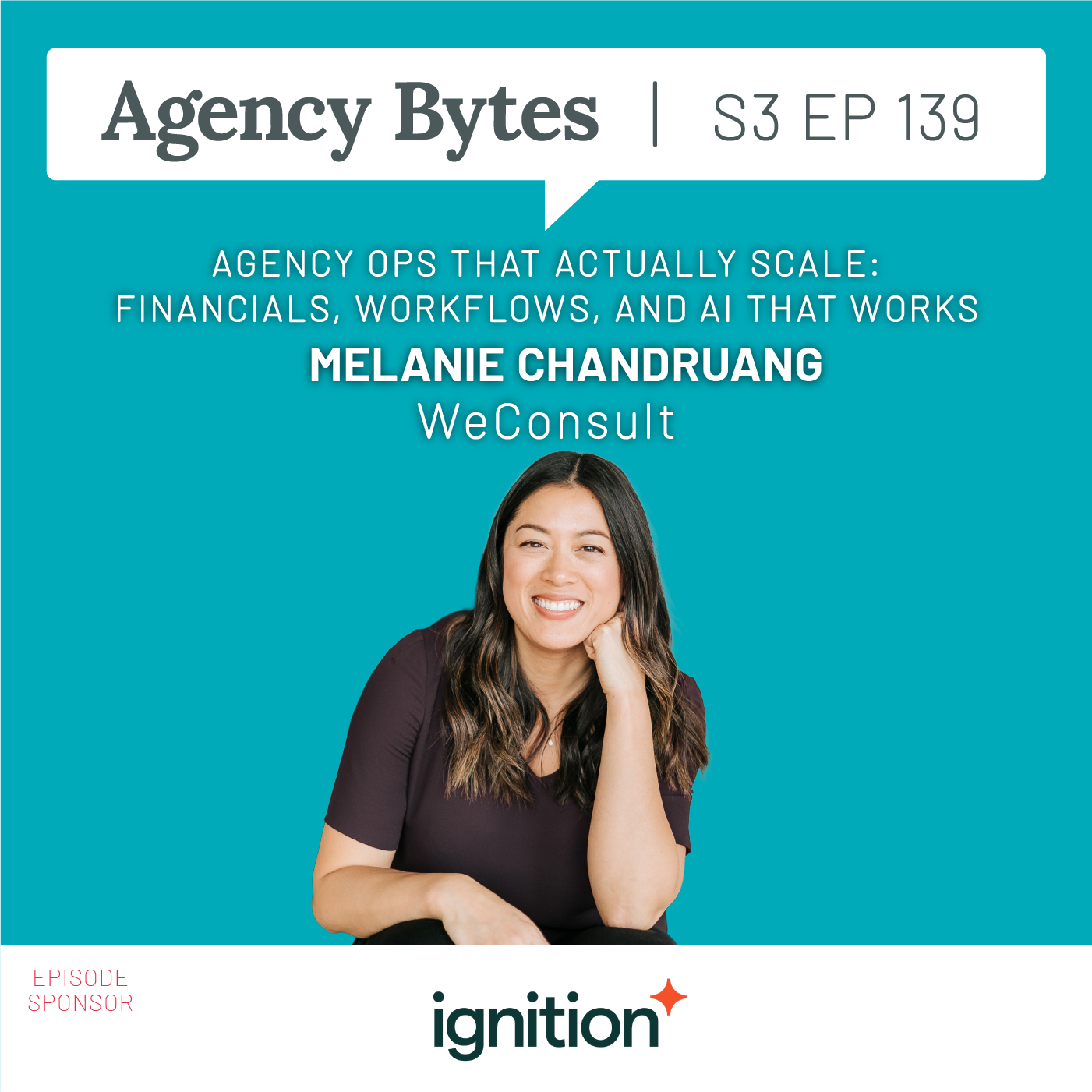
Ep 139 – Melanie Chandruang, We Consult – Agency Ops that Actually Scale: Financials, Workflows, and AI That Works
THIS EPISODE IS SPONSORED BY IGNITION. START YOUR FREE 14 DAY TRIAL ignitionapp.info/agencybytes-trial Use Code OUTSIGHT25 to save 50% off!
Ep 139 – Melanie Chandruang, We Consult – Agency Ops that Actually Scale: Financials, Workflows, and AI That Works
In episode 139, I sit down with Melanie Chandruang, founder of WeConsult and a strategic operations partner for creative agencies. Melanie has spent the last seven years helping agencies tighten up their financials, streamline workflows, and build stronger leadership teams—while also navigating two maternity leaves, a cross-country move, and re-entering the industry in one of its toughest seasons.
We dig into how she rebuilt WeConsult after stepping away to have kids, what’s changed in the agency landscape since 2023, and why she’s now staying higher-level as a fractional ops leader instead of getting buried in implementation. Melanie breaks down what healthy leadership actually looks like, why so many founders remain the bottleneck even after hiring “senior” people, and how clear ownership, scorecards, and trust change everything.
We also get tactical: what she looks for first in the financials, the operational metrics that matter most, and why agencies without documented processes are struggling the most with AI adoption. We wrap by talking about leading through uncertainty, avoiding burnout, and the simple practice Melanie uses to remind herself of the value she’s creating—plus her very 90s go-to karaoke song.
Key Bytes
• Clean financials and clear reporting are the true foundation of scalable ops
• Workflow ownership matters — if it’s nobody’s job, it’s nobody’s job
• Founders stay bottlenecks when leadership has no autonomy or scorecards
• Agencies with documented systems adopt AI faster (and with fewer messes)
• Strong leadership = trust, clarity, and shared problem-solving
• Self-care and boundaries are essential for sustainable agency ownership
Chapters
00:01 Intro and how Melanie rebuilt WeConsult after kids and a cross-country move
02:48 Stepping away from client work, losing momentum, and clawing back into a changed industry
05:36 Why Melanie now stays high-level and pushes implementation to internal teams and automation
07:42 Founders as bottlenecks and what a truly strong leadership team looks like
11:15 Ego, scale, and the operational shifts required for owners to get out of the way
15:36 Where Melanie starts operationally: financials, workflows, and clear ownership
18:07 The agency financial metrics that actually matter (profitability, cash, utilization, and more)
22:03 Why documented systems are the key to successful AI adoption (and how messy it gets without them)
26:00 Leading through uncertainty, rebuilding a business, and protecting your own wellbeing
28:38 AI note-takers, imposter syndrome, and Melanie’s “value” practice
31:36 Melanie’s 90s karaoke pick and where to learn more about WeConsult
Melanie Chandruang is the Founder of WeConsult and a Strategic Operations Partner for creative agencies. With over 15 years in the industry, she helps agency owners boost profits, streamline operations, and move big initiatives forward so they can focus on growth and what matters most.
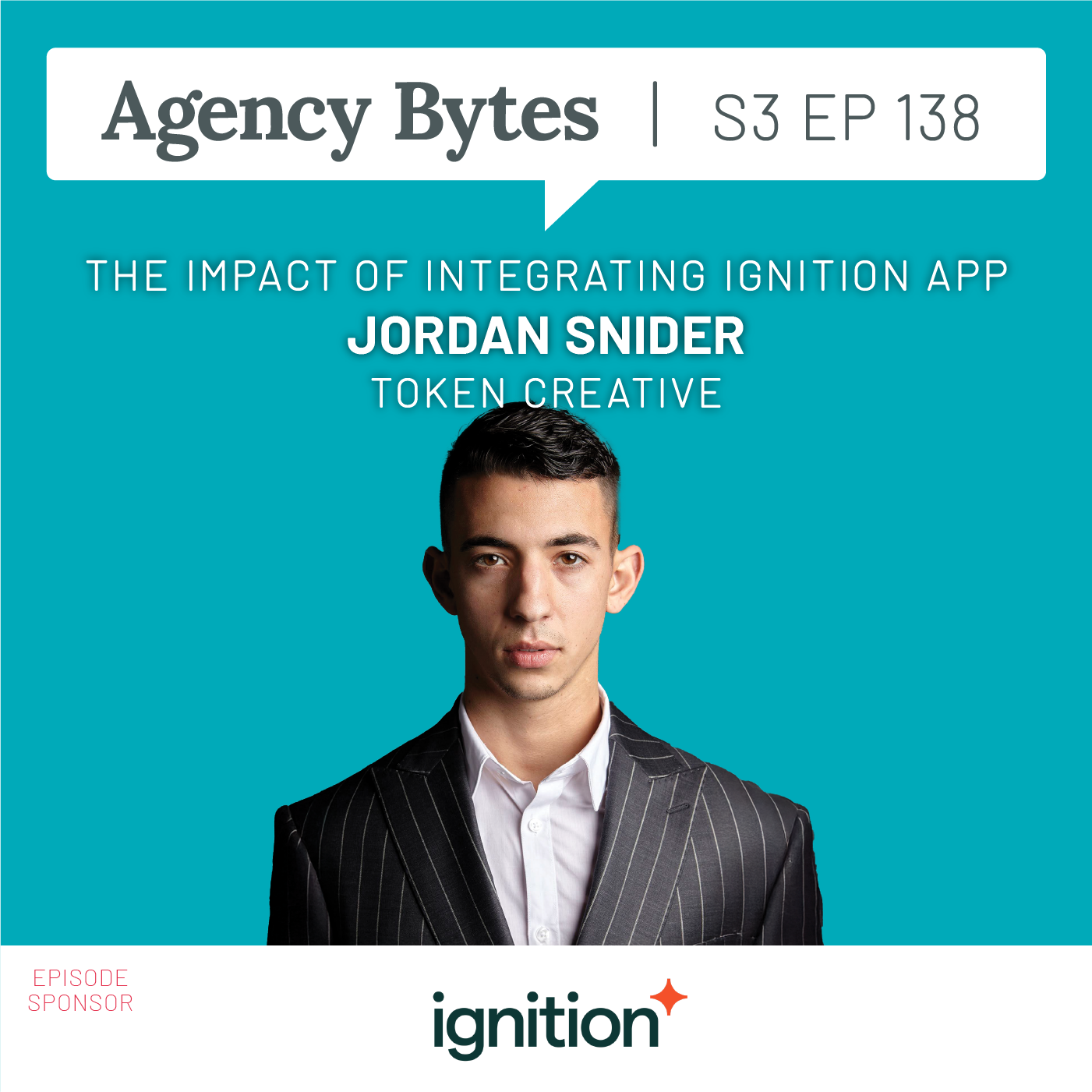
Ep 138 – Jordan Snider, Token Creative – The impact of integrating Ignition App
Ep 138 – Jordan Snider, Token Creative – The impact of integrating Ignition App
In episode 138, I sit down with Jordan Snider, co-founder and CTO of Token Creative Services, to break down the real impact of integrating Ignition App into their agency operations. Jordan shares how Token went from scattered proposals, manual invoices, and nearly $40k in aging AR to a streamlined, single-system workflow that clients actually appreciated.
We dig into the operational before/after: centralized proposals and agreements, automated billing, faster close rates, clearer scope definition, easier upsells and renewals, and the elimination of unbilled “mystery hours.” Jordan also talks about forecasting clarity — and why dashboards that tie proposals, renewals, and revenue projections together are a game changer for decision-making.
This episode is a grounded look at what happens when an agency stops tolerating a duct-taped sales and billing process and finally upgrades the operational spine of the business.
Key Bytes
• Token’s breaking point was nearly $40k in aging AR — a clear sign the proposal and billing process was broken.
• Clients were confused by multiple proposal versions, scattered contracts, and manual payments; consolidating everything through Ignition simplified the entire client experience.
• The biggest financial lift came from capturing previously unbilled variable hours and out-of-scope work.
• Automated reminders and stored payment methods dramatically reduced AR and manual follow-up.
• Forecasting became easier with visible open proposals, renewal pipelines, and year-over-year revenue projections.
• Simplifying the tech stack cut both software cost and constant integration maintenance.
• Ignition enabled Token to shift from hourly pricing to value-driven retainers because operations finally supported it.
• Jordan’s advice: delaying this overhaul guarantees regret — proactively fixing it avoids the forced crisis moment.
Chapters
00:00 Intro and why Token’s Ignition story matters
02:05 Token’s early days and “brute force” agency ops
03:10 The $40k AR wake-up call
05:10 What was broken in their proposal + onboarding workflow
06:55 Client reactions after switching to Ignition
07:50 Close rates, renewals, and handling scope creep
09:40 Capturing unbilled work and shrinking AR
11:55 Forecasting and metrics that changed decision-making
14:00 Simplifying the tech stack and ditching integrations
16:40 How clarity improved both scope and service delivery
23:40 Productizing services and shifting to retainers
25:05 Jordan’s advice for agencies resisting the overhaul
26:50 Rapid fire and wrap-up
Jordan Snider is the Co-Founder and CTOof Token Creative Services, a full-service digital marketing and creative agency based in Kitchener-Waterloo. With a background in full-stack software engineering, Jordan bridges the gap between technical development and creative marketing. He has contributed personal reflections to platforms supporting victims of family violence, discussing the unique stressors faced by newcomers and the importance of community support systems.
His work reflects a blend of technical precision and a commitment to social impact, aligning with Token Creative’s mission to support businesses making positive environmental or social changes.
ignitionapp.info/agencybytes-trial
THIS EPISODE IS SPONSORED BY IGNITION. START YOUR FREE 14 DAY TRIAL ignitionapp.info/agencybytes-trial Use Code OUTSIGHT25 to save 50% off!